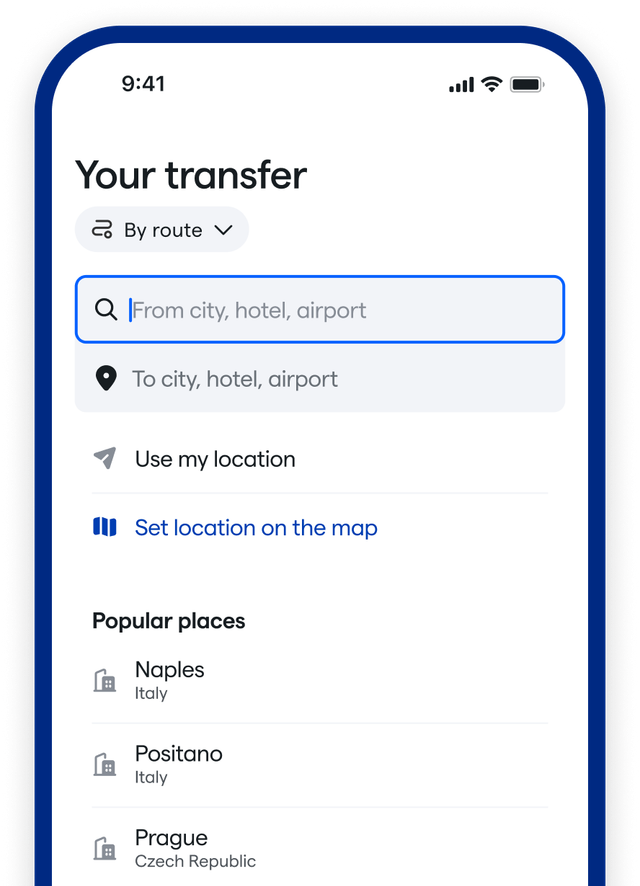
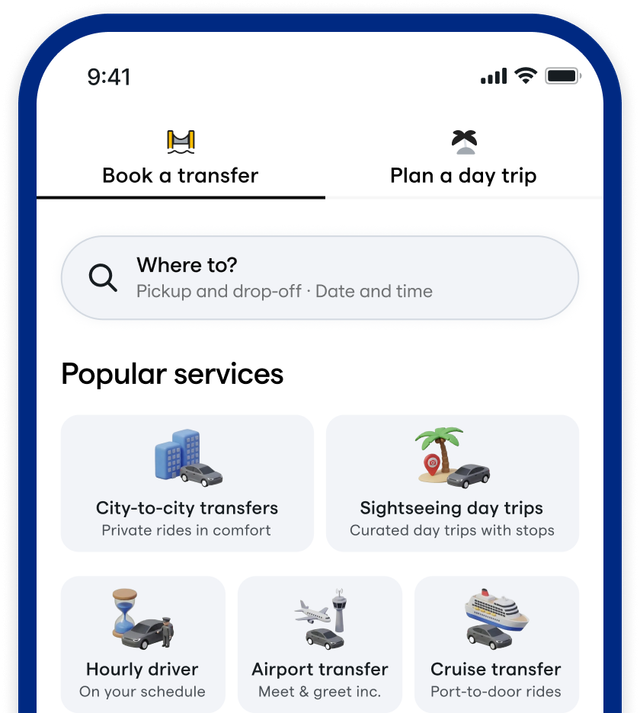
Daytrip은 현지 운전기사와 연결해주는 프라이빗 차량 서비스 플랫폼으로, 고객님을 문 앞까지 안전하게 모셔다 드립니다. 또한 이동 중에 다양한 명소와 관광지를 탐방할 수 있는 기회도 제공합니다. 저희가 운전하고, 여러분은 새로운 곳을 발견하세요.
Daytrip은 현지 영어 구사 운전기사가 운전하는 프라이빗 도어 투 도어 이동 서비스, 선택 가능한 관광지 정차, 시간제 기사 대여, 엄선된 당일 여행을 130개국 이상에서 제공합니다.
취소 정책은 여행에 따라 다를 수 있습니다. 예약 시 적용되는 취소 조건은 여행을 확정하기 전에 항상 표시됩니다. 자격 요건에 따라 Daytrip은 다양한 취소 옵션을 제공합니다:
환불 불가: 여행이 확정된 후 취소할 경우, 결제하신 금액은 환불되지 않습니다.
표준: 예정된 출발 시간 최소 24시간 전까지 여행을 취소하면 결제하신 금액이 전액 환불됩니다. 출발 24시간 미만 전에 취소하는 경우 환불이 불가합니다.
유연: 예정된 출발 시간 최소 1시간 전까지 여행을 취소하면 결제하신 금액이 전액 환불됩니다. 출발 1시간 미만 전에 취소하는 경우 환불이 불가합니다.
출발 24시간 미만 전에 예약한 여행은 예약 과정에서 별도의 안내가 없는 한 무료 취소가 불가할 수 있습니다.
네! 현지 영어 가능 기사와 함께하는 프라이빗 도어 투 도어 공항 이동 서비스를 예약하세요. 고정되고 투명한 요금, 숨겨진 비용 없이 이용할 수 있으며, 해외 공항에서 현금을 환전하는 번거로움 없이 미리 결제할 수 있는 옵션도 제공합니다.
여행 인원 수에 가장 적합한 차량을 받게 되며, 인원이 최대 7명인 그룹의 경우 세단부터 밴까지 다양하게 제공됩니다. 여행하시는 지역에 따라 토요타 코롤라와 비슷한 세단부터 메르세데스 V-클래스, 클래식 쿠바 자동차까지 예약하실 수 있습니다. 정확한 차량 모델은 달라질 수 있지만, 항상 안전성, 신뢰성, 편안함 측면에서 고객님의 요구를 충족하는 차량을 제공합니다. 차량의 재고 상황에 따라 무료로 더 큰 차량으로 업그레이드될 수 있습니다. 최대 7인승 차량이 가장 크기 때문에, 7명 이상인 경우에는 여러 대의 차량이 조합되어 제공됩니다. 여행 며칠 전에 정확한 차량 정보를 안내해 드리겠습니다.
미국을 제외한 모든 지역에서는 운전자가 적절한 어린이용 카시트를 제공합니다(예약 시 알려주시면 됩니다). 미국의 경우, 일부 주에서는 고객이 직접 어린이용 카시트를 준비해야 합니다.
키오지아에서의 여행 정보 알아보기
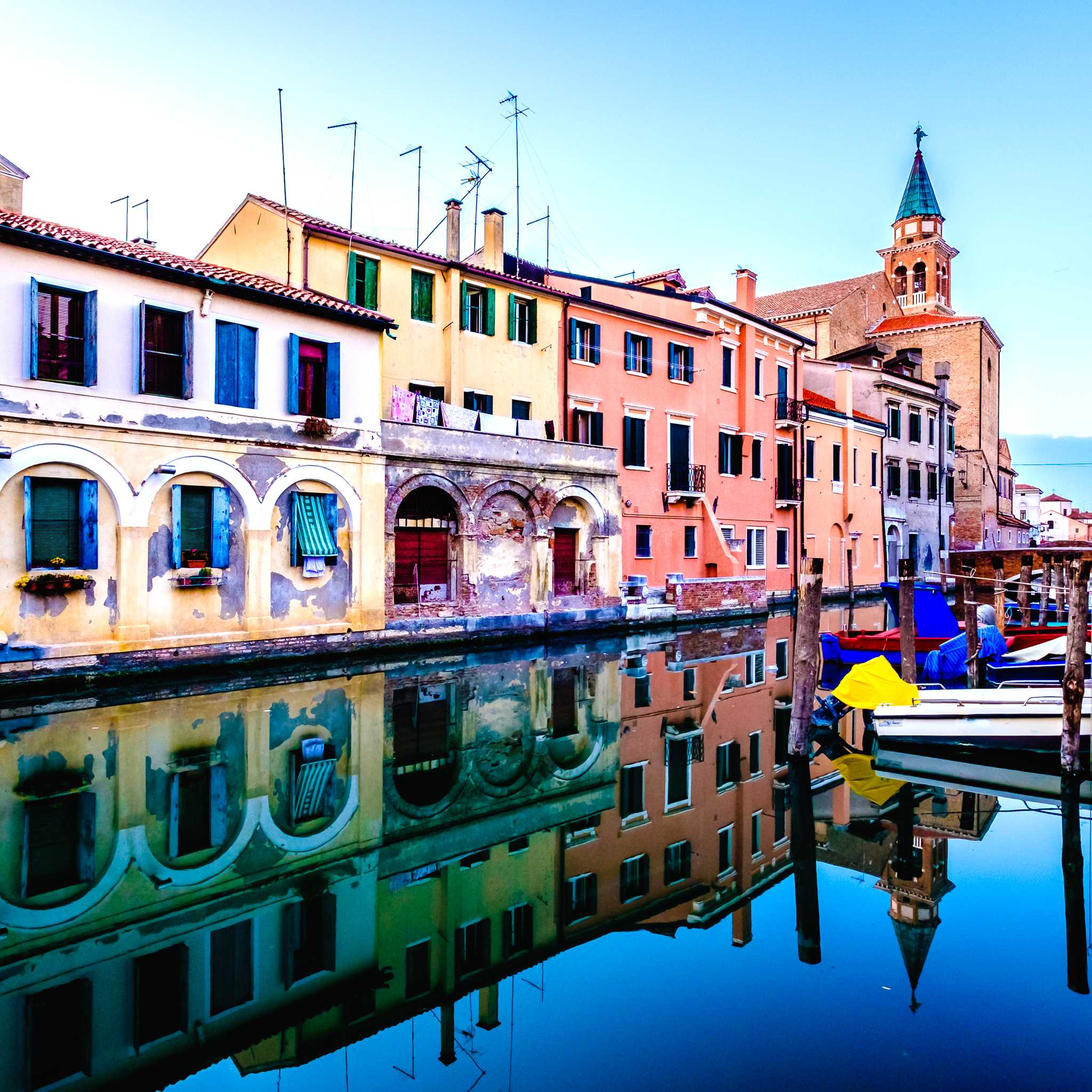
Chioggia shares Venice's lagoon setting, canal-laced layout, and Venetian architectural heritage, but with far fewer crowds and a much more local atmosphere. It is a working fishing town where everyday life carries on alongside visits from travelers. Prices for food and accommodation are generally lower than in Venice. For those who want to experience the beauty of the Venetian Lagoon without the tourist intensity of Venice, Chioggia is a rewarding choice.
Chioggia's historic center is flat and very walkable, making it accessible for most visitors. The main streets are paved and manageable with a stroller, though some bridges have steps, which can make navigating with a pram or wheelchair more challenging. The town's compact layout means you can cover most of the key sights comfortably on foot in a single day.
Yes, the resort beach of Sottomarina sits right next to Chioggia and is one of the most popular on the northern Adriatic coast. It stretches for approximately 10 kilometers (6 miles) and features clean, sandy shores with shallow water, making it ideal for families. There are numerous beach clubs, restaurants, and water sports facilities. Sottomarina is within easy walking distance from Chioggia's historic center.
Start at Piazzetta Vigo and cross the iconic Ponte Vigo bridge over Canal Vena. Stroll down Corso del Popolo, the lively main street lined with shops and cafes. Visit the morning fish market (Pescheria) to see the day's catch. Explore the Cathedral of Santa Maria Assunta and climb the 11th-century clock tower for panoramic lagoon views. On Thursday mornings, a large street market fills the town. The beaches of Sottomarina are just a short walk away.
Italy uses the euro (EUR). Cards are accepted at most restaurants, hotels, and shops in Chioggia. However, the town has a strong local character, and some smaller family-run businesses, market stalls, and fishermen's stands may prefer cash. It is a good idea to have some euros on hand when exploring the fish market and canal-side vendors.
Spring (April to June) is a wonderful time to visit Chioggia, with mild weather, blooming lagoon scenery, and fewer crowds. Early fall (September to October) is equally pleasant. Summer is the busiest season, especially on the beaches of Sottomarina, and the town comes alive with festivals. The Palio della Marciliana, a medieval costume reenactment, takes place each June, and the Chioggia Fish Festival runs for 10 evenings in early July.
Italian is the official language of Italy. Chioggia is less internationally visited than Venice, so English is less commonly spoken in everyday local settings such as smaller trattorias and shops. That said, most hotels and restaurants catering to visitors will have English-speaking staff. Carrying a translation app and knowing a few basic Italian phrases will greatly enhance your experience.
Chioggia's cuisine is rooted in its fishing heritage and fertile lagoon soils. Must-try dishes include bigoli in salsa (thick pasta with onion and anchovy sauce), sarde in saor (sweet-and-sour marinated sardines), and risotto di go (goby fish risotto), a local classic. The rosa di Chioggia radicchio and Chioggia pumpkin are beloved local vegetables. The morning fish market is the perfect place to see the extraordinary variety of fresh seafood available.