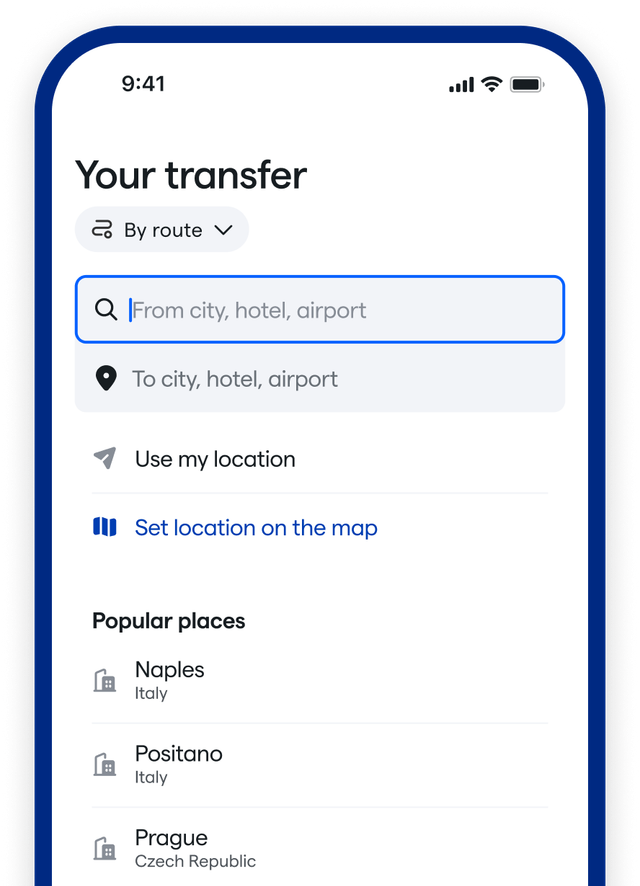
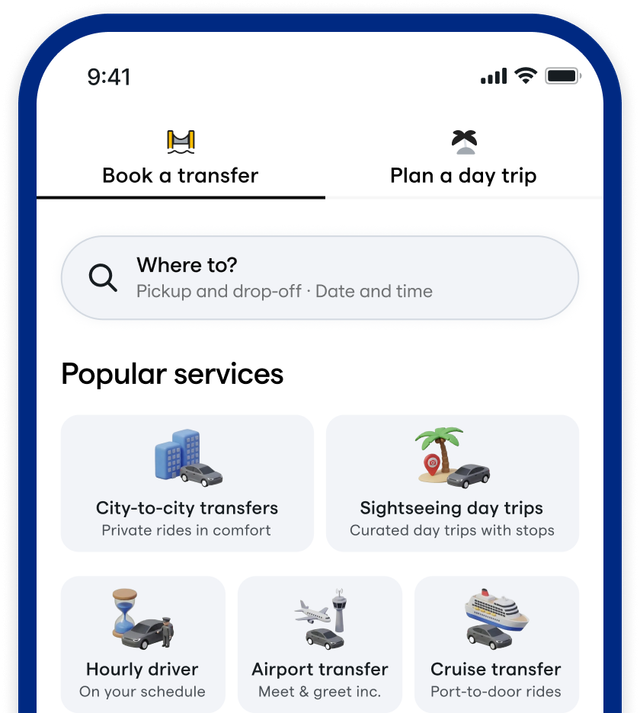
Daytrip은 현지 운전기사와 연결해주는 프라이빗 차량 서비스 플랫폼으로, 고객님을 문 앞까지 안전하게 모셔다 드립니다. 또한 이동 중에 다양한 명소와 관광지를 탐방할 수 있는 기회도 제공합니다. 저희가 운전하고, 여러분은 새로운 곳을 발견하세요.
Daytrip은 현지 영어 구사 운전기사가 운전하는 프라이빗 도어 투 도어 이동 서비스, 선택 가능한 관광지 정차, 시간제 기사 대여, 엄선된 당일 여행을 130개국 이상에서 제공합니다.
취소 정책은 여행에 따라 다를 수 있습니다. 예약 시 적용되는 취소 조건은 여행을 확정하기 전에 항상 표시됩니다. 자격 요건에 따라 Daytrip은 다양한 취소 옵션을 제공합니다:
환불 불가: 여행이 확정된 후 취소할 경우, 결제하신 금액은 환불되지 않습니다.
표준: 예정된 출발 시간 최소 24시간 전까지 여행을 취소하면 결제하신 금액이 전액 환불됩니다. 출발 24시간 미만 전에 취소하는 경우 환불이 불가합니다.
유연: 예정된 출발 시간 최소 1시간 전까지 여행을 취소하면 결제하신 금액이 전액 환불됩니다. 출발 1시간 미만 전에 취소하는 경우 환불이 불가합니다.
출발 24시간 미만 전에 예약한 여행은 예약 과정에서 별도의 안내가 없는 한 무료 취소가 불가할 수 있습니다.
네! 현지 영어 가능 기사와 함께하는 프라이빗 도어 투 도어 공항 이동 서비스를 예약하세요. 고정되고 투명한 요금, 숨겨진 비용 없이 이용할 수 있으며, 해외 공항에서 현금을 환전하는 번거로움 없이 미리 결제할 수 있는 옵션도 제공합니다.
여행 인원 수에 가장 적합한 차량을 받게 되며, 인원이 최대 7명인 그룹의 경우 세단부터 밴까지 다양하게 제공됩니다. 여행하시는 지역에 따라 토요타 코롤라와 비슷한 세단부터 메르세데스 V-클래스, 클래식 쿠바 자동차까지 예약하실 수 있습니다. 정확한 차량 모델은 달라질 수 있지만, 항상 안전성, 신뢰성, 편안함 측면에서 고객님의 요구를 충족하는 차량을 제공합니다. 차량의 재고 상황에 따라 무료로 더 큰 차량으로 업그레이드될 수 있습니다. 최대 7인승 차량이 가장 크기 때문에, 7명 이상인 경우에는 여러 대의 차량이 조합되어 제공됩니다. 여행 며칠 전에 정확한 차량 정보를 안내해 드리겠습니다.
미국을 제외한 모든 지역에서는 운전자가 적절한 어린이용 카시트를 제공합니다(예약 시 알려주시면 됩니다). 미국의 경우, 일부 주에서는 고객이 직접 어린이용 카시트를 준비해야 합니다.
Sintra에서의 여행 정보 알아보기
Yes, though visiting all major Sintra sites requires efficient planning. Most travelers focus on 2-3 main attractions: Pena Palace, Quinta da Regaleira, and Castle of the Moors are the most popular combination. Each requires 1-2 hours exploration time. The 434 tourist bus connects sites from Sintra station. Combination tickets offer savings on multiple entries. Summer crowds slow access. Starting early (8am opening) maximizes time. Some visitors prefer two days for thorough exploration without rushing through these elaborate estates.
Sintra sits approximately 30 kilometers (19 miles) northwest of Lisbon in the Serra de Sintra hills. The journey takes about 40-50 minutes by car through suburban areas and winding mountain roads. Frequent trains also connect Lisbon's Rossio station to Sintra in 40 minutes. The proximity makes Sintra Portugal's most popular day trip from the capital. Many visitors spend full days exploring multiple palaces and estates. The distance enables combining Lisbon city exploration with Sintra's fairy-tale palaces.
Sintra is extremely hilly with steep inclines between town center and hilltop palaces. The Palace of Pena sits 500 meters above sea level. While the historic center is walkable, reaching the palaces requires the 434 bus, taxis, or tuk-tuks due to steep, winding roads. Walking between palaces on mountain trails is possible for fit hikers but takes hours. Most visitors use the hop-on/hop-off bus system connecting all major sites. The terrain's difficulty necessitates planning transportation between attractions rather than walking everywhere.
Sintra's specialty is travesseiro (pillow pastry) filled with almond cream and dusted with powdered sugar, sold at the famous Piriquita bakery since 1862. Queijadas de Sintra (small cheese tarts) represent another local tradition. Portuguese cuisine includes fresh seafood, bacalhau (salt cod), and pasteis de nata (custard tarts). The town's restaurants serve traditional dishes in historic settings. Local produce benefits from Sintra's unique microclimate. These specialties make culinary experiences part of Sintra's cultural heritage alongside its architectural treasures.
Pena Palace (Palacio Nacional da Pena) is Sintra's iconic hilltop palace featuring vibrant red and yellow colors, Moorish and Gothic architectural elements, and fantastical turrets. Built in the 19th century on medieval monastery ruins, it exemplifies Romantic architecture. The palace interior displays royal apartments with original furnishings. Surrounding park features exotic plants, hidden grottoes, and viewpoints offering spectacular vistas across the region. The UNESCO site represents Portuguese Romanticism's greatest achievement and Sintra's most visited attraction.
Quinta da Regaleira is an enigmatic estate featuring elaborate gardens, mysterious grottoes, underground tunnels, and the famous Initiation Well with spiral staircase descending 27 meters. The neo-Manueline palace incorporates alchemical, Masonic, and Templar symbolism throughout its architecture and grounds. The UNESCO site was designed for philosophical meditation and initiation rituals. Exploring the hidden passages, secret caves, and symbolic structures creates adventure-like experiences. The mystical atmosphere distinguishes it from Sintra's more traditional royal palaces.
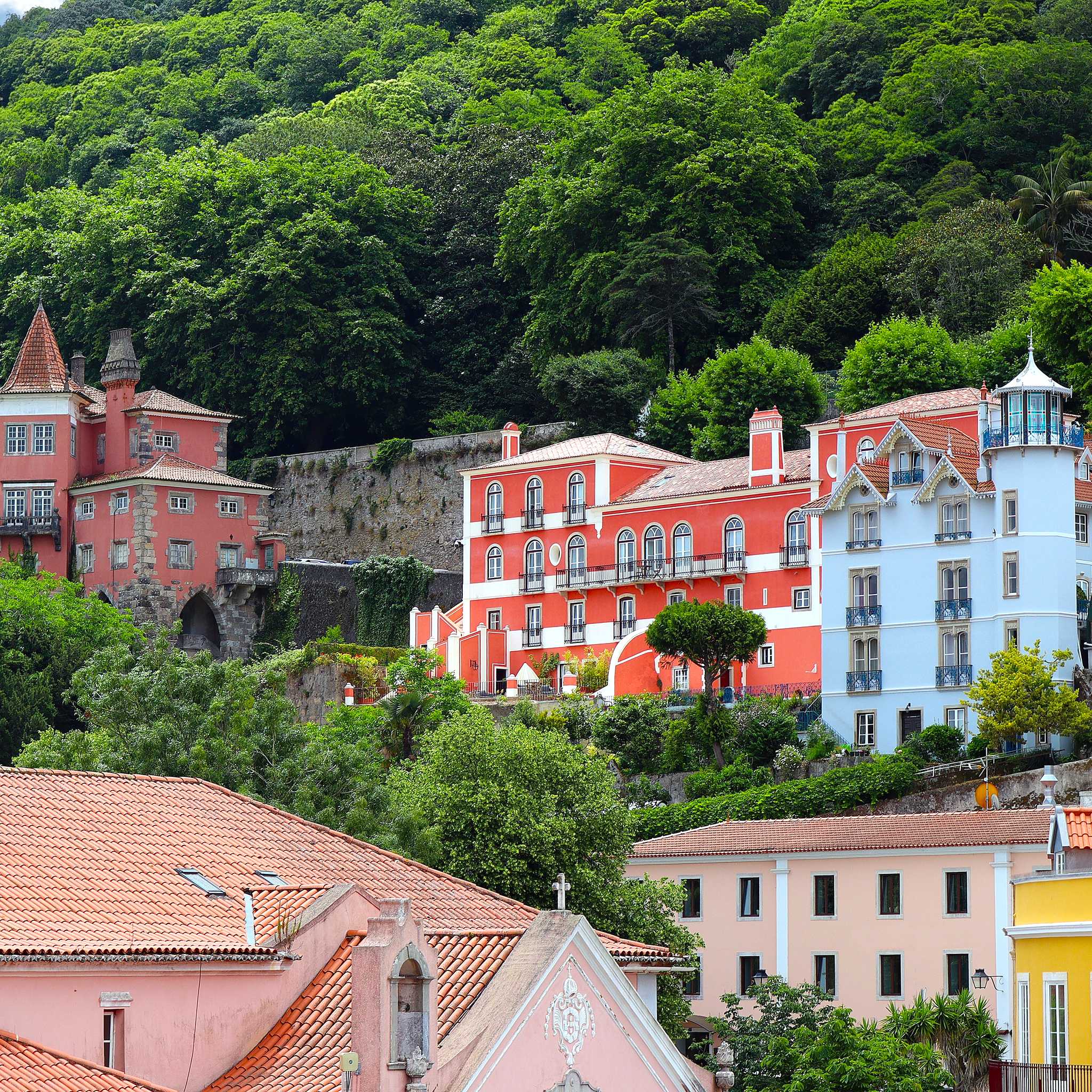
Sintra is a Portuguese hilltop town famous for romantic palaces, Moorish castles, and lush forests creating a UNESCO World Heritage landscape. The colorful Pena Palace with its whimsical architecture, medieval Castle of the Moors, elaborate Quinta da Regaleira estate, and Monserrate Palace showcase diverse architectural styles. Sintra's microclimate supports exotic vegetation. Lord Byron called it a "glorious Eden," making the town Portugal's most enchanting destination combining royal heritage, mystical atmosphere, and natural beauty.
Shoulder seasons (April-May, September-October) offer pleasant weather without peak summer crowds crushing the small town. July-August bring maximum tourists creating long palace queues and difficult parking. Weekdays are significantly less crowded than weekends year-round. Mornings before 10am provide best experiences. Winter offers fewer visitors and mystical misty atmosphere though some days bring rain. Sintra's microclimate means cooler temperatures than Lisbon, so layers are essential. Early visits and advance palace tickets avoid worst congestion.