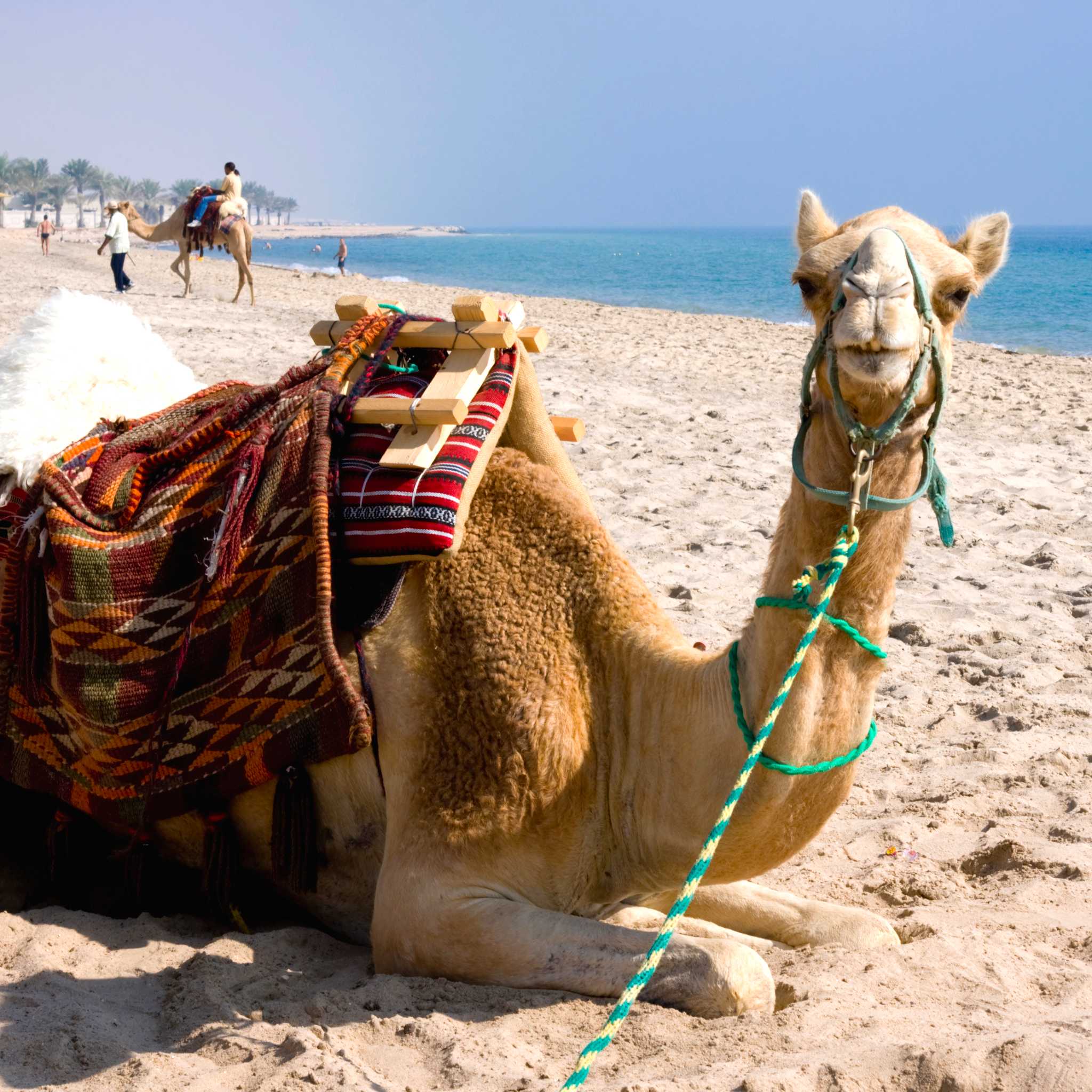
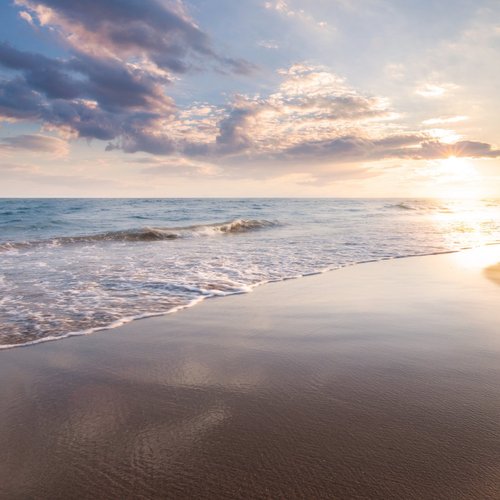
Yes. Al Ruwais Beach has soft sand and shallow, calm water, good for a walk or swim before heading back. Patches of mangrove line the coast nearby too, part of ongoing restoration efforts, adding a pocket of greenery to an otherwise stark desert coastline.
Al Ruwais sits at the very northern tip of Qatar, about 127 km (79 miles) from Doha. The drive trades the capital's skyline for a working fishing harbour, one of the country's oldest mosques, and easy access to the Al Zubarah ruins just down the coast. It's a full change of scenery without an overnight stay.
Al Zubarah lies about 28 km (17 miles) southwest of Al Ruwais along the coast. With a private transfer, the two pair naturally: explore the fort and ruins in the morning, then continue on to Al Ruwais for lunch by the harbour, without doubling back to Doha in between.
Most travellers set aside a full day: roughly 1.5-2 hours each way by road, plus time at Al Zubarah and Al Ruwais. The route runs along open desert highway, and a private transfer lets you set your own pace, stop for photos, and skip the hassle of arranging transport in a region with limited public transit.
Al Zubarah was a fortified pearling and trading town that thrived in the late 18th and early 19th centuries before being destroyed and later abandoned. Its remains, including a harbour, defensive walls, courtyard houses, mosques and a canal, stayed buried under sand and survived remarkably intact. UNESCO inscribed the archaeological site in 2013 as one of the best-preserved examples of a historic Gulf trading town.
Al Ruwais grew up around one of Qatar's busiest fishing harbours, and traditional dhows still work the waters here. The town also holds what's thought to be Qatar's oldest surviving mosque, alongside restored heritage houses that hint at life before oil transformed the peninsula. It's a quieter, more local counterpoint to Doha's skyline.