Alba Iulia sits in the heart of Transylvania and is well-positioned for travelers moving between the region's major hubs. From Sibiu, the journey is roughly 70 km (43 miles), typically around an hour by road. From Cluj-Napoca, it is approximately 100 km (62 miles), usually about 1.5 hours. From Bucharest, the distance is around 370 km (230 miles), a drive of roughly 4 to 5 hours. Its central location also makes it a natural stop on a broader Transylvania itinerary.
A comfortable day trip gives you 5 to 6 hours in the city, which is enough to explore the citadel thoroughly, visit at least one museum, and take in the tree-lined boulevards at a relaxed pace. If you want to include the National Museum of the Union, where the 1918 unification was declared, plan to stay closer to a full day. Check current admission details for the citadel museums before your visit, as fees and access policies can vary by attraction.
Yes, and this is one of its strongest practical advantages. Travelers making their way between Sibiu and Cluj-Napoca pass close enough to Alba Iulia that a stop adds very little extra driving time while delivering one of Romania's most historically significant sites. A Daytrip driver can build the city into your route as a sightseeing stop, so you arrive with context, explore at your own pace, and continue to your final destination without backtracking or juggling separate bookings.
Alba County has been a wine-producing region since the 1st century AD, when Roman settlers recognized the fertile Mures valley as prime viticulture territory. The region is best known for its white wines, particularly those made from Feteasca Regala and Feteasca Alba, grape varieties native to Romania. If you have time after the citadel, the surrounding countryside offers a taste of this tradition. It is a quieter side of the visit that pairs well with the city's Roman heritage and adds a distinctly local dimension to what might otherwise be a purely historical day trip.
Alba Iulia holds a singular place in Romanian history that no other city can claim. This is where Transylvania united with Romania in 1918, where medieval princes once ruled from grand palaces, and where Roman legions once based their regional command. The result is a city that layers Roman ruins, Gothic cathedrals, Baroque fortifications, and royal estates into a single, walkable historic core. Few destinations in Transylvania pack this much historical weight into a day trip.
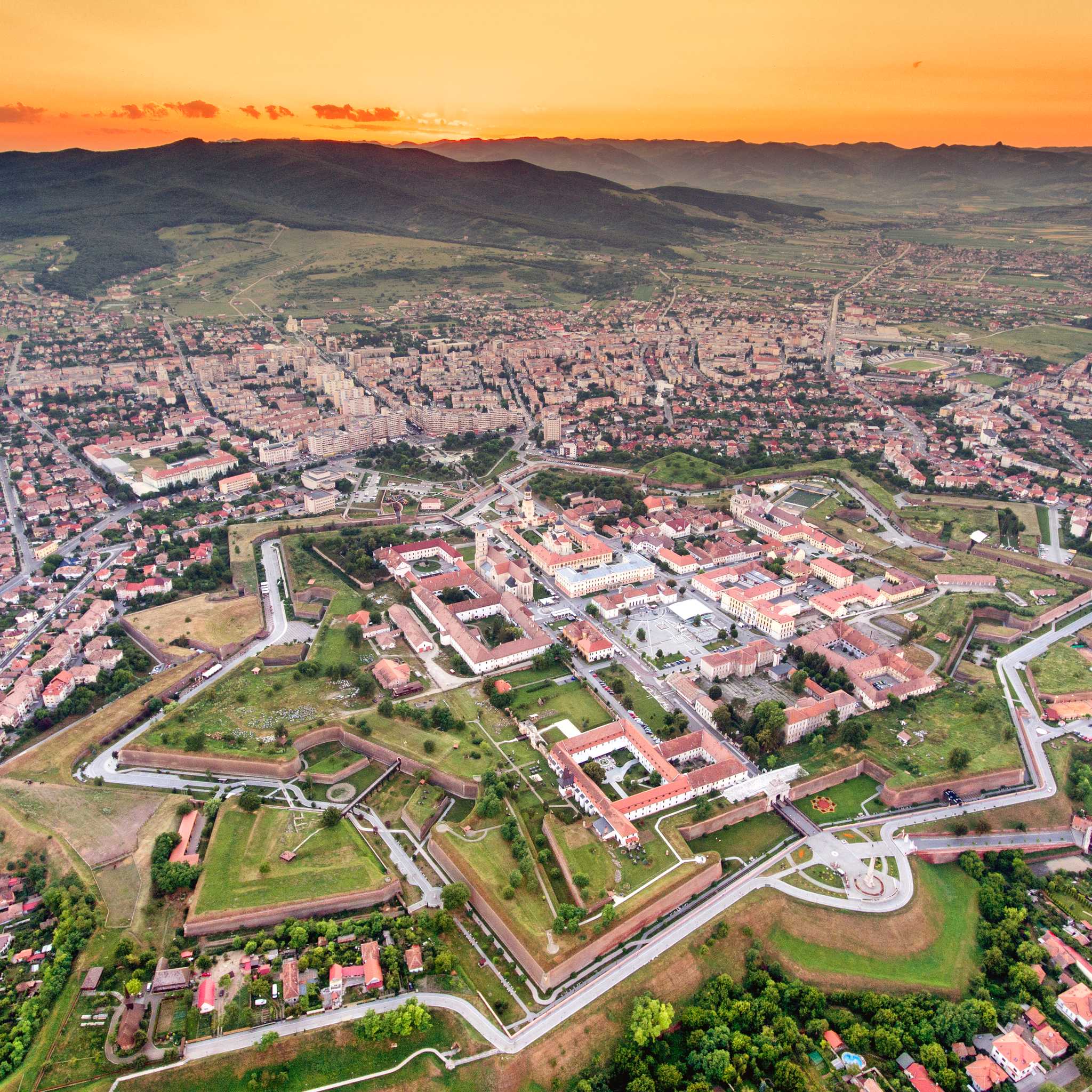
The star-shaped Habsburg fortress is the heart of the visit. Built between 1716 and 1735, it is the largest fortress in Romania and contains enough to fill a full day on its own. Do not miss the Roman Catholic Cathedral of Saint Michael, the oldest monument in Transylvania, built in the 13th century on the foundations of an even earlier Romanesque church. The Coronation Cathedral, where Romanian royalty were crowned in 1922, is equally impressive. Walk through the ornate Baroque gates, explore the Apor Palace and the Princely Palace, and keep an eye out for the ceremonial changing of the guards at the third gate.