Yes, and this is one of the more practical ways to see Albacete. If you are traveling between, say, Valencia and Madrid, Albacete sits naturally along the route. Your Daytrip driver can pause at key points — the cathedral, the plaza, the old posada — giving you an hour or two to explore before continuing to your final destination. You do not need to book a separate day trip or lose a full day of travel. The stop becomes part of the journey rather than a detour from it.
The train connects Albacete to Madrid, but it drops you at a city-center station with your luggage and no onward plan. A Daytrip private transfer picks you up directly from your accommodation and delivers you to your exact destination, whether that is a hotel, an airport, or a specific address. There are no platform changes, no baggage overhead, and no shared space. You also travel on your schedule rather than a fixed timetable, which matters when your plans shift — and in Spain, they often do.
Albacete sits roughly 250 km (155 miles) southeast of Madrid, a drive of approximately 2.5 to 3 hours depending on traffic and your exact pickup point. Valencia lies around 190 km (118 miles) to the east, typically a 2 to 2.5 hour drive. Murcia is approximately 150 km (93 miles) to the south, around 1.5 to 2 hours. These distances make Albacete a natural midpoint on several popular Spain itineraries, and a private transfer lets you treat the drive itself as part of the experience rather than something to endure.
Albacete's reputation for nightlife and festivals is not just local pride — it reflects a city with genuine street-level energy. The Feria de Albacete, held annually in late summer, is a large and long-established Spanish fair, drawing visitors from across the country for over a week of music, bullfighting, and open-air celebration. Outside of major festivals, the city maintains a lively bar and restaurant culture centered around the Plaza de Altozano. Visiting midweek or outside peak season gives a quieter but no less authentic version of the same culture.
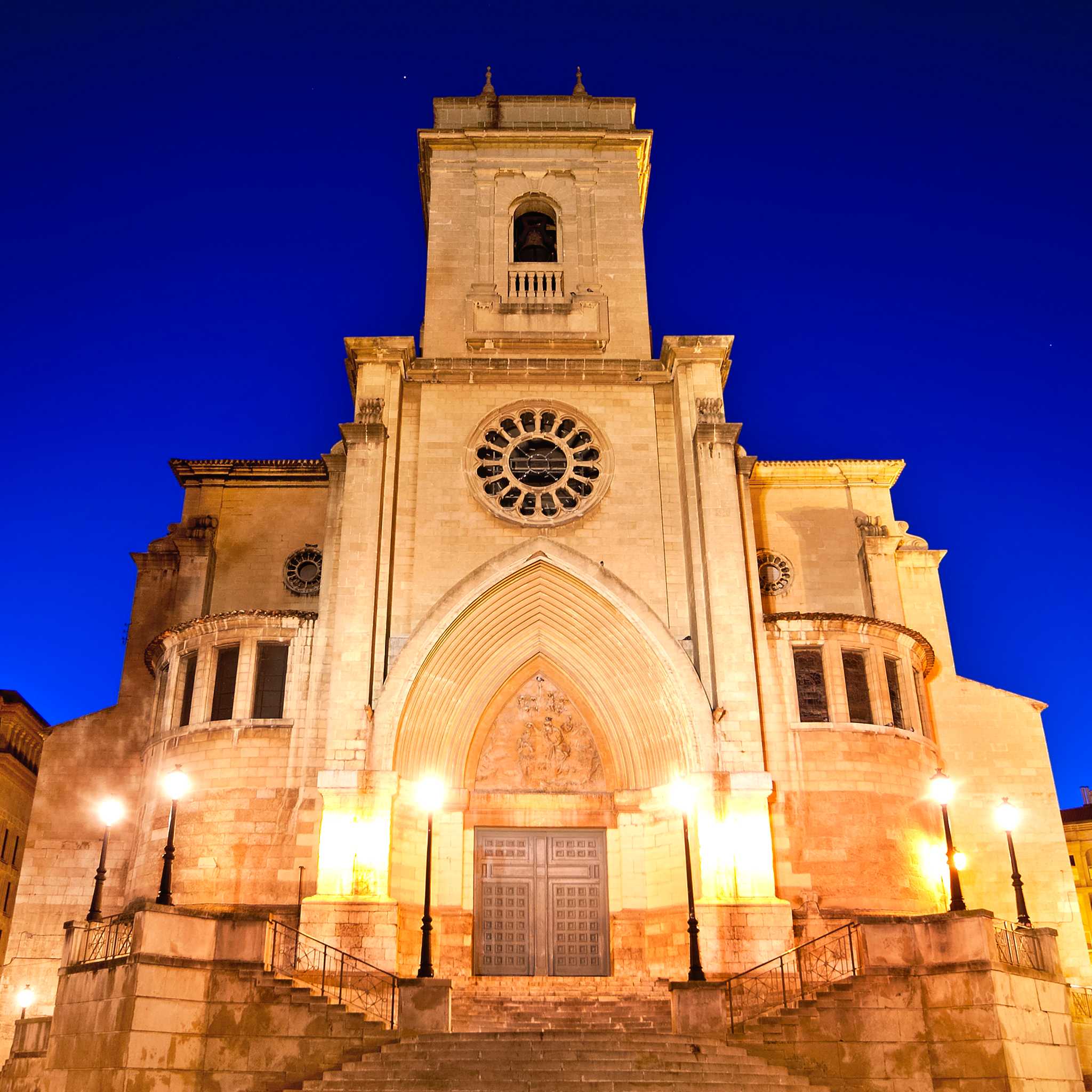
Albacete punches well above its size. Despite being called the "New York of La Mancha," it rewards travelers with a genuinely layered history rather than tourist-polished surfaces. The Catedral de San Juan Bautista took five centuries to complete, and the architectural result — Gothic meeting Renaissance meeting Baroque — tells that story visibly on its walls. The Posada del Rosario, now the city's tourist office, blends Gothic, Mudejar, and Renaissance styles in a single building. Add the Plaza de Altozano's local food scene, centered on traditional pork specialties, and Albacete offers a meaningful few hours rather than a quick photo stop.
Albacete is younger than most Spanish provincial capitals — the city dates to roughly the 13th century, which is relatively recent by Iberian standards. It spent Spain's most turbulent medieval years loyal to the Crown, a position that brought it tangible rewards: in 1888, it became the first provincial capital in Spain to receive electric street lighting, a mark of the city's status at the time. That forward-looking streak is still visible in the contrast between its modern nightlife districts and the centuries-old cathedral at its center. Knowing this background helps make sense of a city that does not look or feel like a typical Castilian town.