Aranda de Duero sits directly on the A-1 corridor between Madrid and Burgos, roughly 150 km (93 miles) north of Madrid and about 80 km (50 miles) south of Burgos. This makes it a natural midpoint stop rather than a detour, and a Daytrip driver can build it into your journey so you explore the cellars and the old town before continuing to your destination without backtracking or coordinating separate transport.
It works well either way. As a standalone trip from Madrid, the underground cellars and historic churches fill a comfortable half-day to full day without feeling rushed. Combined with Burgos or Segovia, it adds a distinct wine and history angle to a broader route through Castile. A Daytrip transfer makes the combination practical since your driver handles the routing and timing, letting you decide on the day how long to linger underground.
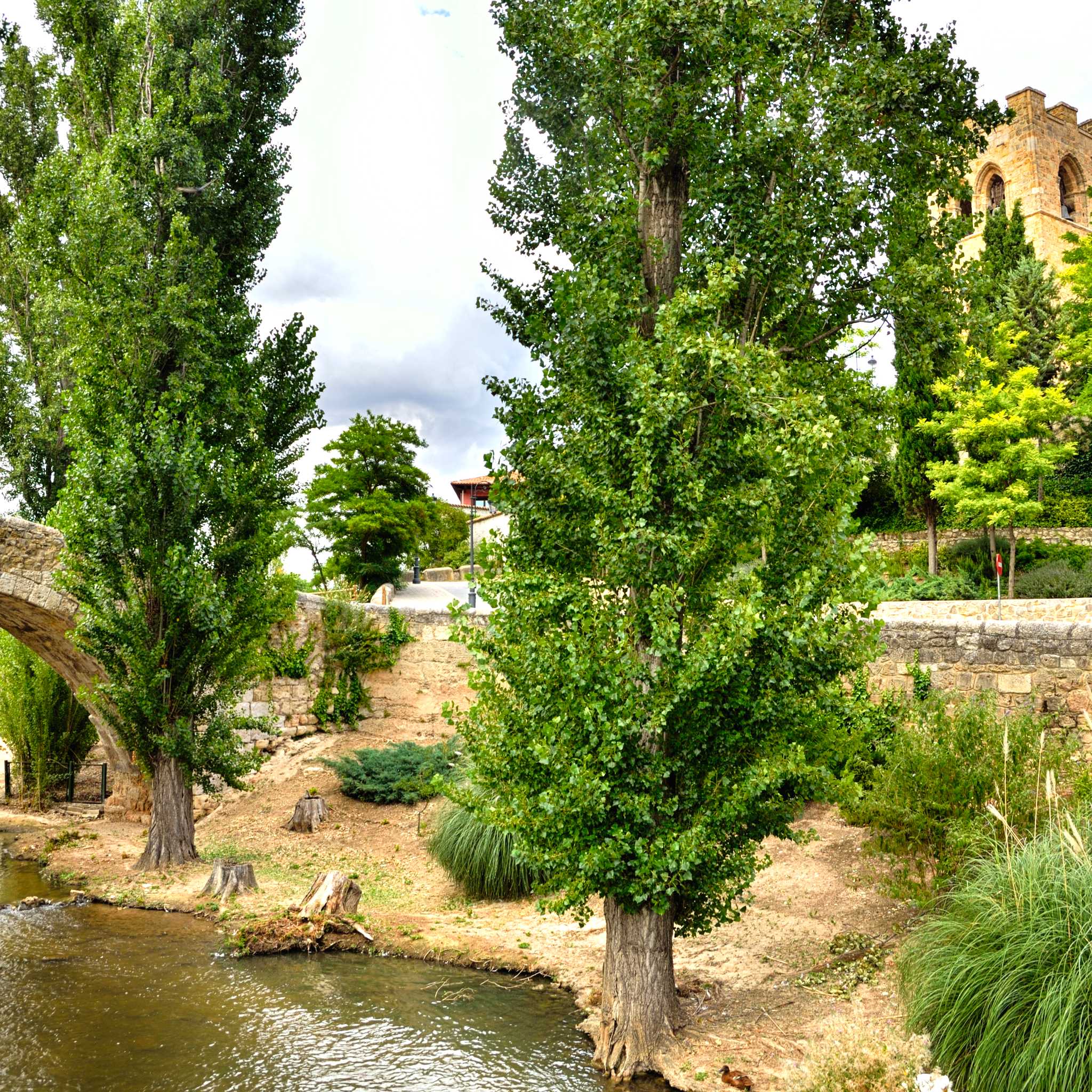
The city's roots go back to Roman occupation, and it grew into a prosperous trading hub during the 15th and 16th centuries. That prosperity left a clear architectural imprint: the Gothic Church of San Juan stands beside a Roman bridge, its fortified tower still intact. Santa María la Real, built across the same period, reflects the influence of the Catholic Monarchs at the height of their reign. The layers of Roman, medieval, and Renaissance history are compact enough to cover on foot in a few hours.
The city sits at the heart of Ribera del Duero, named Wine Region of the Year by Wine Enthusiast Magazine in 2012, and its real draw is literally underground. A network of 135 medieval wine cellars runs beneath the streets, some dating to the 15th century, where visitors can walk cave corridors and taste wine aged in the rock. Above ground, the Church of Santa María la Real delivers an ornate Gothic doorway carved with Biblical scenes and crowned by the coat of arms of the Catholic Monarchs. It is the kind of place that rewards curiosity at every level, figuratively and literally.
Lead with the underground cellars. The cave wineries are what makes Aranda de Duero genuinely different from other historic Castilian towns, and the experience of tasting Ribera del Duero wine inside a 15th century rock-cut chamber is not easily replicated elsewhere. From there, the doorway of Santa María la Real and the Roman bridge near San Juan are close together and take under an hour to appreciate. That sequence covers the city's three most distinctive experiences in a focused visit.
Not all 135 cellars are open to the public, but several actively welcome visitors. The Don Carlos cellar, dating to the 15th century, is among the most accessible, offering guided exploration of the cave itself alongside the chance to taste wine in the underground setting where it was aged. Checking ahead with individual bodegas on seasonal availability is worthwhile, as hours and tour formats vary.