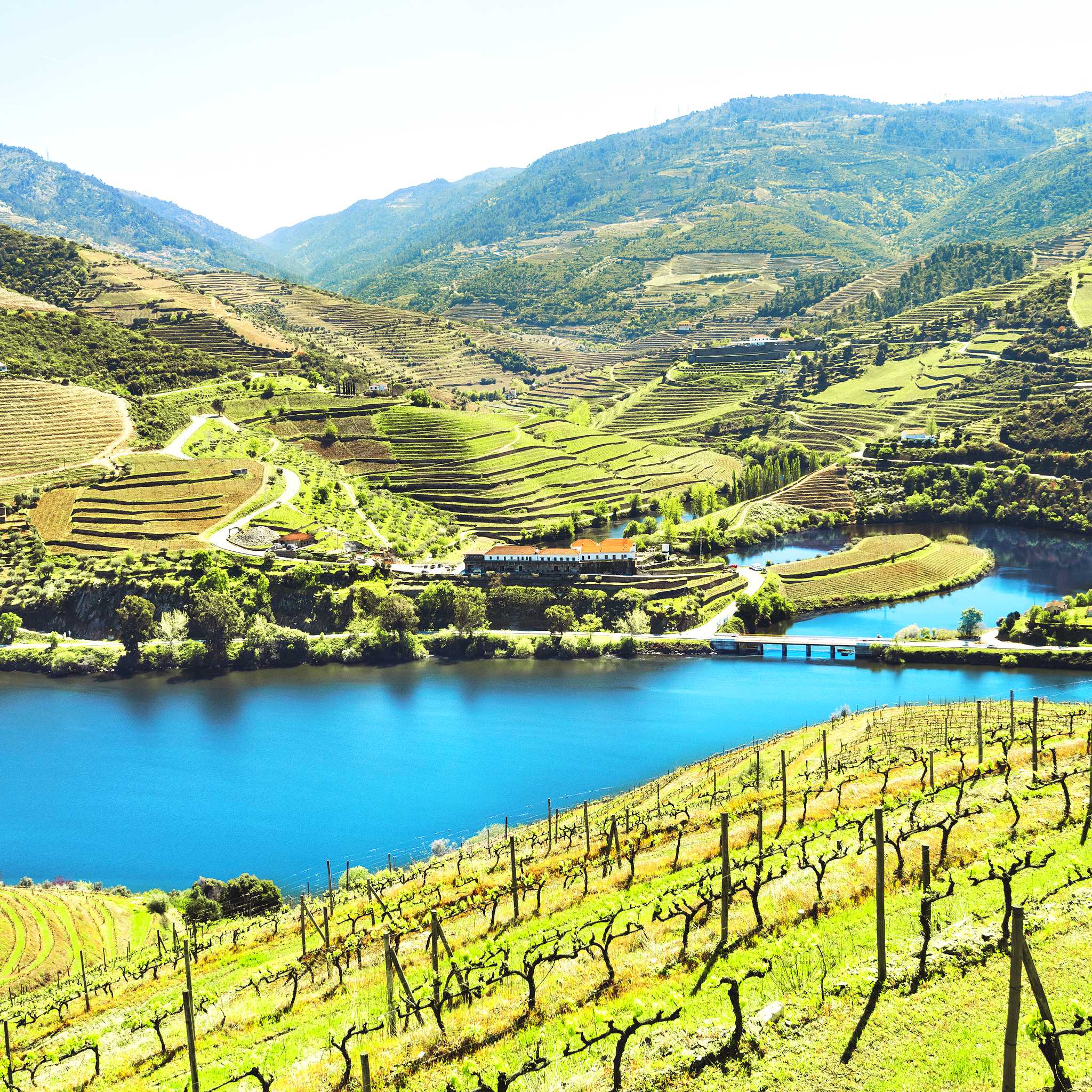
Barca d'Alva sits at the eastern edge of the Douro Wine Region, a UNESCO World Heritage Site and one of the oldest demarcated wine regions in the world. The landscape of sculpted terraces you see from the village is the same landscape that has produced Port wine for centuries. Day trip visitors can explore nearby quintas (wine estates) in the upper Douro Valley, taste wines at the source, and see the vineyards at close range — an entirely different experience from visiting a wine shop in Porto. The harvest season in September and October adds particular atmosphere.
Barca d'Alva is approximately 200 km (124 miles) east of Porto. The drive takes around 2 to 2.5 hours, following the Douro Valley as the landscape transitions from the coastal lowlands into the dramatic terraced wine country of the upper Douro. The route itself is part of the experience — the final stretch through the Douro gorge corridor is among the most striking drives in Portugal. A Daytrip driver can incorporate sightseeing stops along the way, turning the journey into an introduction to the valley rather than just a transfer.
The village itself is small and intimate — a few hours covers its riverfront, the confluence of the Douro and Águeda rivers, and the immediate surroundings. The real case for a full day is what surrounds it: adding the Côa Valley Archaeological Park, a stop at one of the upper Douro quintas, or a riverside lunch in a nearby village like Vila Nova de Foz Côa easily fills six to eight hours. Given the distance from Porto, a full-day format makes the journey worthwhile and lets you explore this corner of Portugal at a pace that does it justice.
The Côa Valley Archaeological Park is one of Europe's most significant prehistoric sites — a UNESCO World Heritage Site containing thousands of open-air Paleolithic rock engravings dating back over 20,000 years, carved into the schist cliffs along the Côa River just inland from Barca d'Alva. The park's visitor center in Vila Nova de Foz Côa is roughly 20 km (12 miles) from the village, making it an easy and natural pairing on the same day trip. Guided site visits take you directly to the engravings in their natural setting, which is a genuinely rare experience — most prehistoric rock art of this scale is either underground or heavily restricted.
Barca d'Alva punches far above its size. This small riverside village at the Spanish border is where the Águeda River meets the Douro, making it one of the most scenically dramatic points in all of Portugal. It serves as a key embarkation and disembarkation point for Douro river cruises, but even if you're not on a cruise, the setting alone — terraced vineyards plunging to the river, schist hillsides, and an almost total absence of tourist infrastructure — makes it a compelling destination. It's the kind of place that feels genuinely undiscovered.
Barca d'Alva is one of the primary turnaround points for multi-day Douro river cruises, particularly those running between Porto and the Spanish border. If you're embarking or disembarking here, a private transfer is the most practical way to connect to and from Porto or other cities — the village is remote and public transport options are very limited. A Daytrip transfer means you arrive on your own schedule, with luggage handled door-to-door, and you can use the journey to explore the valley rather than simply transit through it.