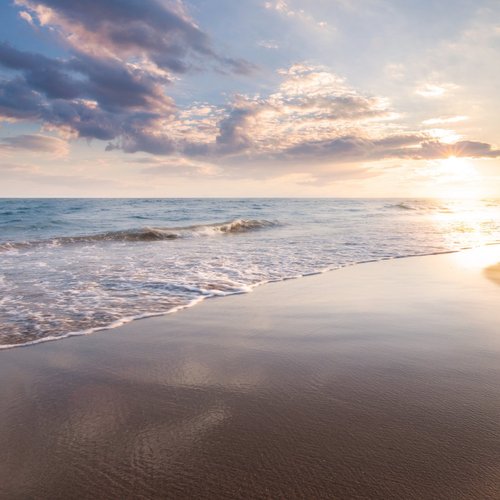
Baška is approximately 75 km (47 miles) from Rijeka by road. The route crosses the Krk Bridge onto the island, then follows the island road south to the Baška Valley. A private transfer typically takes around 1 hour to 1 hour 15 minutes depending on traffic, making it a comfortable and practical day trip from the Kvarner region without the complications of ferry crossings or bus connections.
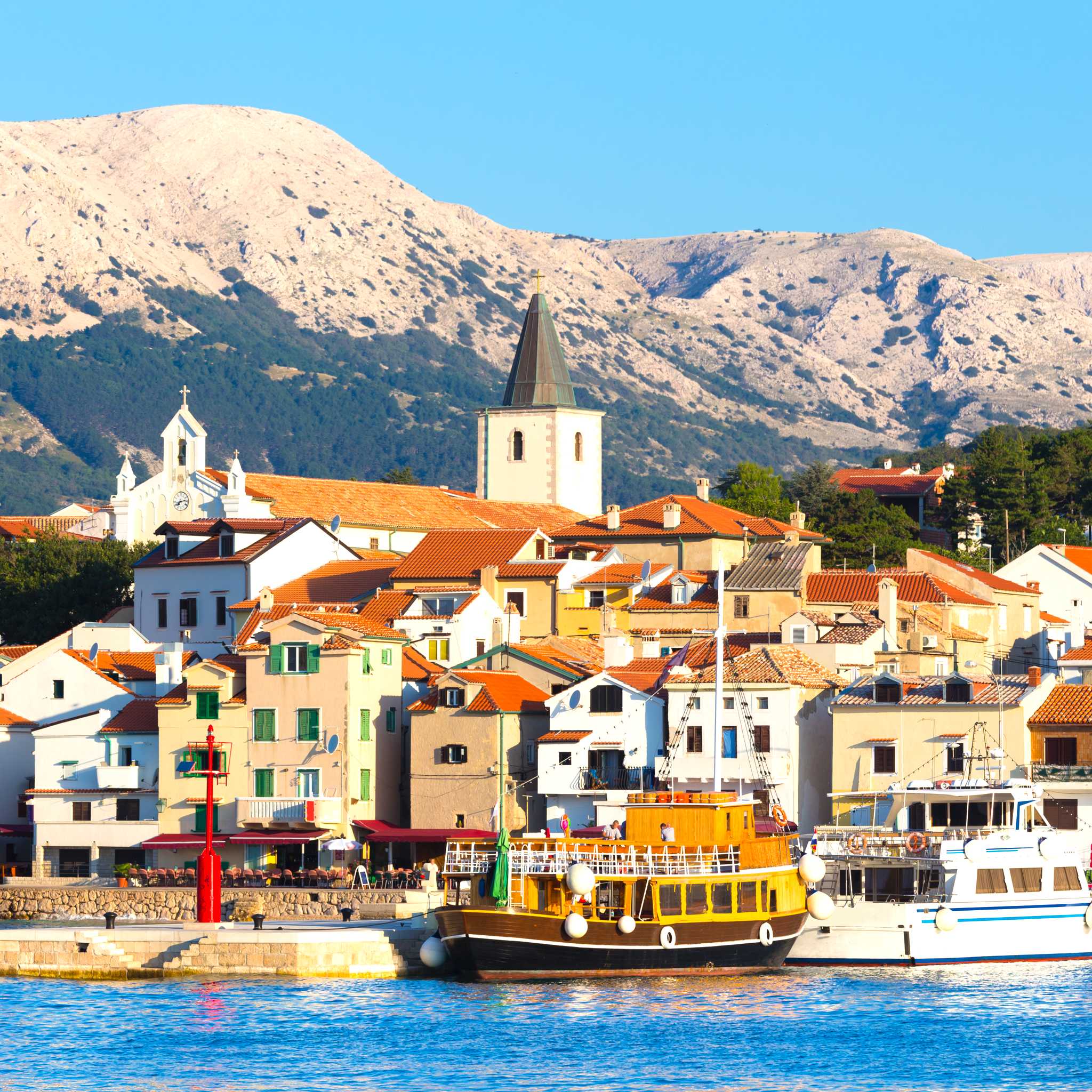
A full day is the ideal allocation. Spend the morning walking the 2 km (1.2 mile) length of Vela Plaža, swimming, or trying watersports such as paddleboarding, kayaking, or windsurfing. After lunch at one of the waterfront restaurants, the compact old town — with its stone lanes, medieval church of St. John the Baptist, and harbor promenade — takes one to two hours to explore at a relaxed pace. A short trip out to the Church of St. Lucy in Jurandvor to see the Baška Tablet replica rounds out the day without rushing.
The Baška Tablet (Bašćanska ploča) is a limestone inscription carved around 1100 AD, found in the Church of St. Lucy in Jurandvor, just 2 km (1.2 miles) from Baška's center. It records a land grant by Croatian King Zvonimir using the ancient Glagolitic script, and contains the first written use of the Croatian name in the Croatian language — which is why historians have called it "the baptismal certificate of Croatian culture." The original has been held at the Croatian Academy of Sciences and Arts in Zagreb since 1934, but a replica is displayed at the church. For anyone interested in Croatian or European history, the short detour from the beach is genuinely worthwhile.
Baška sits at the southern tip of Krk island, sheltered by a green valley that opens onto one of Croatia's most celebrated beaches. Vela Plaža stretches nearly 2 km (1.2 miles) of pebble shoreline backed by mountains, with water clear enough to see the bottom at depth. Beyond the beach, the town holds genuine historical weight: the Baška Tablet, a limestone slab from around 1100 AD bearing the first known mention of the Croatian name in the Croatian language, was discovered just outside the village at the Church of St. Lucy in Jurandvor. It is a rare combination — a world-class beach destination with a landmark that shaped a nation's written identity.