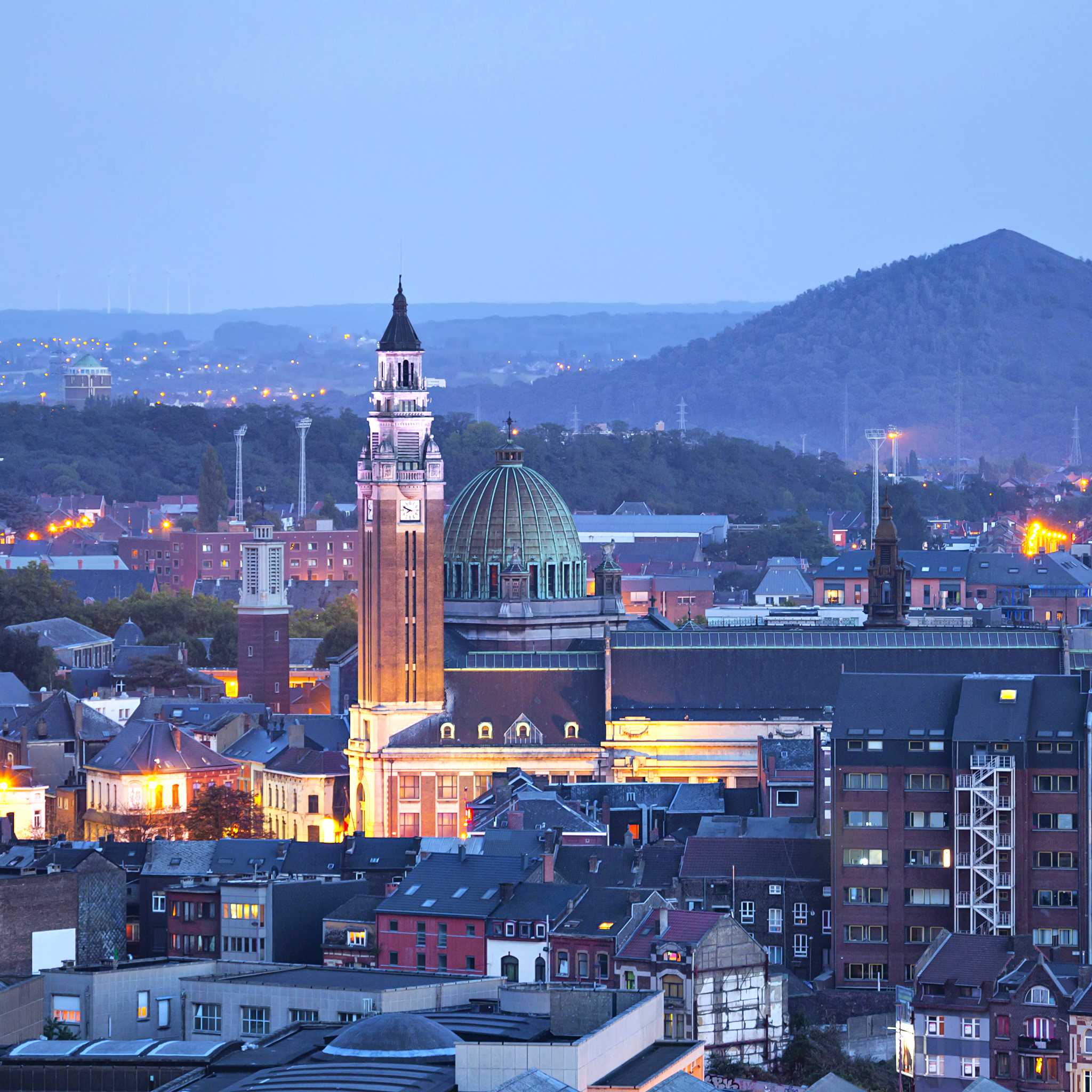
The compact city center is walkable, and key sights like the Photography Museum, Saint-Christophe Church and the Sambre riverfront can be enjoyed on foot. There are some hills and older industrial areas, plus a metro and buses to reach attractions farther out, such as the Bois du Cazier. Most central streets work reasonably well for strollers and wheelchairs, though some surfaces are uneven.
Belgium is generally a safe country, and Charleroi is welcoming to visitors, though as a larger working city it pays to use normal urban common sense. Keep your belongings secure, stay aware in quieter areas, and take usual care at night. Stick to busier, well-lit streets after dark. Most travelers exploring the city's art and heritage have a relaxed, trouble-free visit.
Tipping is appreciated but not required in Belgium, as service is included in the bill. For good service at a restaurant, many people round up or leave around 5 to 10 percent. In cafes and bars, simply rounding up the amount is common and welcome. Small tips for taxis or helpful hotel staff are a kind gesture, but always entirely at your discretion.
Discover Charleroi's celebrated street art and murals, admire the Art Deco town hall and its UNESCO-listed belfry, and visit the historic Place Charles II with the Saint-Christophe Church. Explore the Bois du Cazier, a former coal mine and moving UNESCO heritage site, and Europe's largest Photography Museum. For a thrill, try the Airspace indoor skydiving center near the airport.
Belgium uses the euro (EUR). In Charleroi, cards and contactless payments are widely accepted at hotels, restaurants, shops and museums, and ATMs are easy to find around the city. Belgium is fairly card-friendly, but it is still useful to carry a little cash for small cafes, markets or minor purchases. A mix of card and some euros keeps you covered.
Belgium has three official languages: Dutch, French and German. Charleroi is in the French-speaking region of Wallonia, so French is the main language here. English is spoken in hotels and places that welcome visitors, though less universally than in some Belgian cities. Knowing a few French phrases is appreciated and helps you connect warmly with locals.
Belgian cuisine is rich and satisfying. Try crispy Belgian fries served with mayonnaise, hearty meatballs known as ballekes, and classic moules-frites, mussels with fries. Save room for Belgian waffles and world-famous chocolate. Belgium is also celebrated for its beer, with hundreds of varieties to sample, and Charleroi has its own local breweries offering tours and tastings worth seeking out.
Late spring and early autumn are the best times to visit Charleroi, with milder, more comfortable weather and a lower chance of rain. Belgium has an oceanic climate, so showers are possible year-round, with warm summers and cold winters. Whatever the season, it is wise to pack a raincoat or umbrella. The pleasant shoulder months are ideal for exploring the city on foot.