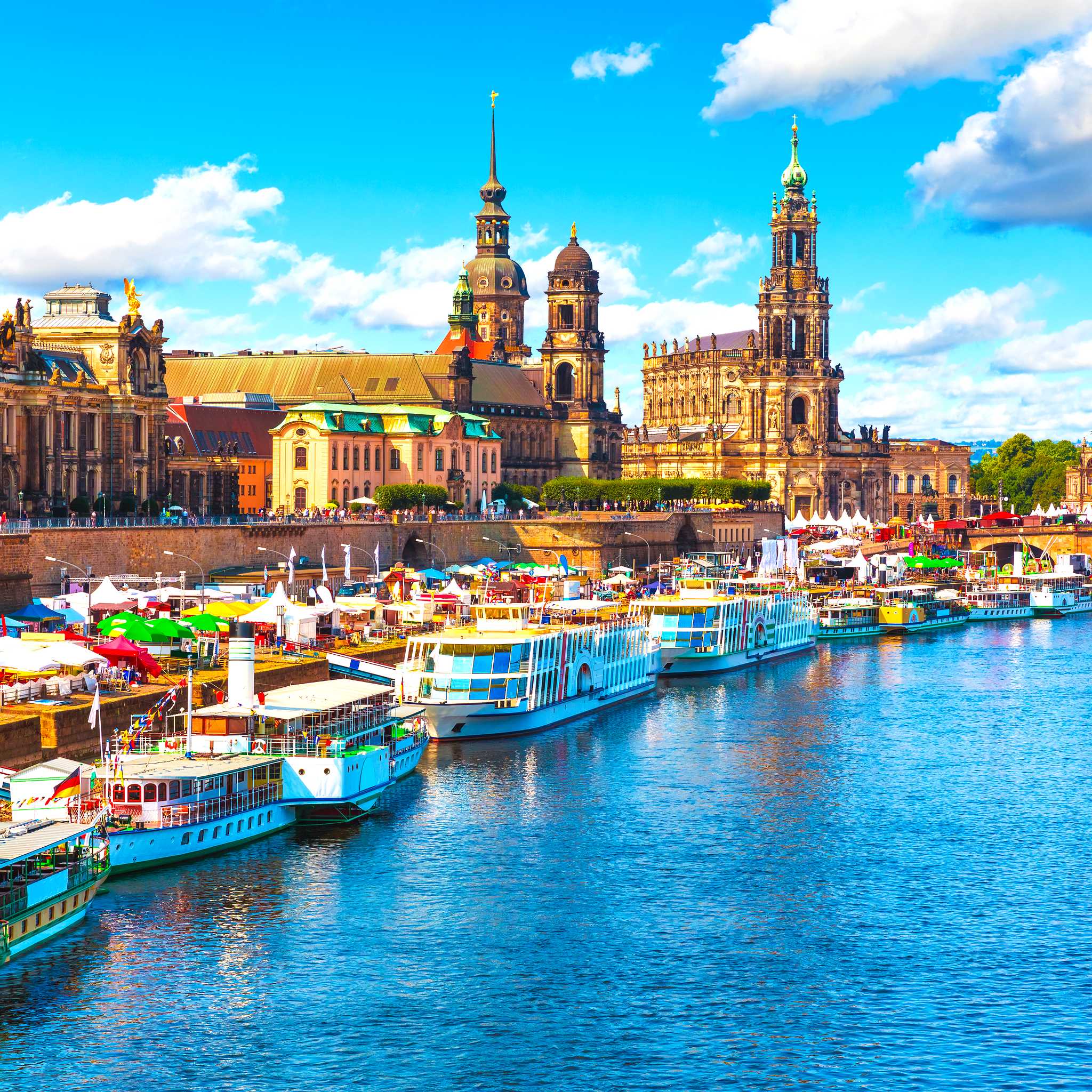
Due to World War II, much of Dresden was reduced to rubble and later rebuilt. Today, it is a thriving, modern city that still retains traditional German food and architecture.
Dresden's Old Town is mostly walkable but features many cobblestone streets that can be challenging for wheelchairs and strollers. The efficient tram system provides good accessibility for reaching different areas.
Dresden is very safe for visitors with low crime rates. The main concerns are occasional pickpocketing in crowded areas and public transport. Basic precautions like staying aware of surroundings are recommended.
Top attractions include the reconstructed Frauenkirche, the Baroque Zwinger Palace with its museums, the Semperoper opera house, and the world's largest porcelain artwork, the Furstenzug mural.
Germany uses the euro as its official currency. ATMs are widely available throughout Dresden, though credit cards are mainly accepted at larger establishments like hotels and restaurants rather than smaller shops.
Traditional Saxon dishes include sauerbraten (marinated roast beef), sossklopse (meatballs with caper sauce), and local specialties like Dresdner stollen (Christmas cake) available year-round at local bakeries.
German is the official language, but many people in Dresden speak English, especially in the tourism industry. Learning basic German phrases is appreciated by locals and helpful for navigation.
The best time to visit is late spring through early fall (May to September) when weather is warm and comfortable for walking. Spring offers blooming gardens while summer provides the longest daylight hours.