Tipping is customary but modest in Austria. In restaurants and cafes, it is usual to round up the bill or add about 5 to 10% for good service, handed directly to the server rather than left on the table. Small tips for taxis and friendly gestures at wineries are also appreciated.
Durnstein is a small, peaceful village considered very safe, with very low crime. The main things to watch are practical: the castle ruins have steep drops and no railings in places, so take care on the climb. Cobblestone streets can be uneven, and riverside paths call for normal caution, especially with children.
The village is tiny and easily explored on foot, with traffic diverted into a tunnel to keep the old town quiet. Cobblestone lanes and the steep path to the castle are challenging for wheelchairs and strollers, however. The riverside Danube path is flatter and gentler. Durnstein is also a stop on the scenic Wachaubahn railway.
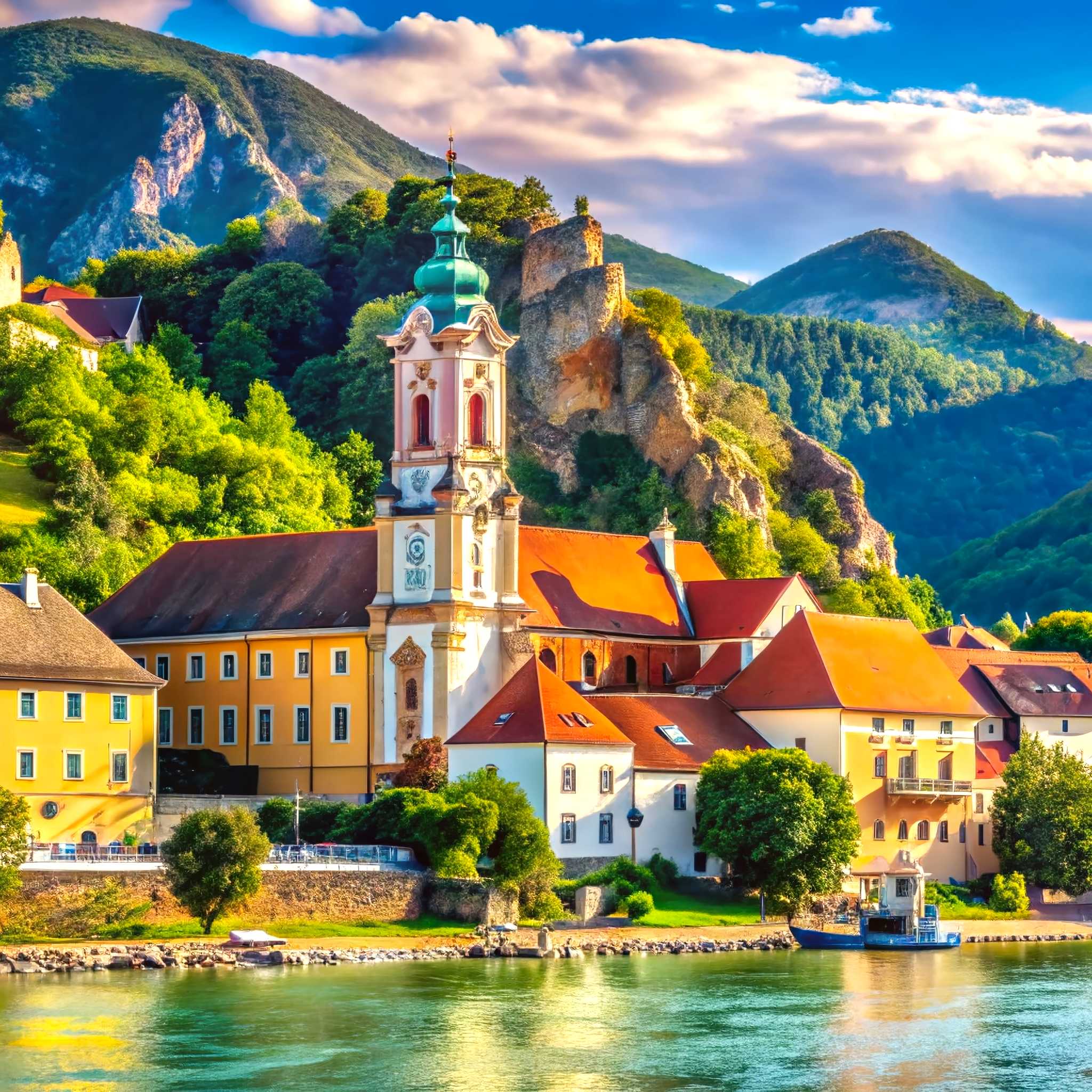
Hike about 20 minutes up to the medieval castle ruins for sweeping views over the Danube and vineyards. Visit the baroque abbey with its iconic blue tower, wander the cobblestone old town, and sample Gruner Veltliner and Riesling at local wineries. River cruises, vineyard walks, and bike rides along the Danube are also popular.
Austria uses the euro. Credit and debit cards are accepted at most hotels, restaurants, and larger shops, but smaller wine taverns, market stalls, and family-run spots in Durnstein often prefer cash, so carrying some euros is wise. ATMs are available in nearby Krems and other Wachau towns.
The Wachau Valley is celebrated for its white wines, especially crisp Gruner Veltliner and aromatic Riesling, best enjoyed at a cozy heuriger, or wine tavern. The region's prized apricots, known as Wachauer Marillen, appear in jams, liqueurs, chocolates, and dumplings. Pair local wine with hearty Austrian dishes for a memorable meal by the river.
German is the official language of Austria, spoken with a distinctive Austrian accent and local expressions. In Durnstein and the wider Wachau Valley, which welcomes many international visitors, English is commonly understood at hotels, wineries, and restaurants. A friendly "gruss Gott," the regional greeting, is always appreciated by locals.
Spring through early autumn, roughly April to September, is ideal. In spring the apricot orchards blossom in pink and white, while autumn brings the grape harvest and golden vineyards. Summer is warm and lively, with everything open. Many shops and sights close in late autumn and winter, though Durnstein's small ship Christmas market is a charming exception.