Elbląg sits roughly 55 km (34 miles) east of Gdańsk and around 80 km (50 miles) west of Kaliningrad's border region, making it a natural stop when traveling through the southern Baltic coast. Gdańsk to Elbląg takes approximately 45 to 60 minutes by private transfer depending on traffic. A Daytrip private transfer means door-to-door pickup at your hotel or rental, no changing trains or hunting for buses, and a local driver who can point you toward the canal highlights before you even arrive.
Four to six hours is enough to cover the main highlights comfortably. The reconstructed old town, St. Nicholas Cathedral, and the Museum of Elbląg fit naturally into a morning, leaving the afternoon for a walk along the canal embankment or a visit to the Gate of the Market. If you want to include a short boat excursion on the Elbląg Canal, plan for a full day. The city is compact and navigable on foot, so you won't lose time to complicated logistics.
Yes, and it is one of the more underrated day trip options in the region. Most visitors to Gdańsk focus on Sopot, Gdynia, or the nearby Malbork Castle, which means Elbląg sees a fraction of the tourist traffic despite being similarly accessible. The result is a city where the main sights are rarely crowded, restaurants and cafes cater primarily to locals, and the pace is noticeably calmer. For travelers who want to see something genuinely off the standard itinerary, Elbląg delivers without requiring much extra travel time.
The Elbląg Canal, built in the mid-19th century, solves an unusual engineering problem: it connects a series of lakes across terrain with significant elevation changes using inclined planes instead of conventional locks. Boats are physically transferred out of the water onto wheeled cradles and hauled up or down grass-covered slopes on rails. It is a functioning piece of 19th-century engineering that still operates today, and it remains one of the few examples of this technology anywhere in the world. Seeing a boat climb a hillside through farmland is genuinely memorable.
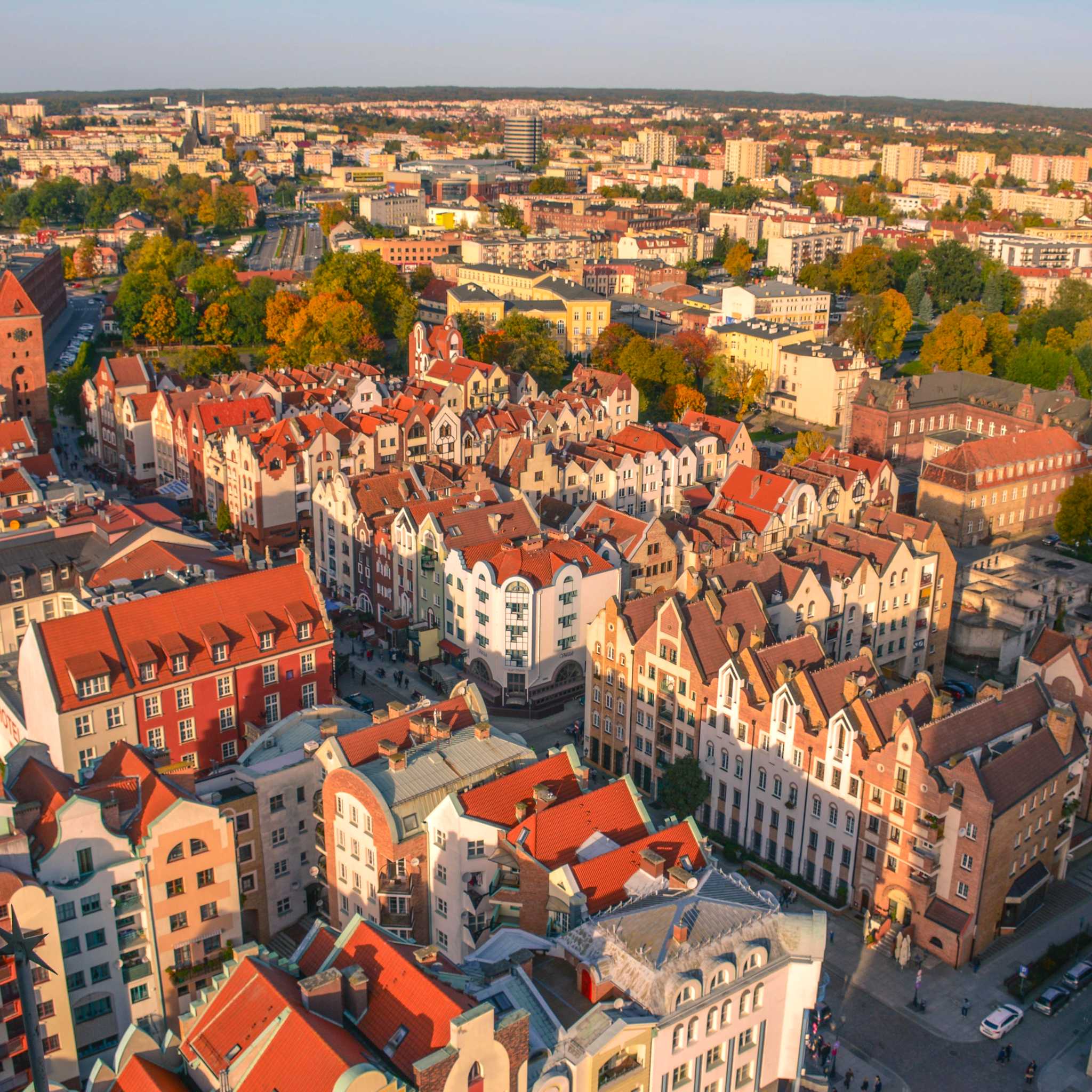
Elbląg is a city with a striking contrast at its core: a meticulously reconstructed medieval old town rising alongside a post-industrial port canal that dates back to Teutonic Knight rule. The reconstructed tenement houses along the Stary Rynek give the city a distinctive character unlike anywhere else in Poland, built from scratch after wartime destruction using historical records and deliberate modern interpretation. Add to that the nearby Elbląg Canal — one of the most unusual waterway systems in Europe, where boats are carried overland on rail-mounted slipways rather than through traditional locks — and you have a destination that genuinely surprises visitors.
Start with the Stary Rynek (Old Market Square) to understand what makes the city's reconstruction so architecturally distinctive — buildings that reference historical facades while being openly contemporary in detail. St. Nicholas Cathedral is one of the larger Gothic brick churches in the region and worth stepping inside. If time is short, skip a full canal boat tour and instead walk the canal embankment near the Old Town, where you get a clear sense of the waterway without committing to several hours on the water.