Grado pairs naturally with Aquileia, which sits just 11 km (7 miles) away on the mainland. Aquileia is a UNESCO World Heritage Site and one of the most significant Roman archaeological sites in Italy, with extraordinary floor mosaics in its own basilica that rival anything in Ravenna. Adding a stop there on your way to or from Grado turns the journey into a genuinely layered experience spanning Roman, early Christian, and Venetian history — all within a tight geographic area.
Grado sits about 50 km (31 miles) from Trieste, around 80 km (50 miles) from Udine, and approximately 135 km (84 miles) from Venice. Public transport to Grado involves multiple connections and can be time-consuming, particularly from Venice. A private transfer eliminates the transfers and waiting — your driver brings you directly to the island, and you set the departure time. For a destination that rewards arriving relaxed and ready to explore, door-to-door service makes a noticeable difference.
Most travelers find 5 to 7 hours is enough to explore the historic center, visit the Basilica di Sant'Eufemia, stroll the seafront promenade, and take a short lagoon boat ride to Barbana Island. If you want to linger on the beach or explore the lagoon more thoroughly by kayak or boat, building in a full day is worthwhile. The compact layout of the island means you can cover the main highlights on foot without rushing.
Yes. The beaches are the draw in summer, but outside peak season Grado reveals a quieter, more atmospheric side. The historic center and basilicas are far less crowded from autumn through spring, the lagoon takes on a different character for birdwatching and photography, and the town itself feels genuinely local rather than resort-driven. Many travelers find the off-season visit more rewarding for the history and the lagoon landscape — the Adriatic light in particular is striking outside the summer haze.
The Basilica di Sant'Eufemia is the centerpiece — a 6th-century church with some of the finest early Christian mosaic floors in northeastern Italy. The surrounding old town, known as the "castrum," is a tight maze of narrow alleys and small piazzas that rewards slow wandering. From there, the Grado Lagoon opens up everything else: a short ferry ride reaches Barbana Island and its centuries-old Franciscan sanctuary, while the Adriatic beaches stretch just beyond the historic quarter.
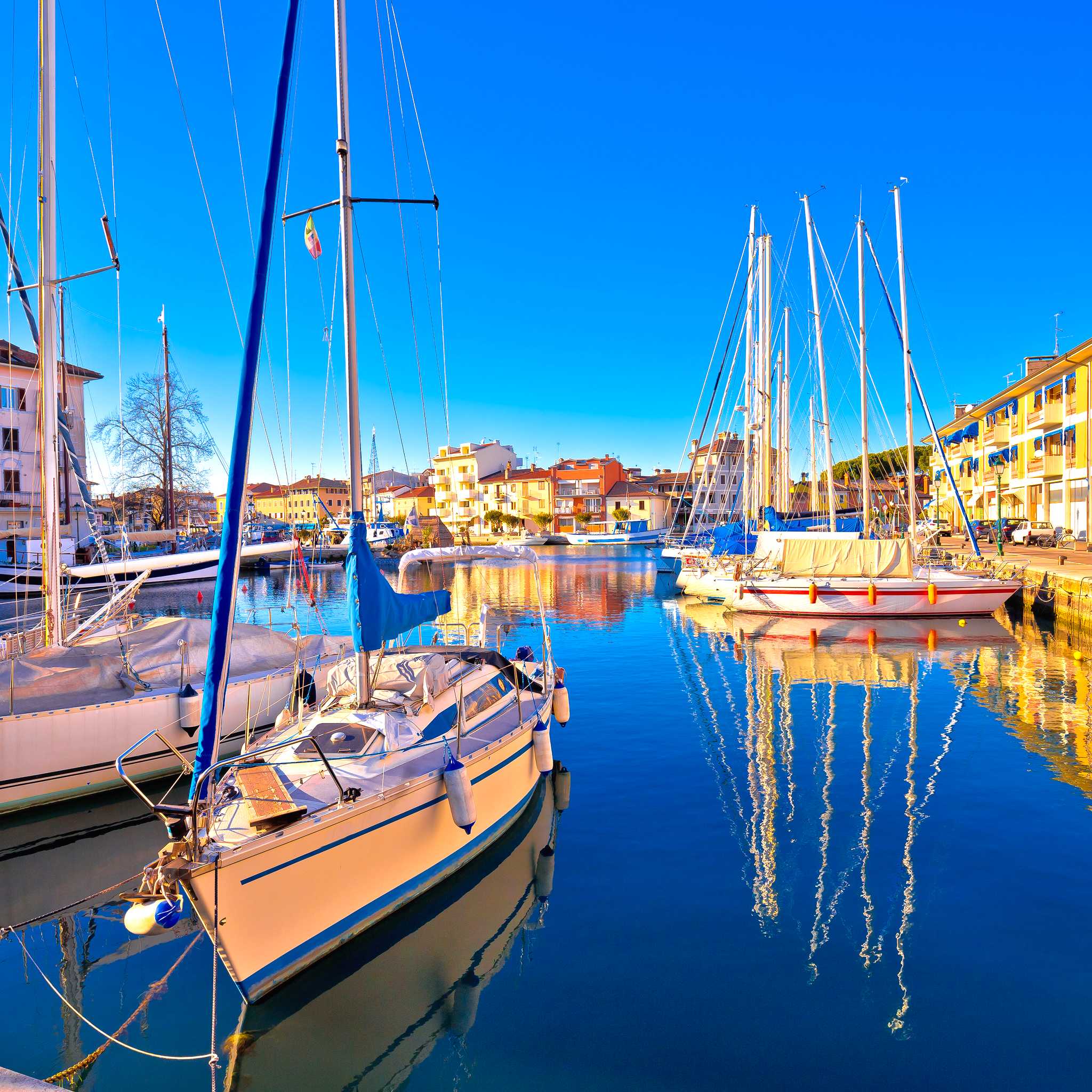
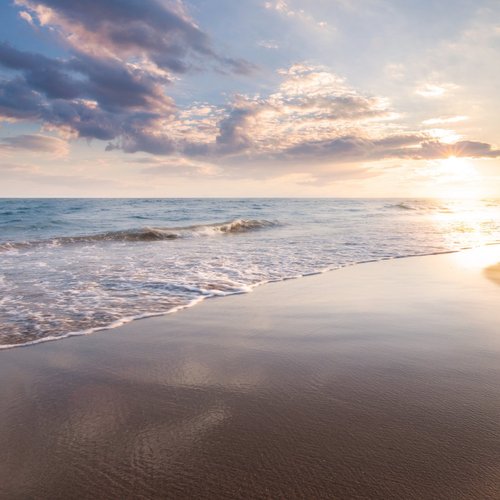
Grado is a rare combination of ancient history and Adriatic beauty, all packed onto a small island connected to the mainland by a causeway. You can walk through a 6th-century historic center with early Christian basilicas and mosaic floors in the morning, then be on a sandy beach or gliding across a 90 sq km lagoon by afternoon. Romans founded it as the port of Aquileia, Byzantines made it a patriarchal seat, and Venetians eventually inherited its legacy — few places this compact carry that much history.