A few of the park's protected trails require a free permit arranged in advance, and access to some routes can be restricted during the summer fire-risk season. Village walks and the many viewpoints around Grazalema need no permit, so it's worth checking current rules at a park visitor center if you plan to tackle one of the restricted routes.
Grazalema sits deep in the Sierra de Grazalema, about 113 km (70 miles) from Seville, 125 km (78 miles) from Malaga, 112 km (70 miles) from Cadiz, and just 32 km (20 miles) from Ronda, its closest gateway town. A private transfer typically takes around 1.5 to 2 hours from Seville, Malaga, or Cadiz, and about 40 to 50 minutes from Ronda, since the final stretch climbs through mountain roads.
A couple of hours covers the village center at an easy pace, while a half or full day leaves room for a short walk or a nearby White Town. Grazalema pairs naturally with Zahara de la Sierra or Ronda, both linked by the same Sierra roads, so it's easy to build a fuller day around it rather than visiting on its own.
Yes. The route between Grazalema and Zahara de la Sierra crosses the Puerto de las Palomas, a narrow mountain pass that climbs to around 1,180 meters, with sweeping views over the natural park and griffon vultures riding the thermals below. It's one of the most scenic stretches of road in Andalusia, not just a way to get from A to B.
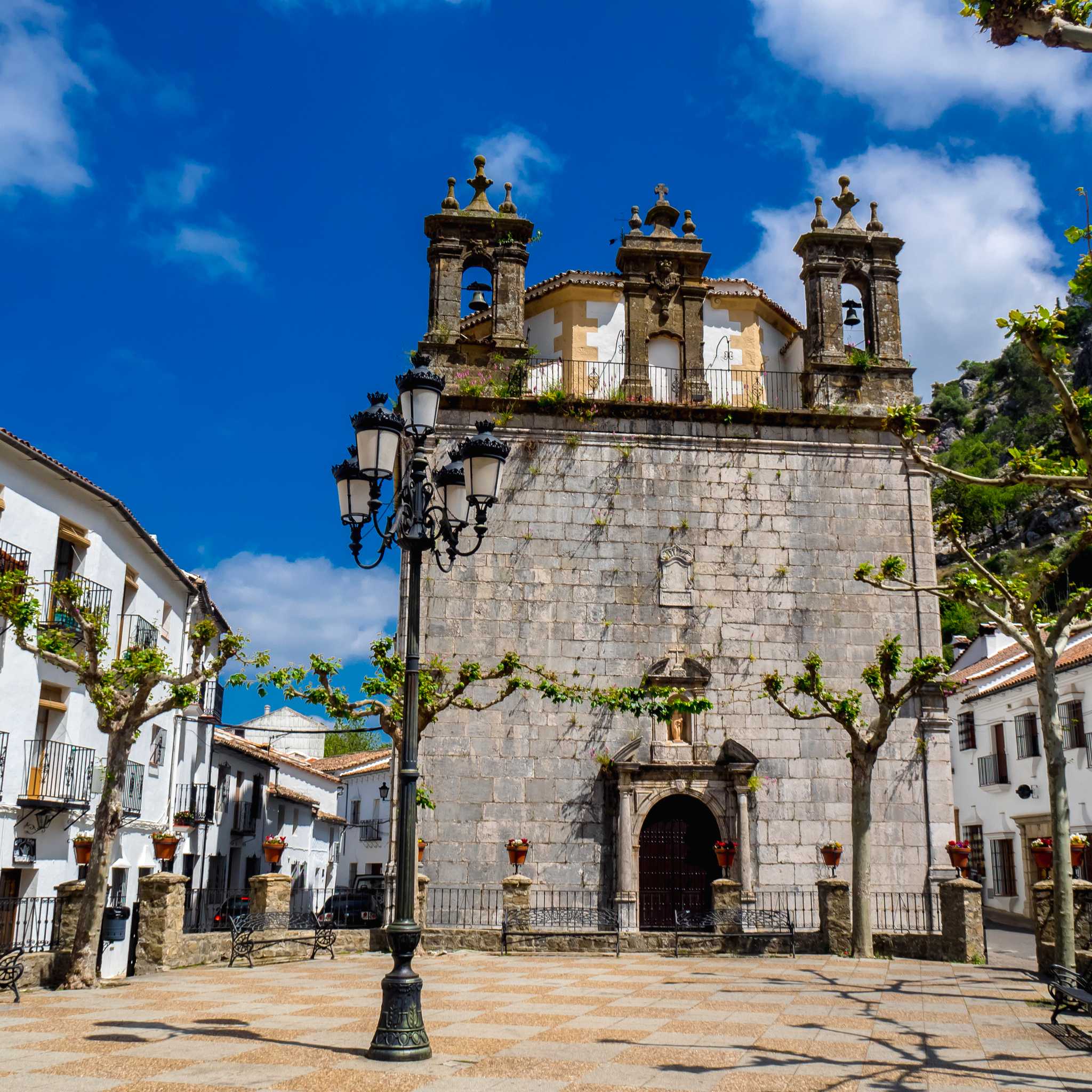
The historic quarter, a designated Property of Cultural Interest, is made for wandering: cobbled streets and whitewashed houses beneath the rocky Peñon Grande outcrop. Don't miss the Baroque Nuestra Señora de la Aurora Church, the Encarnación Parish, and the Traditional Textile Museum, where local artisans still work the looms behind Grazalema's famous wool blankets.
It holds the reputation as the rainiest place in Spain, and its lush, spring-fed setting sets it apart from drier neighboring villages. Its historic quarter earned Spain's National Tourism Award for town beautification, and the village is known for Payoyo cheese and generations-old wool weaving. With no train station and only limited bus connections through Ronda, a private transfer is the most direct way to reach and explore it.