Tipping is not customary in South Korea and is generally not expected. Restaurants, taxis, and cafes do not anticipate tips, and prices are usually all-inclusive. Some upscale hotels and restaurants may add a service charge to the bill. There is no need to leave extra, so you can simply pay the listed amount and enjoy your visit worry-free.
Gyeongju and South Korea generally are very safe, with low crime and a relaxed pace. The city is pleasant and well-lit at night, making evening walks to illuminated sites enjoyable. Use normal common sense with belongings in crowded areas. Take care with traffic when crossing roads, and watch your footing on uneven historic paths and around temple steps.
Gyeongju's historic core is compact, mostly flat, and very walkable, and bike rentals make it easy to cover more ground. Paved park paths around the tombs and ponds suit relaxed strolling. Some temples like Bulguksa and Seokguram sit on hillsides with steps and slopes, which can challenge wheelchairs and strollers, so plan those visits with extra time and assistance.
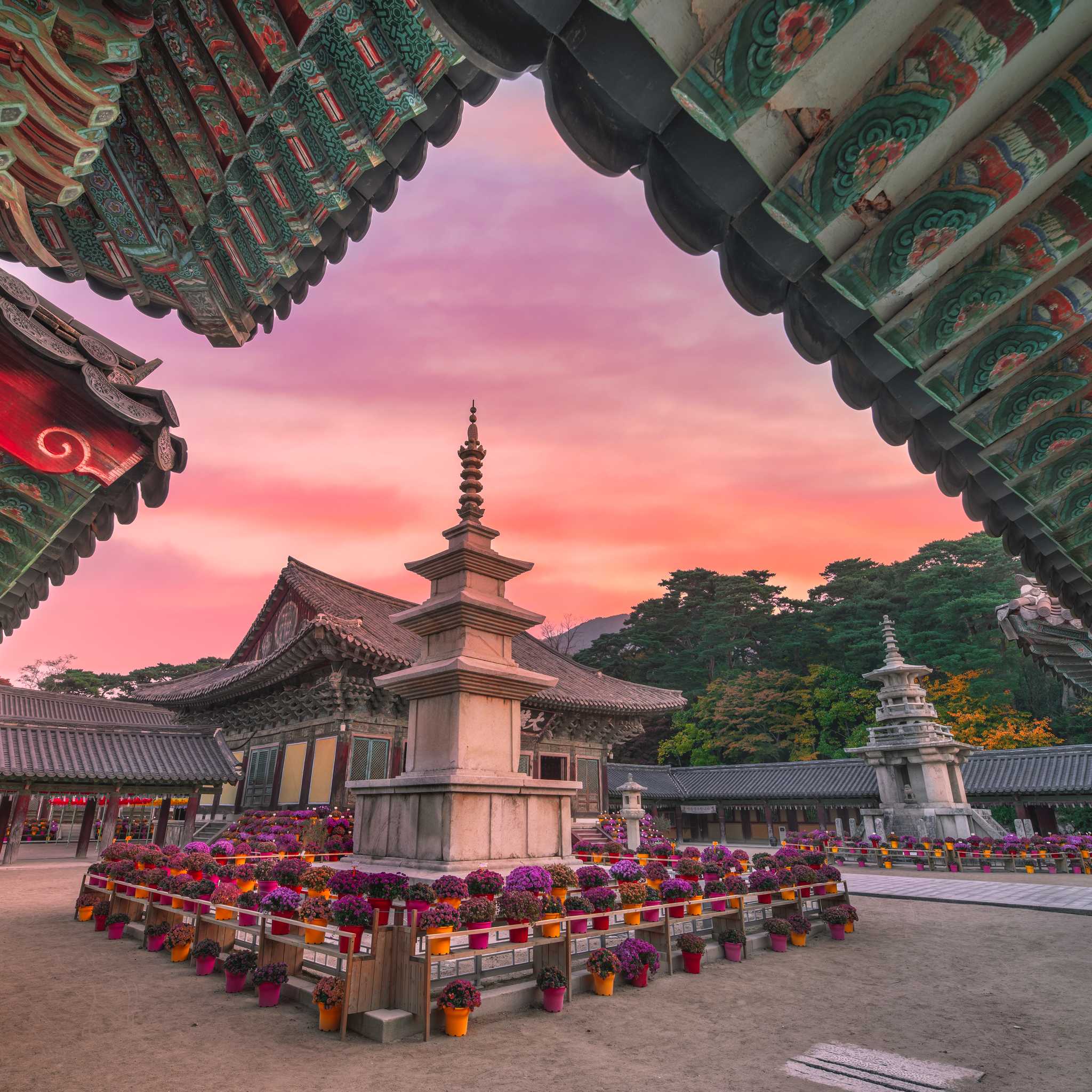
Wander the grassy royal mounds of Daereungwon Tomb Complex, see the ancient Cheomseongdae observatory, and visit Donggung Palace and Wolji Pond, beautifully lit at night. Explore the UNESCO-listed Bulguksa Temple and nearby Seokguram Grotto. Stroll the cafe-lined Hwangnidan-gil street, browse the National Museum, and rent a bike or hanbok to enjoy the historic core.
South Korea uses the South Korean won, abbreviated KRW. Cards and mobile payments are accepted almost everywhere, from major attractions to cafes and shops in Gyeongju, so you rarely need much cash. It is still handy to carry some won for small vendors, traditional markets, and snack stalls. ATMs that accept foreign cards are available around the city.
Korean is the official language of South Korea. In Gyeongju, English is less widely spoken than in Seoul, though signs, museum displays, and major attractions often include English, and many people in hospitality can help visitors. Translation apps are very useful, and learning a few phrases goes a long way with locals.
Korean cuisine centers on rice, savory side dishes, and kimchi. Try bibimbap, bulgogi, and Korean barbecue, plus hearty stews and street snacks. In Gyeongju, do not miss Hwangnam-ppang, a famous local pastry filled with sweet red bean, and the playful 10 won bread shaped like an old coin. Wash it all down with local tea or coffee.
Spring and autumn are the most popular times. April brings famous cherry blossoms around the tombs and lakes, while autumn paints the city in golden ginkgo and red maple leaves. Both seasons offer comfortable weather for walking and biking. Summer is hot and humid with occasional rain, and winter is cold but quiet, with fewer crowds at the sites.