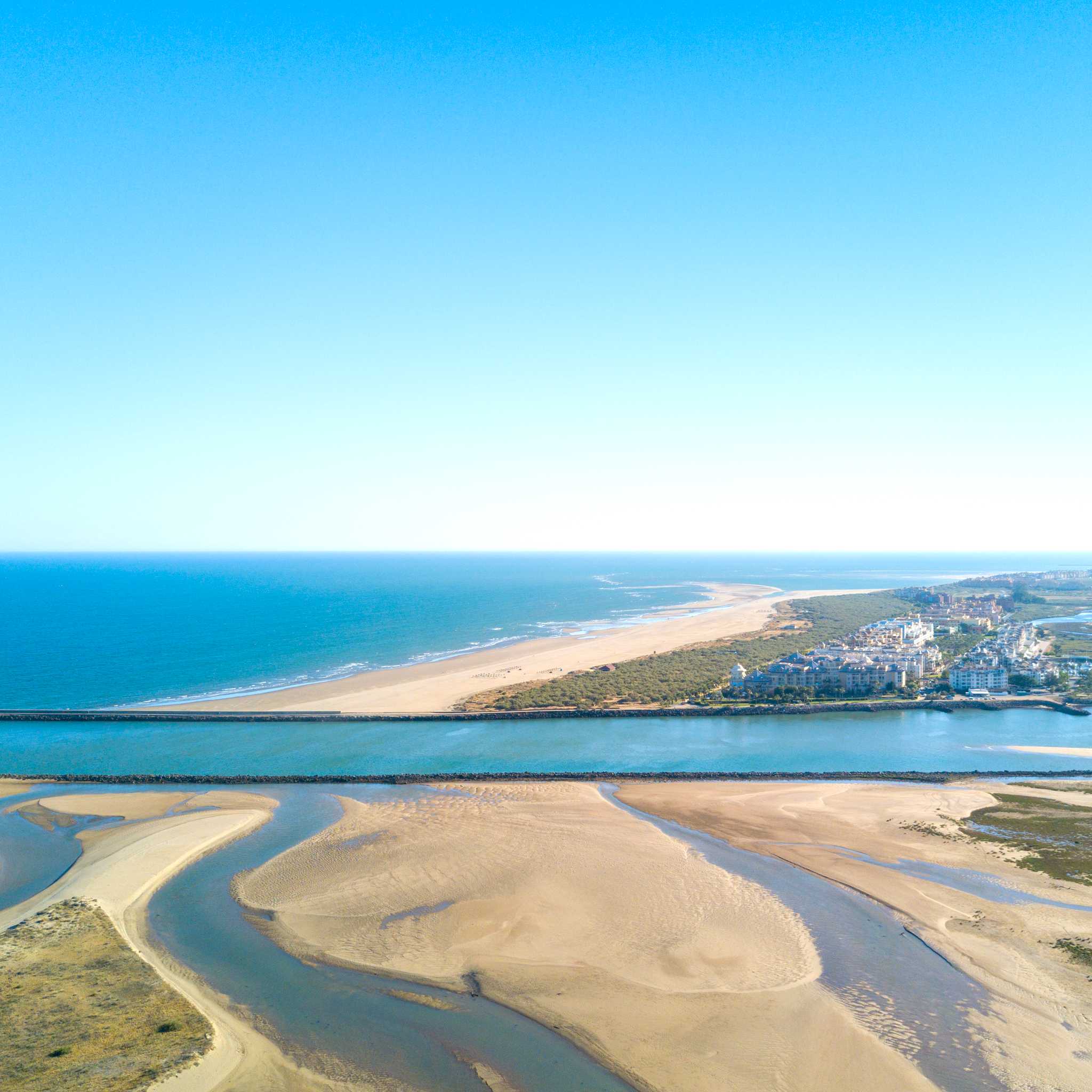
Yes — Huelva rewards those who explore further. The city's historic center centers on Plaza de las Monjas, surrounded by handsome early 20th-century architecture and the 15th-century Iglesia de San Pedro. The nearby town of Moguer, birthplace of Nobel Prize-winning poet Juan Ramon Jimenez, adds a literary dimension to the day and is generally quiet and easy to explore on foot. For nature lovers, Donana National Park — a UNESCO World Heritage Site and one of Europe's most important wetlands — is also accessible from Huelva, home to flamingos, Iberian lynx, and sweeping coastal landscapes.
Huelva sits roughly 95 km (59 miles) west of Seville, making it a natural fit for a full day out. Plan for around 6 to 7 hours on the ground to cover the Columbus trail at La Rábida, the Muelle de las Carabelas harbor, and a walk through the historic center. If you want to add a detour to nearby Palos de la Frontera — the actual departure point of Columbus' fleet — budget an extra hour or two. The journey itself takes around 1 hour each way, so you are back comfortably before evening.
For a day trip built around exploration, a private transfer gives you something trains and buses cannot — the freedom to shape your own itinerary. La Rábida monastery and the Muelle de las Carabelas are not in Huelva city center; they sit outside town and are difficult to reach on public transport. With a Daytrip driver, you can stop at both sites, continue into the city, and add Palos de la Frontera or Moguer without coordinating multiple buses or worrying about return schedules. Your driver waits while you explore, so the day moves at your pace rather than the timetable's.
The area around Huelva holds one of history's most consequential stories. At La Rábida monastery, founded in the 12th century, Franciscan friars championed Columbus' cause and helped him secure the royal support that made the 1492 voyage possible. Columbus himself stayed at the monastery in the weeks before departure. A short drive away at Muelle de las Carabelas, you can board full-scale wooden replicas of his three ships and get an immediate sense of just how small they were for crossing an ocean. The monastery's Mudejar cloister and 13th-century alabaster chapel are worth time on their own. Together, these sites form one of the most historically significant stops in all of Andalusia.
Huelva is where the story of the New World begins. This is the city whose port launched Columbus' 1492 voyage, and that history is still tangible today — from the La Rábida monastery where Columbus spent years seeking royal backing, to a harbor where you can step aboard life-size replicas of the Nina, Pinta, and Santa Maria. Beyond the Columbus trail, Huelva's historic center holds Gothic-Mudejar churches, Roman ruins, and the kind of authentic Andalusian atmosphere that crowds haven't yet discovered. Few cities pack this much layered history into a single day.
Start at La Rábida monastery in the morning when it is quietest — the Mudejar cloister and Columbus connection alone justify the visit. Walk or drive a few minutes to Muelle de las Carabelas to board the ship replicas before the midday heat builds. Spend the early afternoon in Huelva's historic center, then consider a short drive to Palos de la Frontera, where Columbus and his crew actually set sail in August 1492. That circuit covers the full Columbus trail and leaves room for a proper Andalusian lunch along the way. One well-paced day is genuinely enough to feel like you have understood this place.