A local public bus runs to the park entrance, but it means navigating schedules, transfers, and standing room with luggage or family in tow. A private transfer takes you straight from your hotel or the airport to the park gate on your own schedule, so you start the walkway experience relaxed instead of rushed.
Plan for around 2 to 3 hours inside Iguazu National Park. The Brazilian side is compact and efficient, with a 9 km (5.6 miles) walkway network delivering panoramic views without long treks. That makes it easy to pair with round-trip travel and still have time left in your day.
Yes. The Brazilian side's walkway is flat, paved, and short enough for all ages and fitness levels, with elevators available at key points. Optional nature hikes along the river are there for travelers who want more, but they're not required to see the highlights, making this one of the most accessible natural wonders you'll visit.
Each side has its own character. Brazil's 20% share of the falls gives you the big-picture, postcard views from a distance, ideal for a focused day trip. Argentina's 80% share means more up-close trails and boardwalks, but it demands a full day on its own. For travelers with limited time, the Brazilian side delivers the iconic view most efficiently.
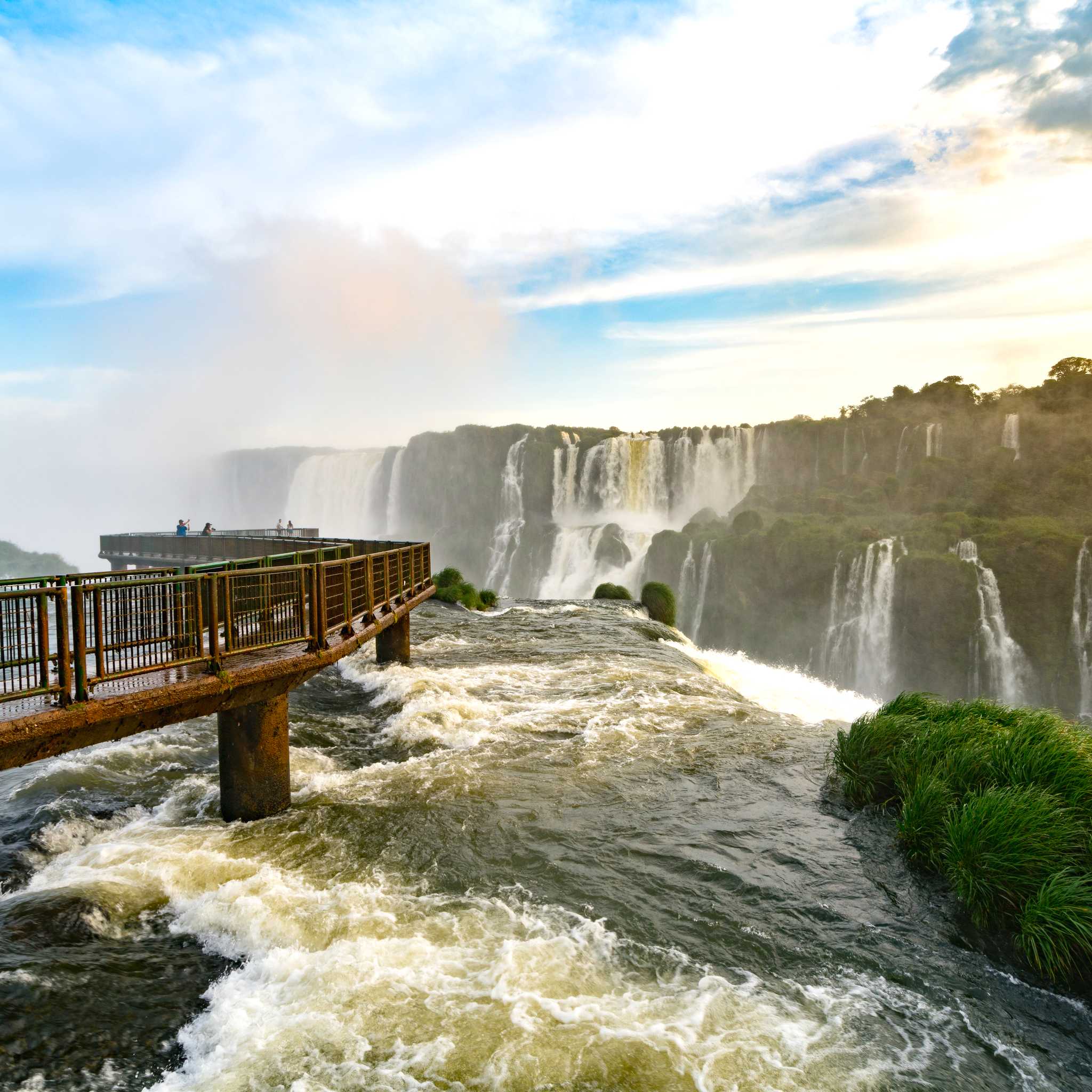
Iguazu is widely considered one of the largest waterfall systems on earth, spanning nearly 3 km (1.9 miles) of jungle and cascades. The Brazilian side rewards you with sweeping panoramic views you simply can't get elsewhere, culminating at the Devil's Throat, a thundering U-shaped cascade wrapped in mist. It's the kind of sight Eleanor Roosevelt summed up in three words: "Poor Niagara!"
The trail hugs the Iguaçu River canyon, opening up to view after view of cascading water before ending at a platform practically inside the Devil's Throat, where mist, rainbows, and roaring water surround you. Along the way, keep an eye out for coatis and colorful birds that make the rainforest setting feel alive, not just scenic.