Jeonju's center and Hanok Village are flat and very walkable, making it easy to explore on foot. Some village lanes are narrow and paved with uneven stone, which can be bumpy for strollers and wheelchairs. Visiting early in the day means thinner crowds and a calmer, more comfortable stroll through the quieter streets.
South Korea is considered one of the safest countries in the world, with very low crime rates, and Jeonju is no exception. Streets feel calm and welcoming, even at night. Standard common sense, like watching your belongings in busy markets, is enough. Solo travelers and families alike tend to feel comfortable exploring the city.
Tipping is not part of the culture in South Korea and is generally not expected at restaurants, cafes, taxis or hotels. Prices you see usually include service, and leaving extra money can even cause confusion. The best way to show appreciation is simply a polite thank you, which is always warmly received in Jeonju.
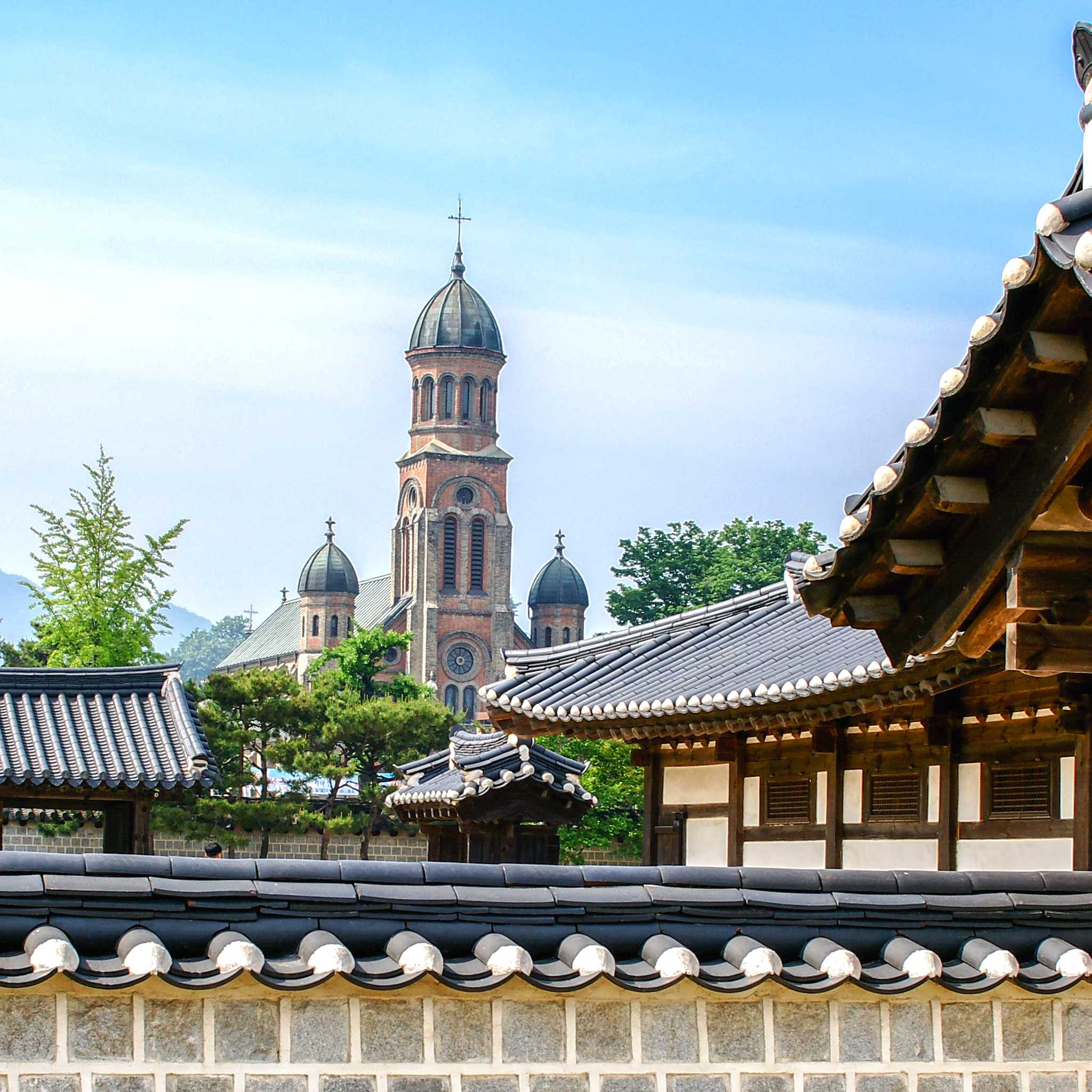
Jeonju Hanok Village is the highlight, with around 700 traditional homes, teahouses and craft studios. Don't miss the striking Jeondong Catholic Cathedral, Gyeonggijeon Shrine, the Omokdae hilltop viewpoint and the buzzing Nambu Market. The Jaman Mural Village and the National Intangible Heritage Center add color and culture, all within easy reach of the village.
South Korea uses the South Korean won (KRW). Credit and debit cards are accepted almost everywhere, including small shops and cafes, so you rarely need much cash. It is still handy to carry a little for traditional markets, street food stalls and older family-run spots in Jeonju, where small vendors may prefer cash payment.
The official language is Korean. In Jeonju you will find English signage at major attractions, transit hubs and many restaurants, and younger residents often speak some English. Learning a few basic Korean phrases is appreciated, and a translation app makes ordering food and asking for directions easy in smaller shops and markets.
Jeonju is the birthplace of bibimbap, served with beef, fresh vegetables and an array of side dishes. Also try kongnamul gukbap, a comforting bean sprout and rice soup, and hand-cut kalguksu noodles. Wash it down with locally brewed makgeolli rice wine, and pick up a famous choco pie from a local bakery for the road.
Spring, around April and May, and autumn, especially October, are the most pleasant times to visit Jeonju, with comfortable, mild weather. Spring brings cherry blossoms and the Jeonju International Film Festival, while autumn offers clear skies and the Bibimbap Festival. Summers can be hot and humid, and winters get cold, so pack accordingly.