Yes. Daytrip drivers are local specialists who know the region, and you can request stops along your route. Travelers moving between Hamburg and Lübeck, or continuing further along the Baltic coast, have natural opportunities to break the journey at smaller towns or landmarks that would otherwise require a separate trip. When you book, you choose which stops interest you and the itinerary is built around your schedule rather than a fixed group departure time.
The distance from Hamburg to Lübeck is approximately 65 km (40 miles). Trains run regularly and are a reasonable option, but they deposit you at the main station outside the historic center, requiring onward navigation with luggage. A Daytrip private transfer takes you door to door, so you arrive directly where you need to be. For travelers with a tight itinerary, or those visiting Lübeck as part of a longer journey between cities, a private transfer removes the transfer friction and lets you start exploring the moment you arrive.
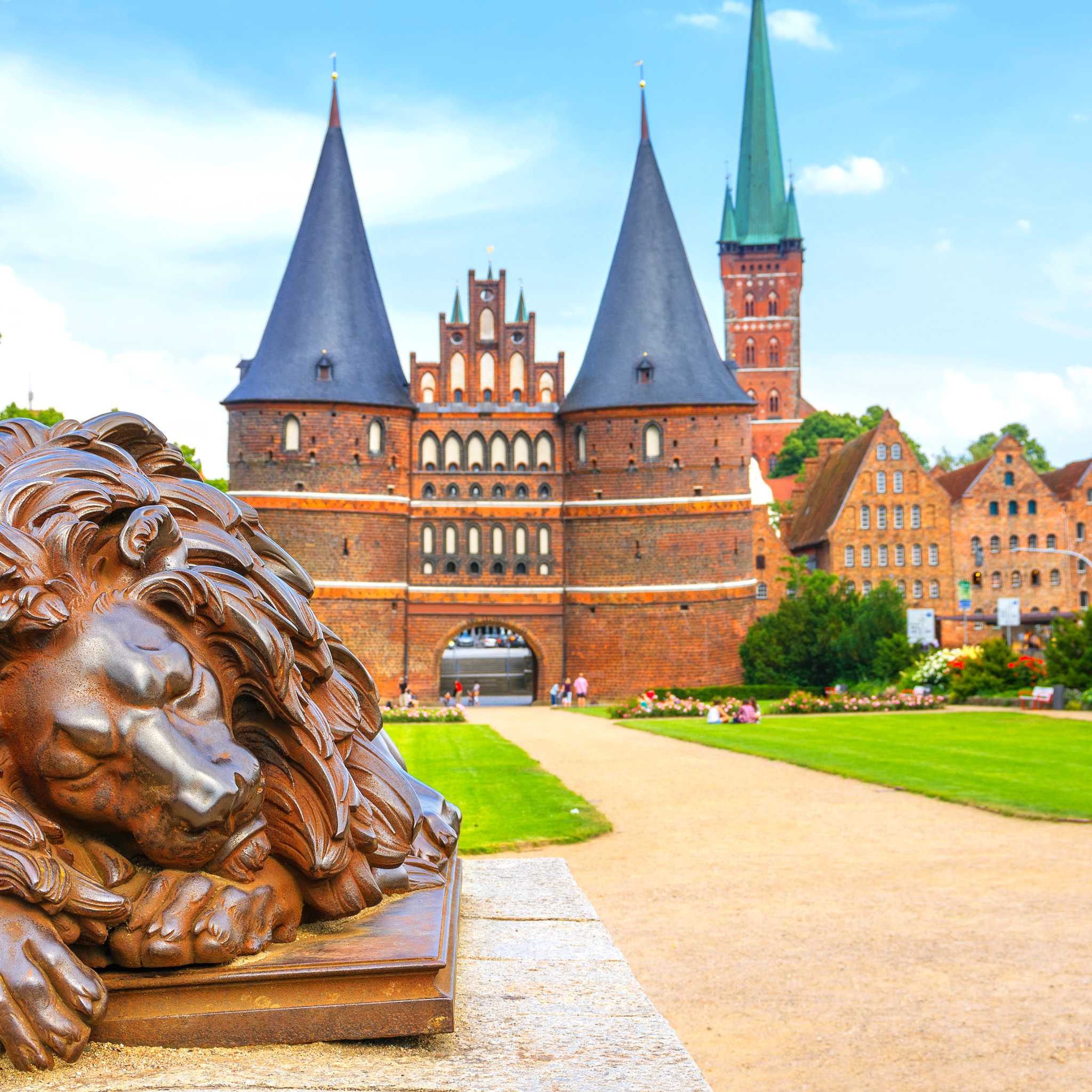
The Old Town is an island roughly 1 km (0.6 miles) long, which means the core highlights are genuinely walkable in a focused day. The Church of St. Mary, the Holstentor gate, the merchant quarter, and the marzipan shops are all within close proximity of each other. A day trip gives you enough time to explore without rushing if you arrive mid-morning and leave in the early evening. Travelers who want to go deeper into the city's museums or surrounding neighborhoods may prefer an overnight stay, but for a compelling and complete experience of what makes Lübeck special, a day is well spent.
Lübeck Marzipan is a world-renowned confection with centuries of history, made from a recipe rooted in the city's role as a trading hub for almonds and sugar. Lübeck's version is considered distinct in texture and quality from marzipan produced elsewhere, and the city's confectioners take that reputation seriously. Tasting it here, in the city where the tradition lives, is a genuinely different experience from buying it elsewhere. Most visitors build a stop into their Old Town walk, since the historic confectionery shops are clustered in the center and easy to combine with other sights.
The Church of St. Mary is Lübeck's finest ecclesiastical building and one of the most important Gothic churches in northern Europe. Built at the city's highest point, it holds the distinction of having the tallest brick-vaulted roof in the world, a feat of medieval engineering that still impresses today. Its design directly inspired at least 70 other churches built across the Baltic region, making it the architectural blueprint for an entire religious building tradition. A visit here is not just sightseeing — it is standing inside a building that shaped how a generation of builders conceived sacred space.
Lübeck is one of Germany's most visually complete medieval cities, and its entire Old Town is a UNESCO World Heritage Site. The island city is encircled by water and crowned by seven towers, with over 1,000 years of history packed into Gothic, Renaissance, Baroque and Neo-Classical architecture that has survived remarkably intact. Unlike many historic cities where heritage is scattered, Lübeck's Old Town is compact and walkable, meaning you can absorb centuries of Hanseatic merchant culture, explore narrow alleyways, and step inside architectural masterpieces like the Church of St. Mary without losing hours to logistics.