每位乘客可以携带一件大行李(29" x 21" x 11" / 74 x 53 x 28 cm)和一件小行李(22" x 14" x 9" / 56 x 36 x 23 cm)。豪华轿车最多可容纳 2 件大行李。我们始终会为您安排最合适的车辆,以确保您的行李能够容纳。如有超大行李,或您不确定行李是否能放下,请 联系我们。
Most travelers find 4 to 5 hours in Mahdia comfortably covers the main highlights. The medina is compact and walkable, so you can pass through the Skifa Kahla, explore the Great Mosque, browse the textile souks, and take in the dramatic sea views from the promontory without feeling rushed. If you have a full day, the slower pace of haggling in the souks and stopping at a seafront cafe makes the experience far richer. A Daytrip booking lets you set your own departure time and linger as long as you like, rather than racing back for a fixed bus or train schedule.
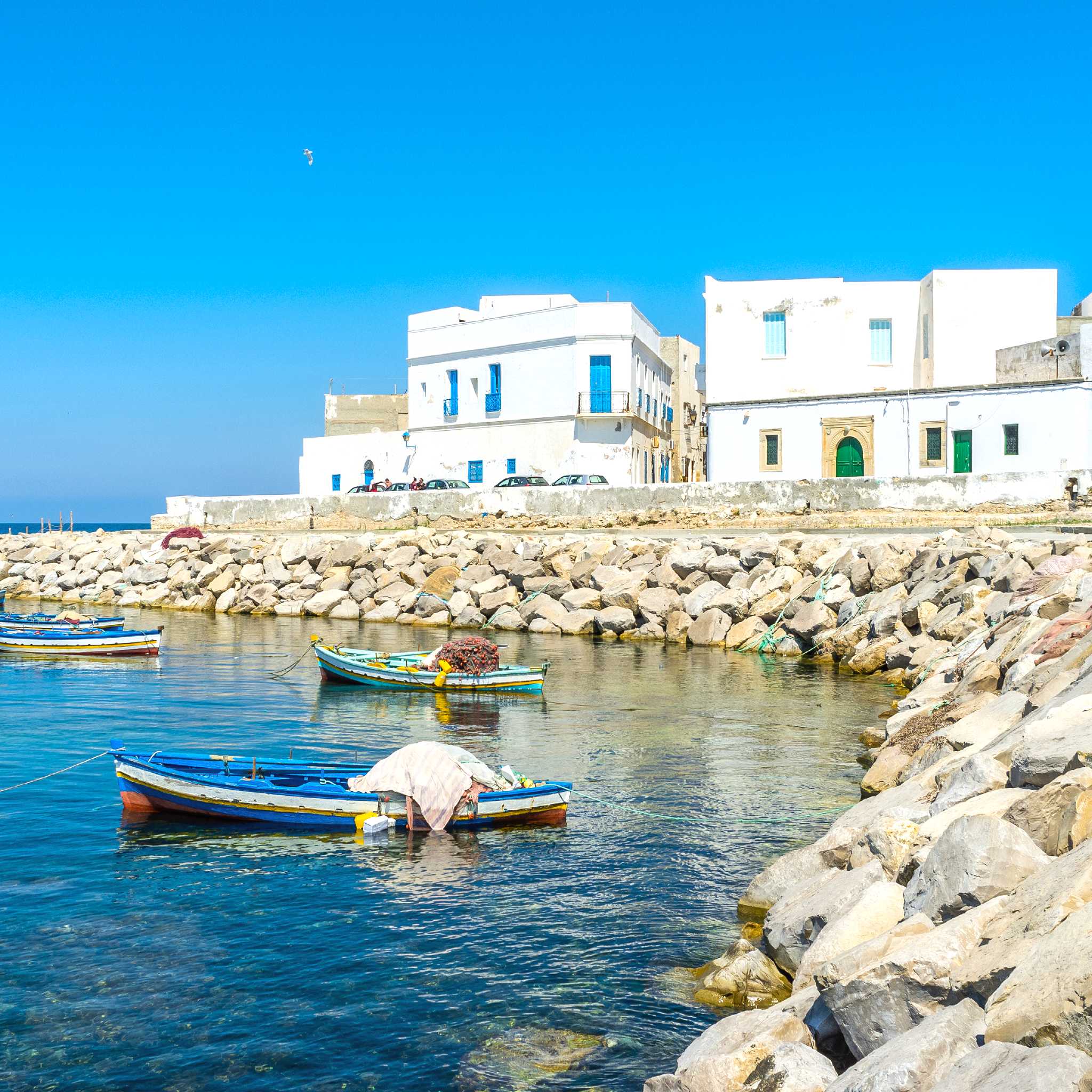
History is the headline, but Mahdia has real depth beyond the medina. The promontory setting means the city is surrounded on three sides by the Mediterranean, and the coastal views from the old town are genuinely striking. The town itself has a relaxed, unhurried atmosphere that feels distinct from the busier resort areas of the Tunisian coast — there are seafront restaurants serving fresh catch, quiet streets to wander, and a pace that rewards slowing down. For travelers coming from larger cities or resort strips, Mahdia offers something rarer: a place that is historically rich and visually beautiful without being built around tourism.
The Skifa Kahla, which translates as the "black gate," is the monumental fortified entrance to Mahdia's historic medina. Built in 916 during the Fatimid period, it served as the primary defensive gateway to a city that was one of the most strategically important ports on the North African coast. Its walls are extraordinarily thick — designed to withstand prolonged sieges — and they did their job well enough that the gate and many structures behind it have survived to the present day. The gate is now attached to the town museum, so visitors can pair the physical experience of walking through a millennium-old fortification with the historical context that explains why it was built the way it was.
Mahdia punches well above its size when it comes to historical significance. This compact promontory city was the first capital of the Fatimid dynasty, a civilization that went on to shape the entire medieval Islamic world. Walking through the Skifa Kahla, a monumental gate built in 916, into a medina that has survived centuries of sieges gives you a genuine sense of layered history that most Tunisian coastal towns simply cannot offer. Add the architectural curiosity of the Great Mosque — designed after Roman temples rather than traditional Islamic models — and the colorful textile souks, and a single day here covers ancient Roman origins, early Islamic civilization, and living North African culture all at once.
Mahdia has a long-standing reputation as one of Tunisia's centers for traditional textile production, particularly silk and woven fabrics. The souks inside the medina are the best place to find these goods, and bargaining is both expected and part of the experience. Arriving with a rough sense of what interests you — whether decorative textiles, clothing, or handwoven pieces — helps focus your time. Going with a private driver rather than a tour group means you are not on someone else's schedule, so if you find yourself deep in a negotiation or want to double back to a stall you passed earlier, you have the freedom to do so.
Mahdia is most commonly visited from Sousse, roughly 75 km (47 miles) away, or from Monastir, approximately 60 km (37 miles) away, making either city a natural base for a day trip. From Tunis, the journey is around 220 km (137 miles) and better suited for travelers who want to combine Mahdia with other central Tunisian stops along the way. From Djerba, the distance is approximately 290 km (180 miles), which works well as a longer scenic transfer with sightseeing stops en route rather than a straight day trip.