You do not need to join a tour group. A private transfer gives you full control over your itinerary—when you leave Hanoi, how long you spend in the valley, and when you return. Tour groups typically follow a fixed program with limited time at each stop. Traveling independently with a dedicated driver means you can linger in the villages longer, take an unplanned detour to a viewpoint, or simply leave when you are ready rather than when the group is.
Mai Chau is approximately 150 km (93 miles) from Hanoi. The journey typically takes around 3 to 3.5 hours each way, passing through mountain roads and the dramatic Thung Khe Pass. A private transfer is the most practical way to make this trip, as it gives you flexibility over your departure time and allows you to stop at scenic viewpoints along the route rather than following a fixed schedule.
Yes, the route is well-traveled by private vehicles. The drive follows Highway 6 out of Hanoi, climbing into the mountains of Hoa Binh Province before descending into the Mai Chau valley. The highlight is the Thung Khe Pass, also called the White Cloud Pass, where the views across the forested ridges are genuinely impressive. Road conditions are generally good, though the mountain section involves winding curves, which is another reason a professional driver makes the experience more comfortable than attempting it yourself.
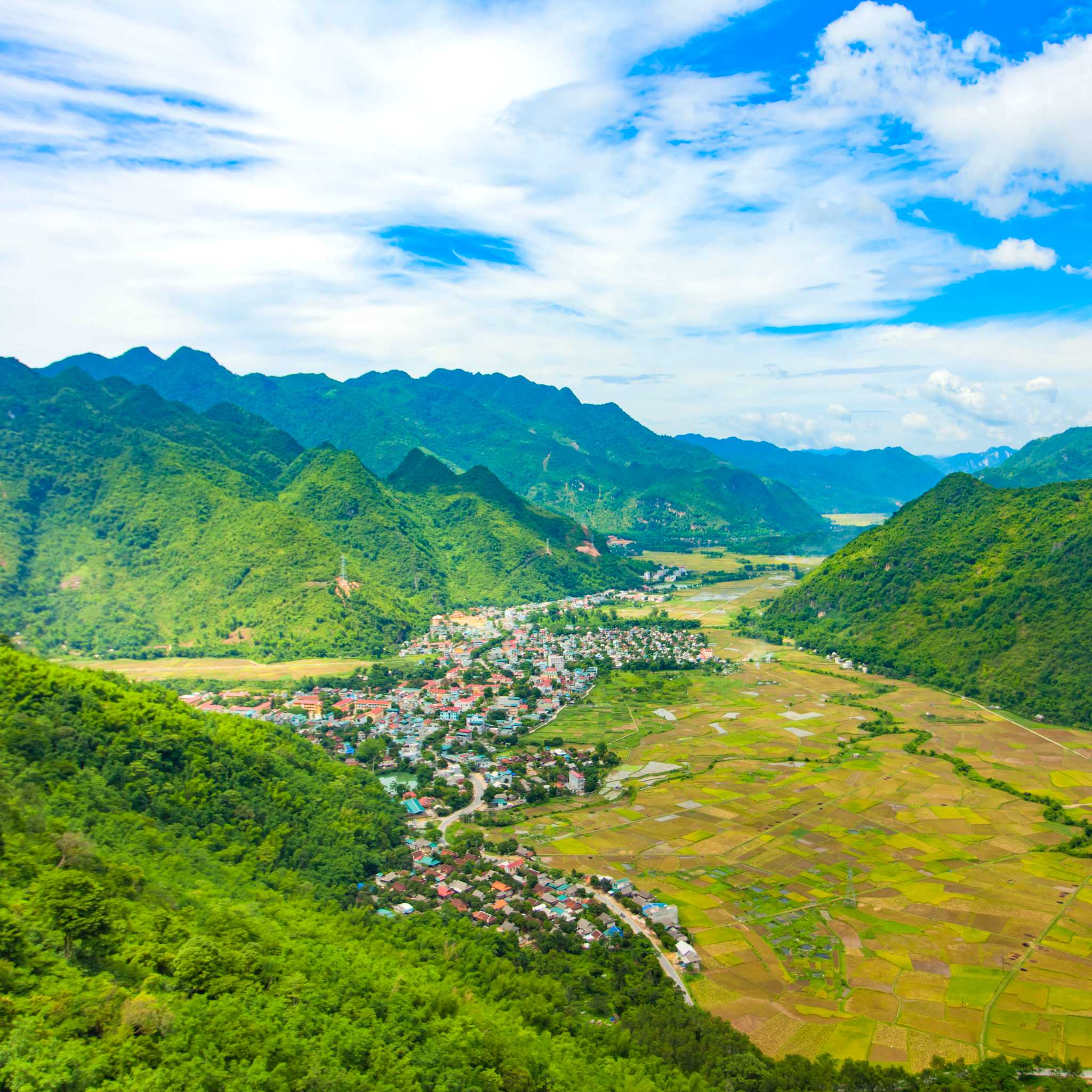
A full day is enough to get a meaningful experience. Most visitors spend time walking or cycling between the villages of Lac and Pom Coong, stopping to explore stilt houses and watch artisans at work. The surrounding paddy fields are best in the morning light. If time allows, the short hike up to the valley viewpoint rewards you with a panoramic perspective of the whole basin. Plan to arrive by mid-morning to make the most of daylight hours.
Mai Chau offers a striking contrast to Hanoi's urban energy. The valley is defined by terraced rice paddies, traditional White Thai stilt villages, and a slower pace of life rooted in ethnic minority culture. You can walk or cycle through working farmland, visit local households, and watch traditional weaving—all within a single day. It is one of the few places close to Hanoi where the landscape and way of life feel genuinely unchanged by tourism.
A few practical points help you get the most out of the visit. The valley is home to White Thai communities, so dressing modestly when entering villages is appreciated. Most villagers sell handwoven textiles directly, and buying from them supports local livelihoods more directly than purchasing from roadside shops. Bring cash, as card payment is not widely available. The weather in the valley can differ from Hanoi—mornings tend to be cooler and occasionally misty, especially outside the dry season—so a light layer is worth packing.