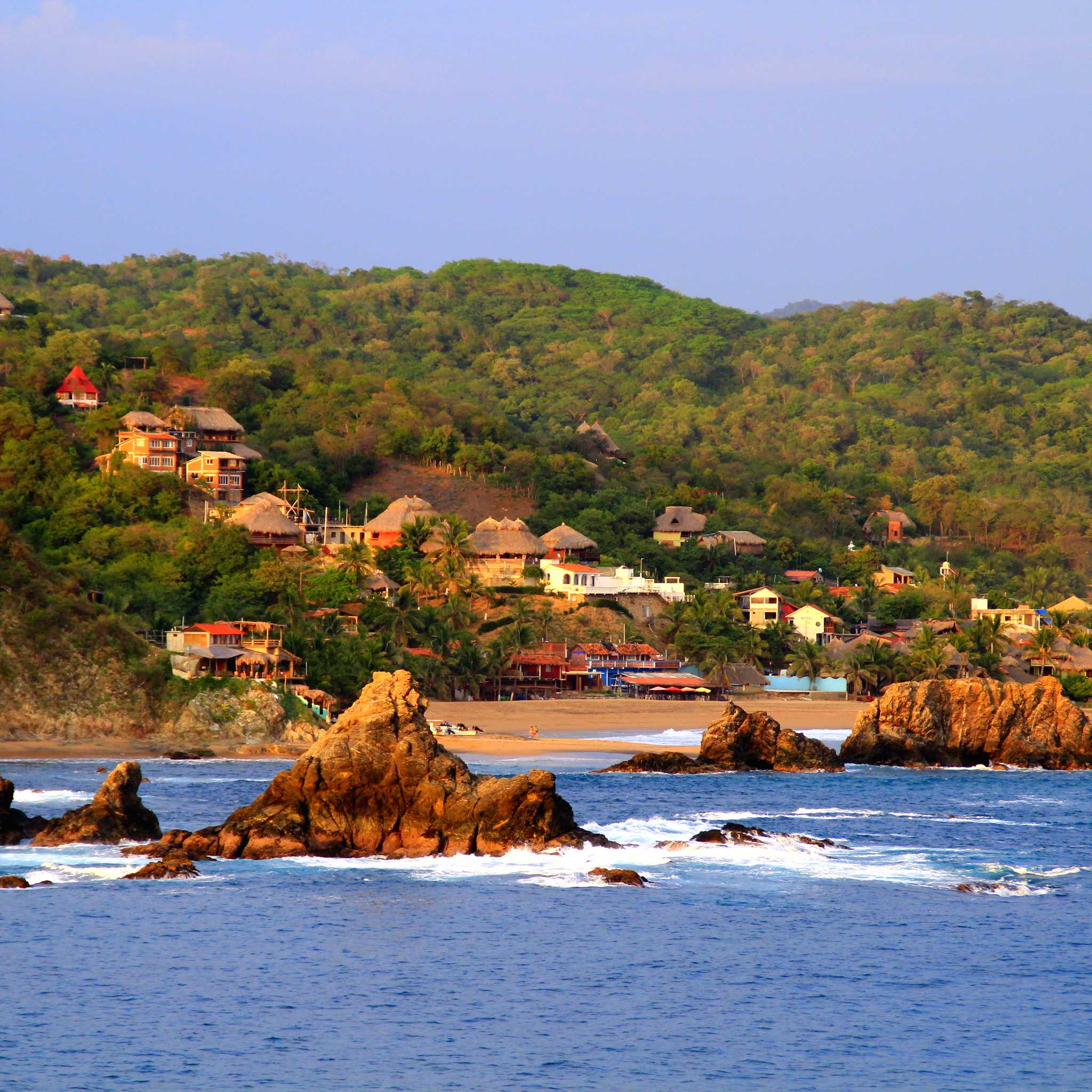
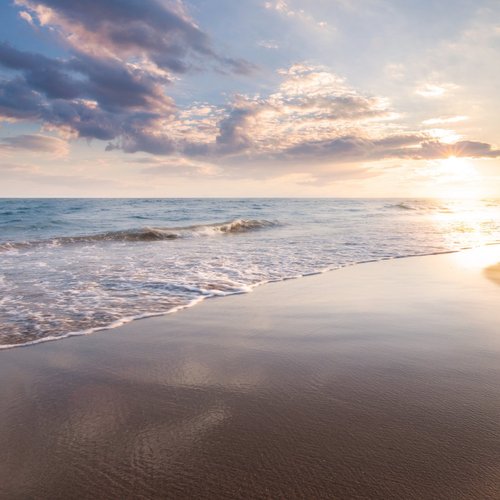
Mazunte is a compact, informal village with one main unpaved road and steep paths leading to many beaches and viewpoints. Wheelchair accessibility is very limited, as most terrain is hilly, sandy, or rocky. Strollers can manage the main street with some effort, but reaching beaches and attractions like Punta Cometa involves rough paths not suitable for wheels.
Mazunte is generally considered a safe destination. Oaxaca is one of Mexico's more stable states, and the small beach town has a peaceful, community-oriented feel. As always, exercise normal caution, especially after dark when streets are poorly lit, and keep an eye on your belongings at the beach. Most visitors report feeling completely at ease throughout their stay.
Tipping is customary in Mexico. Leaving 10-15% at restaurants is standard, and 20% is considered generous and very appreciated. In a small community like Mazunte, where many workers depend on seasonal income, tipping makes a meaningful difference. Always carry small bills, as many local places cannot easily make change for large notes.
Hiking to Punta Cometa for sunset is a beloved ritual, as the dramatic rocky headland is the southernmost point of Oaxaca. The Centro Mexicano de la Tortuga lets you learn about sea turtle conservation. Laguna Ventanilla offers crocodile boat tours and birdwatching. Nearby Laguna Manialtepec is one of the few places in the world where you can swim among bioluminescent plankton after dark.
Mexico uses the Mexican peso (MXN). Mazunte is a small, largely cash-based town, so it's important to bring pesos before you arrive. ATMs in Mazunte are limited, charge high fees, and can run out of cash during busy periods. Withdraw money in larger towns like Puerto Escondido or Huatulco before making your way to Mazunte.
Spanish is the official language of Mexico. In Mazunte, English is not widely spoken outside of hotels and a handful of restaurants that cater to international visitors. Learning a few basic Spanish phrases will make your trip smoother and more enjoyable, and locals always appreciate the effort.
Fresh seafood is a highlight, with grilled fish, ceviche, and shrimp dishes widely available. The town's wellness culture means healthy, plant-based, and organic options are abundant alongside traditional Oaxacan staples. Try local tamales, tlayudas (a large, crunchy tortilla with toppings), and fresh tropical fruit smoothies. Organic coffee from the Oaxacan highlands is excellent here.
November through April is considered the best time to visit. The weather is warm and dry, the ocean is calmer, and you may even spot migrating humpback whales offshore. The rainy season runs from May through October, bringing afternoon downpours and higher humidity. Summer visits can still be rewarding but expect occasional heavy rains and more insects.