Monchique is about 25 km (16 miles) from Portimão, 30 km (19 miles) from Lagos, and around 65 km (40 miles) from Faro, though the narrow, winding roads climbing into the Serra de Monchique make travel take longer than the distance suggests. A Daytrip driver handles those mountain roads for you, leaving you free to take in the views instead. Half a day comfortably covers Fóia and Caldas de Monchique, while a full day allows time for the handicraft shops and a slower mountain lunch.
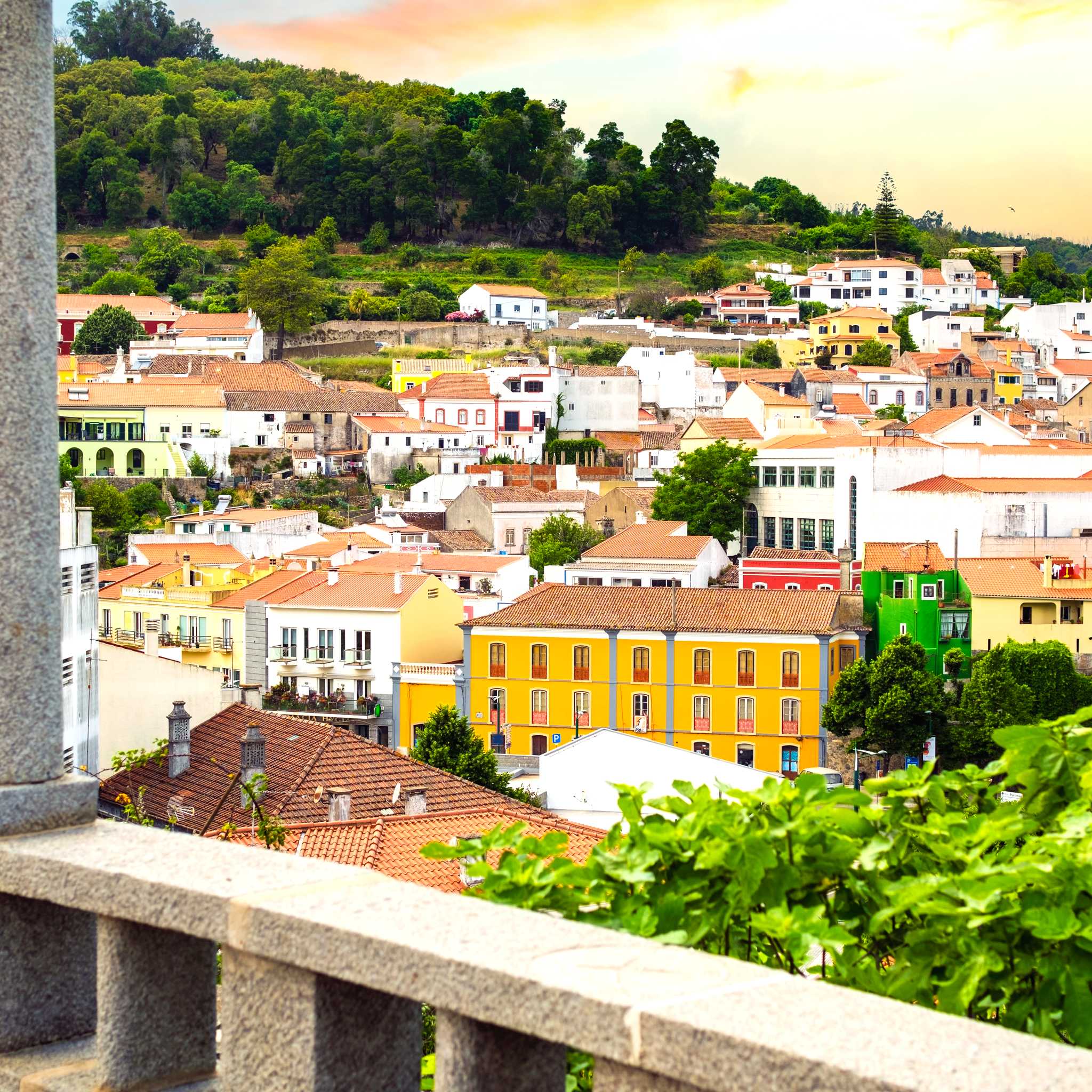
Monchique town itself rewards a slow walk, with workshops selling local handicrafts, including the wooden folding chairs the area is known for, along with cork and ceramic pieces. The surrounding hills hold one of the last substantial pockets of cork oak and chestnut woodland in the Algarve, with short walking trails if you want to stretch your legs between stops.
Caldas de Monchique is a small spa village about 6 km (4 miles) south of Monchique town, built around natural thermal springs that have drawn visitors for centuries. Its cluster of pastel buildings and shaded, forested valley feel quieter and more romantic than the hillside market town above it. Most day trips combine both: the springs and gardens of Caldas, then the shops and views of Monchique proper.
Fóia is widely regarded as the highest point in the Algarve, rising to around 902 meters in the Serra de Monchique. On a clear day, the summit delivers sweeping views across the mountains, down to the Algarve coastline, and out toward the Atlantic. Parking sits close to the top, so it's an easy, high-reward stop without a demanding hike.
Monchique is known for medronho, a strong spirit distilled from wild arbutus berries, often sold alongside local honey and smoked sausages. Mountain restaurants lean into hearty dishes built around chestnuts and roast pork, a contrast to the seafood-heavy menus down on the coast. It's one of the better places in the Algarve to pick up edible souvenirs you won't find in the beach towns.
The Algarve is known for its beaches, but Monchique sits inland in a different world entirely. The Serra de Monchique mountains are cooler and greener, covered in cork oak, eucalyptus, and chestnut forest instead of sand and sun loungers. It's a short detour that shows a side of the region most coastal visitors never see: misty peaks, thermal springs, and quiet mountain villages.