Two to three hours is enough to walk the village, reach the castle ruins, and take in the views without rushing. The village is small but the terrain is steep and uneven, so wear comfortable shoes and pace yourself. If you're combining Monsanto with other stops along your route — such as the nearby walled medieval city of Castelo Branco or the schist village of Idanha-a-Velha — half a day works well as part of a broader regional itinerary.
The village is built on a steep hillside with cobblestone paths and uneven rocky surfaces throughout. Reaching the castle at the summit requires a sustained uphill walk. Travelers with mobility limitations may find the terrain challenging, though the lower parts of the village are still worth exploring and offer impressive boulder-integrated architecture without the full climb. Arriving by private car means you can be dropped close to the village entrance and spend your energy on the experience itself rather than on logistics.
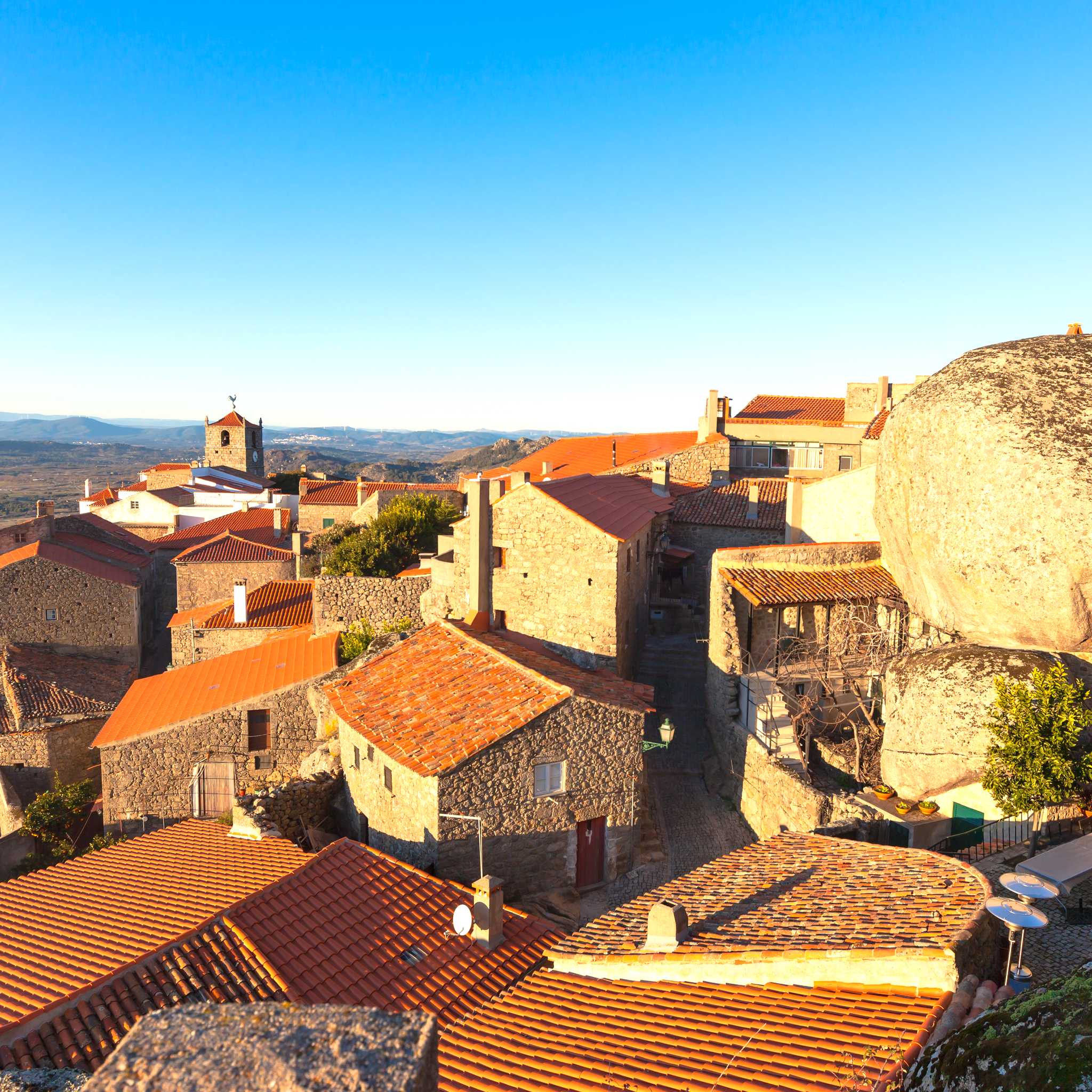
The village itself is the attraction. Wander the steep, narrow lanes and look for houses tucked under boulders the size of houses. Climb to the Castle of Monsanto, a 12th-century fortress perched at the summit, for sweeping views over the border region of Beira Baixa. Along the way, you'll pass the Chapel of São Miguel da Memória, built partly into the castle ruins, and the eerie remains of a Roman temple. Give yourself time to simply explore — every corner reveals something unexpected.
Monsanto is one of Portugal's most extraordinary villages, where ancient granite boulders aren't just part of the landscape — they're part of the architecture. Houses are built around and beneath massive rocks, caves serve as walls and roofs, and the entire hillside feels like a living prehistory. It was famously voted the "most Portuguese village in Portugal" in 1938, and a visit today still feels completely otherworldly. For travelers who want something genuinely unlike anywhere else in Europe, Monsanto delivers.
Monsanto is a living village with a small permanent population, so it's quieter and more authentic than heavily commercialized heritage sites. There are a handful of local cafés and restaurants where you can try regional dishes like chanfana (slow-cooked goat) and local wines, but dining options are limited — arrive with flexible expectations. Most visits work best in the morning before tour groups arrive. There's no large parking area in the village itself, so coordinating your arrival with a driver who can wait nearby makes the whole experience far smoother.
Monsanto sits in Portugal's Beira Baixa region, close to the Spanish border in the eastern interior. It's roughly 300 km (186 miles) from Lisbon and about 190 km (118 miles) from Porto. The village is set in a remote, mountainous landscape with limited public transport connections, which makes getting there independently time-consuming and logistically awkward. A private transfer is the most practical and comfortable way to reach it, especially if you want to stop and enjoy the scenic countryside along the way.