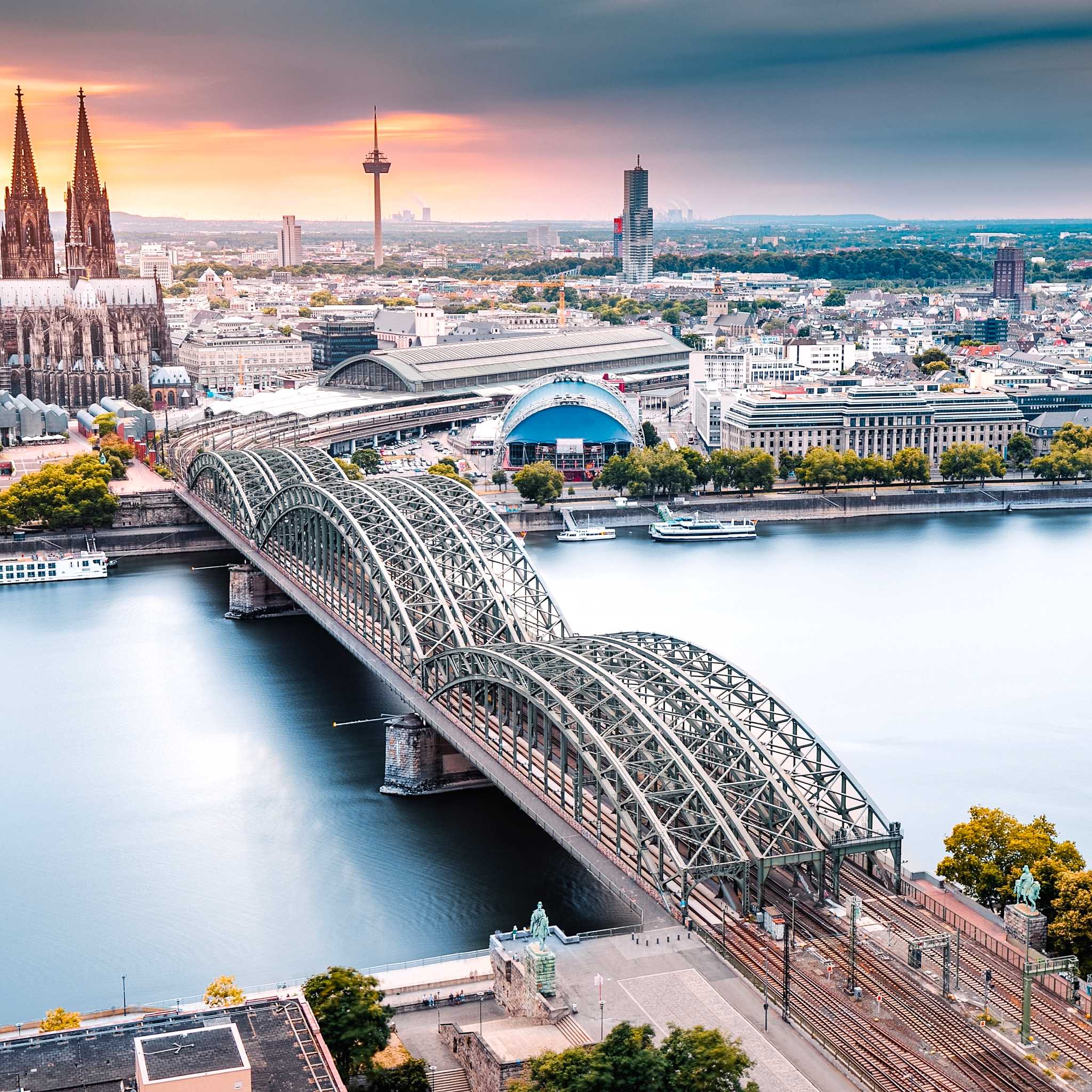
Yes, and this is one of the real advantages of traveling by private transfer. The route from Aachen to Monschau passes through the Eifel highlands, and nearby points of interest include the spa town of Bad Aachen and the Hohes Venn nature reserve. If you are traveling from Cologne — approximately 100 km (62 miles) away — the route offers additional flexibility for a scenic detour. Your Daytrip driver can suggest a stop that fits your timing and interests, turning the transfer itself into part of the experience.
Monschau sits roughly 30 km (19 miles) southeast of Aachen in the Eifel highlands. By private transfer the drive takes around 45 to 60 minutes depending on traffic and the scenic route taken. Public transport requires a combination of trains and regional buses with connections, which can stretch the journey significantly and limits your flexibility once you arrive. A private transfer lets you set your own schedule and gets you directly to the town without navigating multiple connections.
Plan for around 4 to 6 hours to see the town comfortably. Spend the first hour or two exploring the cobbled lanes and the exterior architecture of the half-timbered houses. The Red House interior tour takes roughly 45 minutes on its own and is worth prioritizing. Leave time for the Felsenkeller Brewery and Museum, a stop at the mustard mill, and a slow lunch or coffee in one of the historic cafes. The town rewards a relaxed pace — rushing it would be a shame.
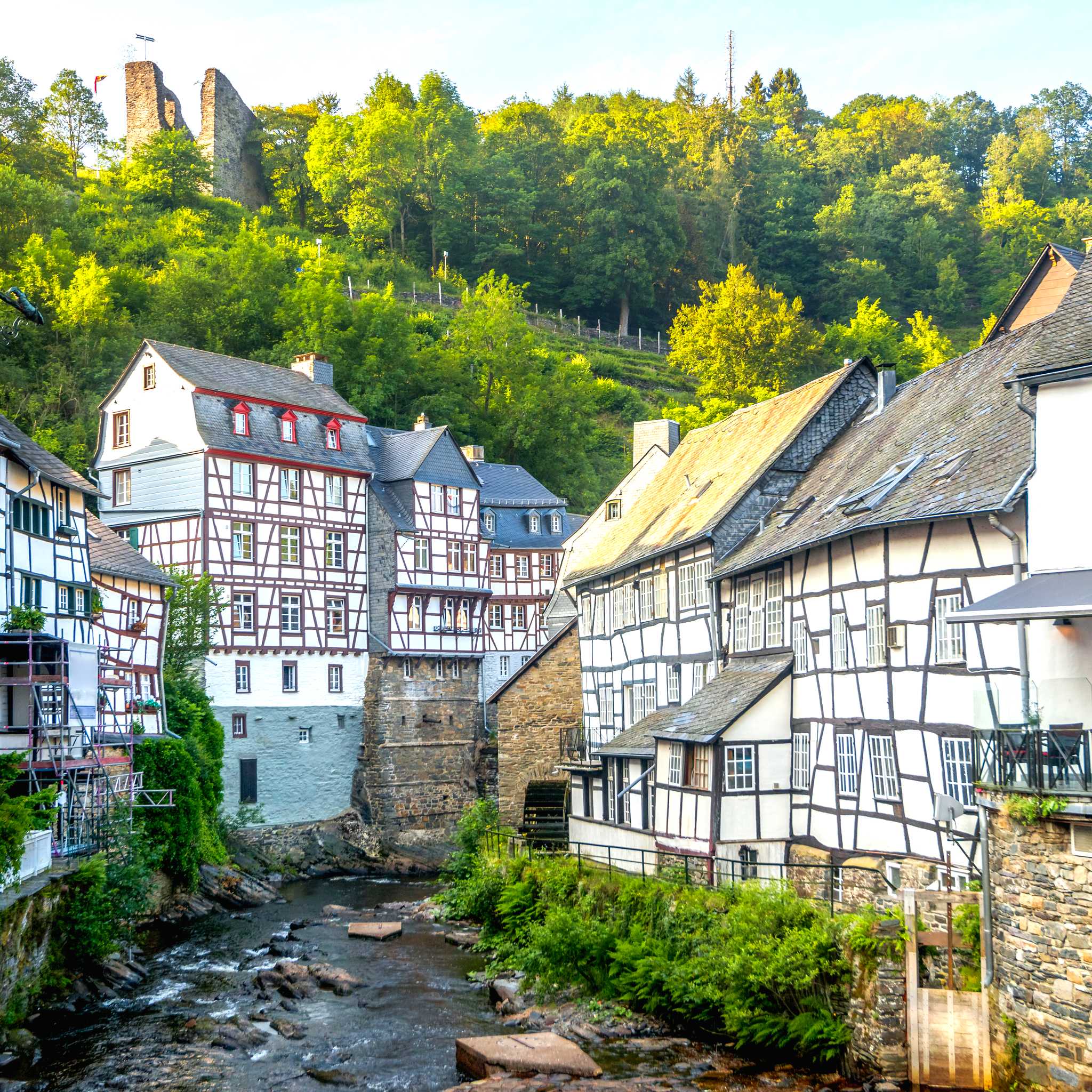
Absolutely. Monschau is one of Germany's best-preserved medieval towns, and its compact size makes it ideal for a day trip. The historic center is small enough to explore thoroughly in a single day, yet rich enough to fill every hour — from the cobbled lanes lined with half-timbered houses to the landmark Red House, the Felsenkeller Brewery and Museum, and the local mustard mill. It feels genuinely unchanged from 300 years ago, which is rare and worth the journey.
The Red House is an 18th-century merchant mansion built by the Scheibler family, who made their fortune in Monschau's textile trade. Its red-brick facade stands apart from every other building in town, which is striking against the rows of half-timbered houses surrounding it. Inside, the rooms are decorated in Rococo, Louis XVI, and Empire styles — an extraordinary level of opulence for a town this size. The centerpiece is a self-supporting oak staircase with detailed carvings depicting each stage of textile production. It is one of the most unusual and well-preserved interiors in the entire Eifel region.
Most historic German towns were heavily damaged during World War II and subsequently rebuilt. Monschau is a genuine exception — the town center survived largely intact, which means the architecture is authentic rather than reconstructed. The half-timbered houses, the narrow lanes, the riverside setting along the Rur, and landmarks like the Red House and the ruined castle on the hill above town are all original. For travelers who have visited reconstructed old towns elsewhere in Germany, Monschau offers something noticeably different: the real thing.