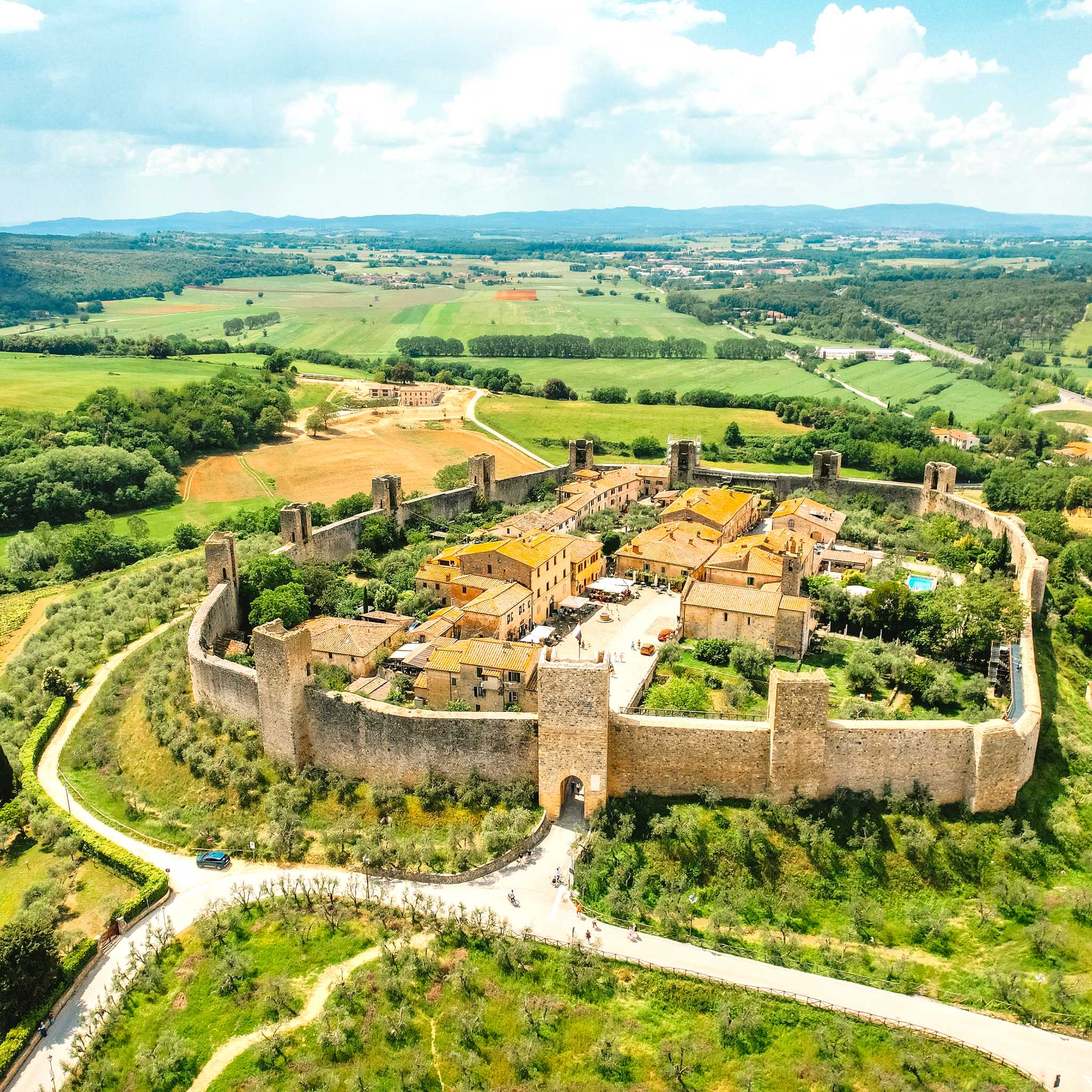
Monteriggioni is a very compact village and can be seen in as little as one to two hours. A complete walk along the walls, a visit to the Monteriggioni in Arme Museum, a stroll through Piazza Roma, and a peek inside the church of Santa Maria Assunta is comfortable within a half-day. This makes it a great addition to a broader Tuscan itinerary.
Monteriggioni has uneven cobblestone streets and some steps, which can be challenging for strollers and wheelchairs. The main piazza is relatively flat, but the wall walkway involves steps and is not wheelchair-accessible. It is best to check in advance with specific sites if you have mobility needs.
Tipping is not mandatory in Italy, but it is a kind gesture for good service. In restaurants, leaving a euro or two per person is appreciated. Some establishments include a "coperto" (cover charge) on the bill, which covers bread and table service. For taxi drivers, rounding up the fare is a common courtesy.
The main highlights are the medieval walls and 14 towers, which offer panoramic views of the Tuscan countryside. Piazza Roma is the heart of the village and a lovely spot to relax over a coffee. The Monteriggioni in Arme Museum displays replicas of medieval armor and weapons. Nearby, the 11th-century Abbadia a Isola abbey is worth a short detour.
Italy uses the euro (EUR). Credit and debit cards are accepted in most restaurants and shops, but it is always a good idea to carry some cash for smaller purchases, market stalls, or museum entry fees. ATMs are available in nearby towns such as Siena, which is about 20 minutes away.
The best time to visit is spring (April to June) or early fall (September to October) when the weather is pleasant and crowds are smaller. July brings the popular Monteriggioni Medieval Festival, when the town fills with costumed reenactments and markets. Avoid the peak summer heat if you prefer a quieter, more relaxed visit.
Italian is the official language of Italy. In a small village like Monteriggioni, English is less widely spoken than in larger cities, but staff at restaurants and shops generally manage basic communication with visitors. Learning a few simple Italian phrases is always appreciated.
The area around Monteriggioni is rich in Tuscan culinary traditions. Must-try dishes include ribollita (a hearty vegetable and bread soup), pici cacio e pepe (thick hand-rolled pasta), wild boar ragu, and bistecca alla Fiorentina. Local Chianti wine and Vernaccia di San Gimignano pair beautifully with most meals. Many restaurants in and around the village serve authentic recipes made with regional ingredients.