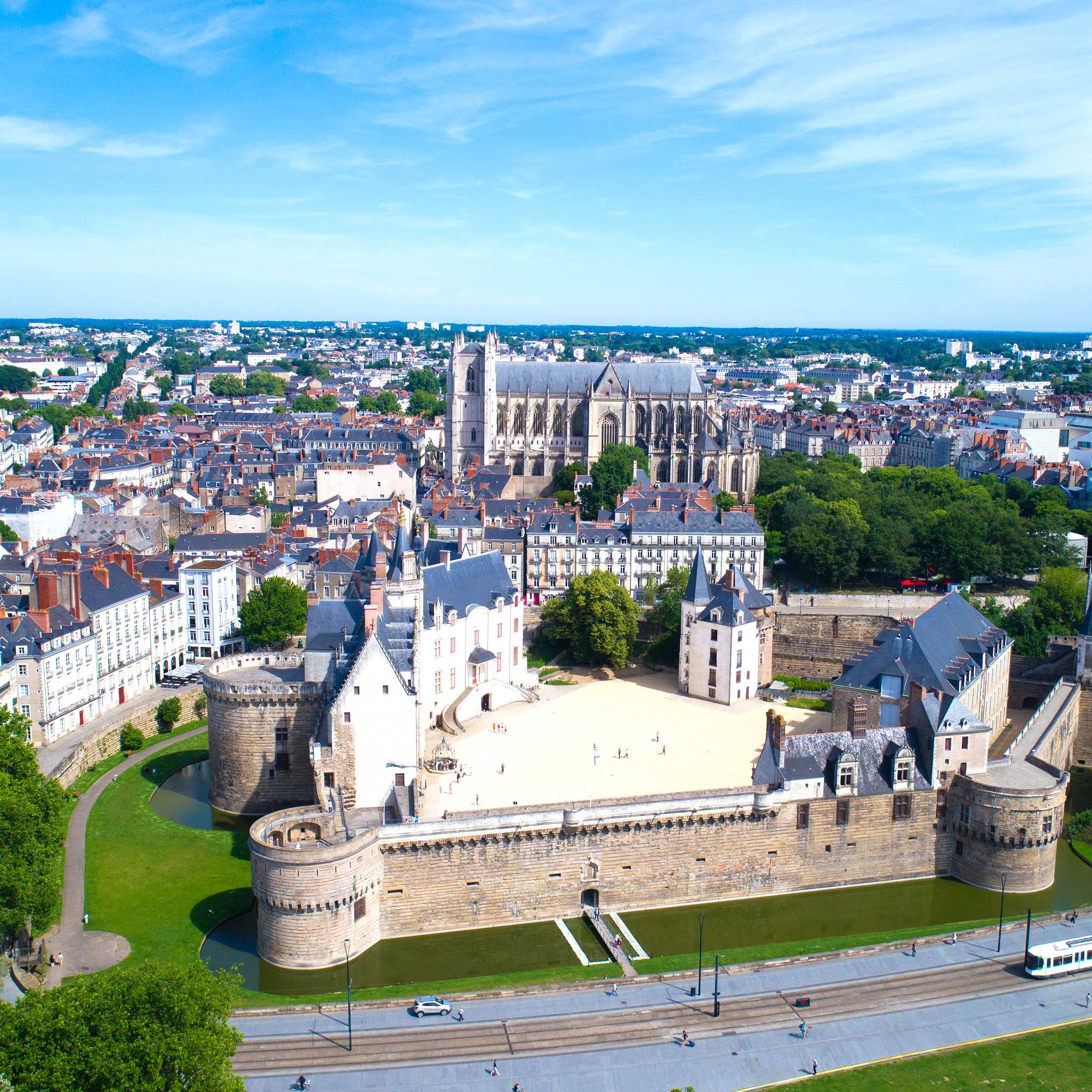
Nantes is considered one of France's more accessible cities. The tram network is largely step-free, and major attractions such as the Chateau des Ducs de Bretagne and the Les Machines de l'Ile site have accessibility provisions. The city center is mostly flat, though some older cobblestone streets can be uneven. It is worth checking individual venue websites in advance for specific accessibility details.
Nantes has an excellent public transport network including trams, buses, and a river ferry (Navibus) that connects neighborhoods along the Loire. The city center is very walkable, and much of the key sightseeing is concentrated on Ile de Nantes and in the historic heart. A green line is painted on the sidewalks to guide visitors between major cultural sites, making self-guided exploration easy and enjoyable.
Tipping is not obligatory in France, as a service charge is typically included in restaurant bills by law. However, leaving a few euros for good service is a kind and appreciated gesture. Rounding up the bill or leaving small change is a common local habit. For taxis, rounding up to the nearest euro is standard. In hotels, a small tip for porters and housekeeping is always welcome.
Les Machines de l'Ile, a fantastical mechanical world built inside the city's former shipyards, is one Nantes' most unique attraction and home to the famous giant walking elephant. The Chateau des Ducs de Bretagne offers history and free access to its courtyard. The Cathedrale Saint-Pierre-et-Saint-Paul, the Jardin des Plantes, and a cruise on the Loire or Erdre rivers are also highly recommended.
France uses the euro (EUR). Cards are accepted almost everywhere in Nantes, including restaurants, shops, and transport. Contactless payment is widely used. It is still handy to have some cash for smaller markets, certain bakeries, and tips. ATMs are plentiful throughout the city center and near major attractions.
French is the official language of France. In Nantes, most staff at hotels, major attractions, and popular restaurants will speak at least basic English. That said, locals genuinely appreciate any effort to greet them in French. A simple "bonjour" and "merci" will always be well received and can set a friendly tone for the whole interaction.
Nantes has strong culinary roots tied to the Loire Valley and the nearby Atlantic coast. Muscadet, a crisp dry white wine produced in the region, pairs perfectly with local seafood. Beurre blanc, a classic butter sauce served with fish, was actually invented in the Nantes area. Try gateaux nantais, a rum-soaked almond cake, for a sweet local treat. Fresh oysters and mussels from the coast are also excellent.
Late spring through early fall, roughly May through September, offers the warmest and most pleasant weather for exploring Nantes. June and July are particularly lively thanks to the Le Voyage a Nantes outdoor art festival, which transforms the whole city into a creative playground. Winter is mild rather than harsh but can be rainy, while spring and fall offer fewer crowds and comfortable temperatures.