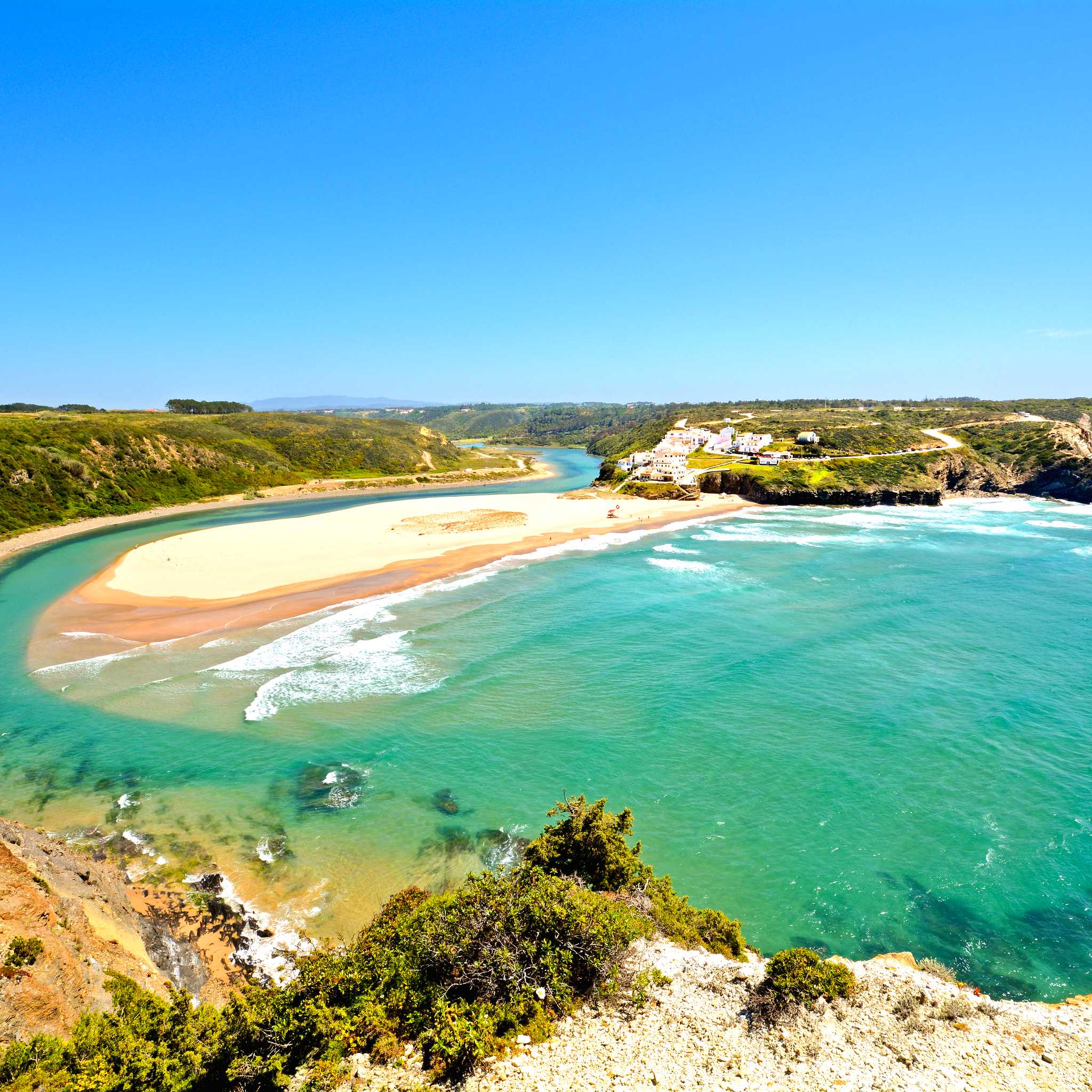
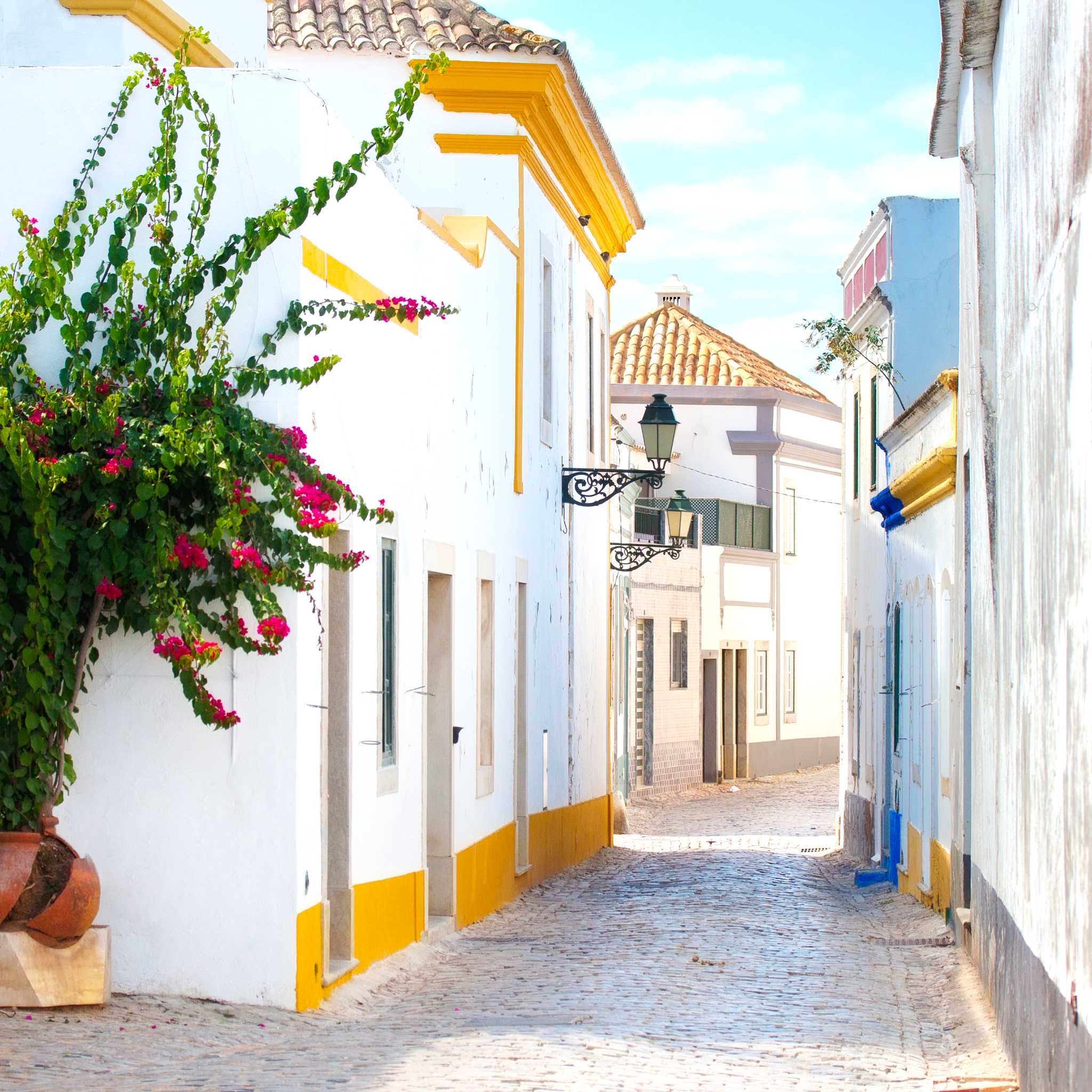
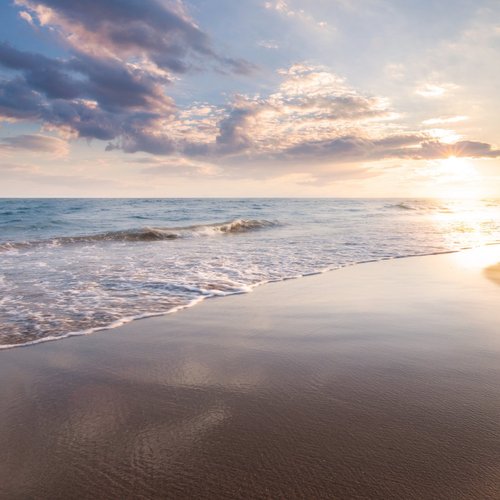
Odeceixe village sits on a hillside with narrow, uneven cobblestone streets, which can be challenging for strollers and wheelchairs. The beach area (Praia de Odeceixe) is about 3 km (1.8 miles) rom the village and the terrain there is flatter. A car or private transfer is the most practical option for getting between the village, beach, and surrounding attractions comfortably.
Surfing and sandboarding are the most popular activities, with surf schools and rental shops available at the beach. The area is also excellent for hiking the renowned Rota Vicentina, specifically the Fisherman's Trail, which ends in Odeceixe. Kayaking and paddleboarding are popular on the calmer river side of the beach, and exploring the village on foot is a relaxing way to spend a morning.
Praia de Odeceixe is the main draw, offering both surf waves on the ocean side and a calm lagoon ideal for families and kayakers. The historic village windmill (Moinho do Odeceixe) is a must-see, offering views over the valley. Nearby highlights include the wild beaches of Aljezur, the Rota Vicentina coastal walking trails, and the dramatic cliffs of the Costa Vicentina Natural Park.
Portugal uses the euro (EUR). ATMs are widely available in larger towns nearby, such as Aljezur, but can be limited in smaller villages like Odeceixe itself. It's a good idea to carry some cash, especially for smaller cafes, beach kiosks, and local markets. Most hotels and restaurants accept major credit cards.
The best time to visit Odeceixe is from late spring through early fall, roughly May to September, when the weather is warm and sunny. July and August are the busiest months, packed with Portuguese families and surfers from across Europe. If you prefer fewer crowds, May, June, or September offer pleasant warmth with a quieter atmosphere. Winters are mild but many local businesses close during the off-season.
Portuguese is the official language of Portugal. In Odeceixe and the wider Algarve region, many people working in hospitality speak at least some English, especially during the summer months. Learning a few basic Portuguese phrases is always appreciated by locals.
Tipping is appreciated but not obligatory in Portugal. In restaurants, rounding up the bill or leaving 5-10% for good service is common practice. At cafes, leaving small change is a friendly gesture. Tipping is less ingrained culturally than in some other countries, so there is no pressure, but it is always welcomed.
The Algarve region is known for its fresh seafood, and grilled sardines are a local staple. Cataplana, a rich seafood stew slow-cooked in a traditional copper pot, is a regional specialty worth seeking out. Near the beach, casual kiosks serve simple, delicious food perfect after a morning of surfing. Pair your meal with a local wine from the Alentejo region just across the river.