Oruro sits about 224 km (139 miles) south of La Paz on the Bolivian Altiplano. By private transfer the drive takes roughly 3.5-4 hours each way, making it a full but manageable day trip if you set out early and leave enough time to explore before heading back.
Most travelers spend about half a day in Oruro before returning to La Paz - enough for an unhurried visit to the mining museum, sanctuary, and monument. With a private transfer, your driver waits on-site for the return leg, so there's no separate transport to arrange or clock to watch.
Oruro sits high on the Bolivian Altiplano, where temperatures can shift quickly and the air feels thinner than at sea level. Dress in layers, wear comfortable walking shoes, and pace yourself, especially on the stairs up to the monument.
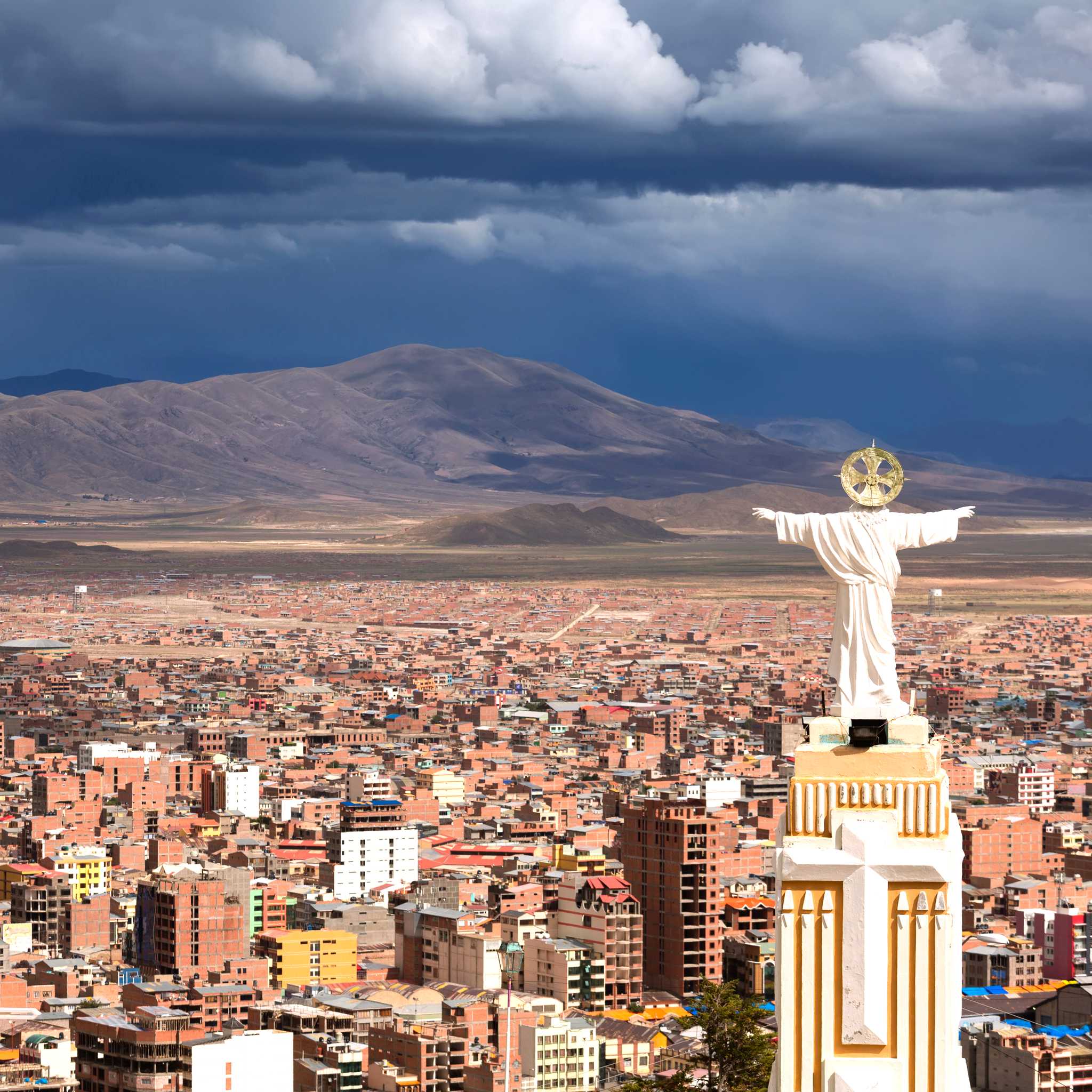
The Museo Sacro, Folklórico, Arqueológico y Minero lets you descend into an actual mineshaft and hear the story of the mining trade from former miners themselves. Next door, the Santuario de la Virgen del Socavón honors the patron saint of miners, and the towering monument above the city - about 45 meters tall - offers sweeping views over Oruro and the surrounding Altiplano.
Oruro is best known for Carnaval de Oruro, a UNESCO-recognized celebration where dancers in elaborate costumes perform to appease the devil for the region's mineral wealth. It only takes place during a specific window each year, so check current timing before planning around it - outside that period, the mining museum and sanctuary still tell the same story that inspires the festival, year-round.
Public buses run frequently but mean a trip to the terminal, a fixed departure time, and shared seating for the whole journey. A private transfer picks you up directly from your La Paz accommodation, moves at your own pace, and can pause along the Altiplano for photos or a break - no schedules to chase and no terminal crowds.