Yes, and it's one of the best reasons to visit by private transfer rather than public transport. Sulmona is minutes away and worth an hour or two on its own, while the wider Maiella National Park offers mountain scenery within easy reach. Because the transfer is private, these stops can be added to your route without extra bookings or fixed schedules.
Pacentro sits in the Abruzzo mountains, about 167 km (104 miles) from Rome, generally a 2 to 2.5 hour drive depending on the mountain approach and traffic. From Pescara on the coast, it's around 78 km (48 miles), roughly an hour's drive. Sulmona, the closest larger town, is just 9 km (6 miles) away, about a 10 to 15 minute drive. A private transfer takes these mountain roads directly, without the changes and waits that trains or buses to a village this small typically require.
Two to three hours is enough to walk the historic core, climb toward the towers for the views, and step inside the Chiesa Madre. Pacentro is small, so it pairs naturally with a nearby stop like Sulmona, just 9 km (6 miles) away, letting you combine a hilltop village and a larger historic town in one day rather than dedicating a full day to either.
The historic center is compact but steep, built on a hillside with narrow cobbled streets and stairways leading up toward the towers. Comfortable walking shoes are recommended. Most visitors manage it at a relaxed pace, though the older upper sections aren't stroller- or wheelchair-friendly.
Yes. Alongside its medieval towers and Baroque church, Pacentro is known as the ancestral home of Madonna's paternal grandparents, who emigrated from the village. It's a detail that surprises most first-time visitors and adds a modern footnote to a village otherwise defined by centuries of history.
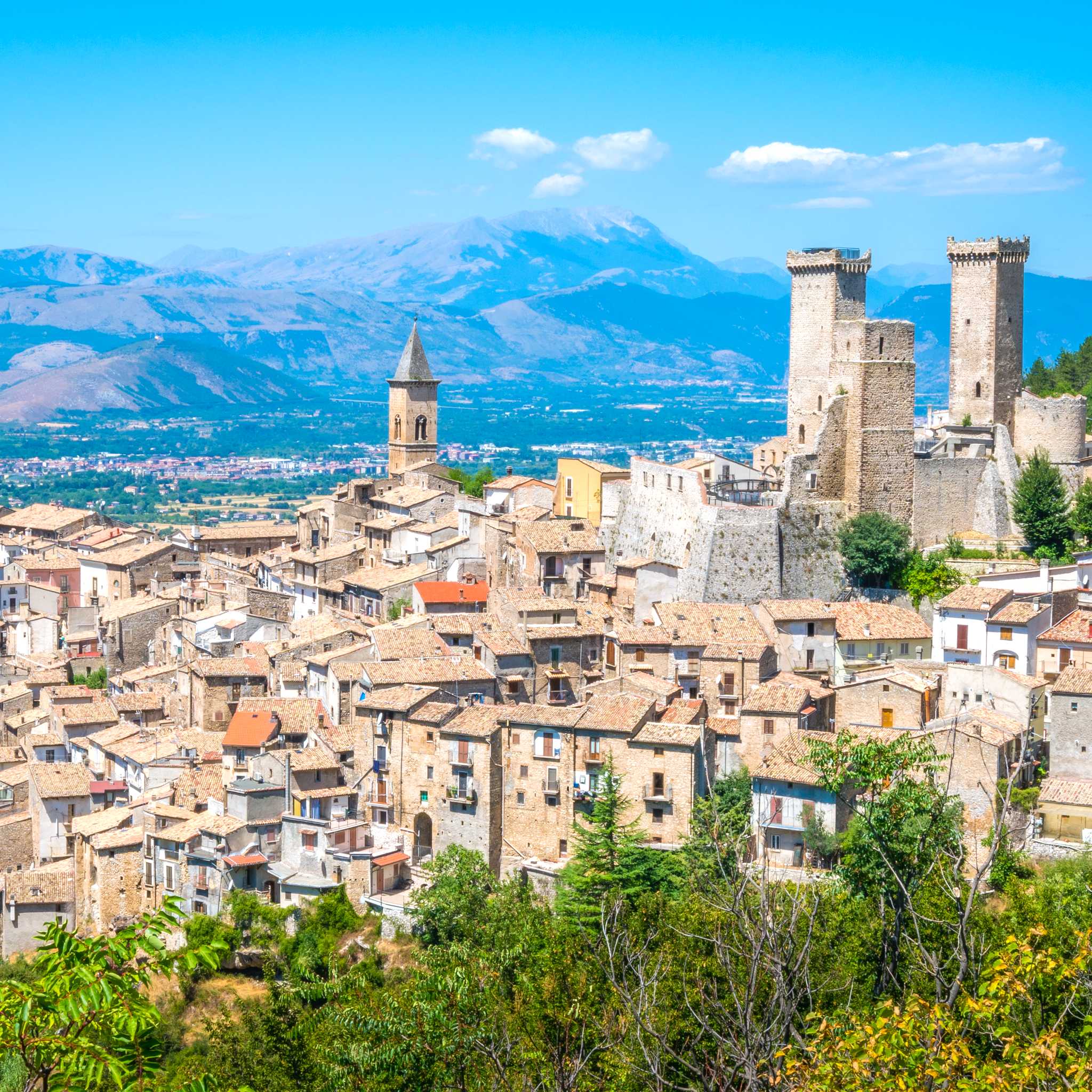
Pacentro is one of Abruzzo's best-preserved medieval hilltop villages, dating back to the 9th century. Two surviving 14th-century towers still overlook the Maiella National Park, and the Piazza del Popolo is anchored by the 17th-century Chiesa Madre, whose plain facade hides an interior dense with Baroque stucco, a carved walnut pulpit, and the relics of San Crescenzo. Centuries-old palaces and narrow lanes surround the piazza, opening onto valley views at nearly every turn. It's a compact village built for slow wandering rather than a checklist of sights.