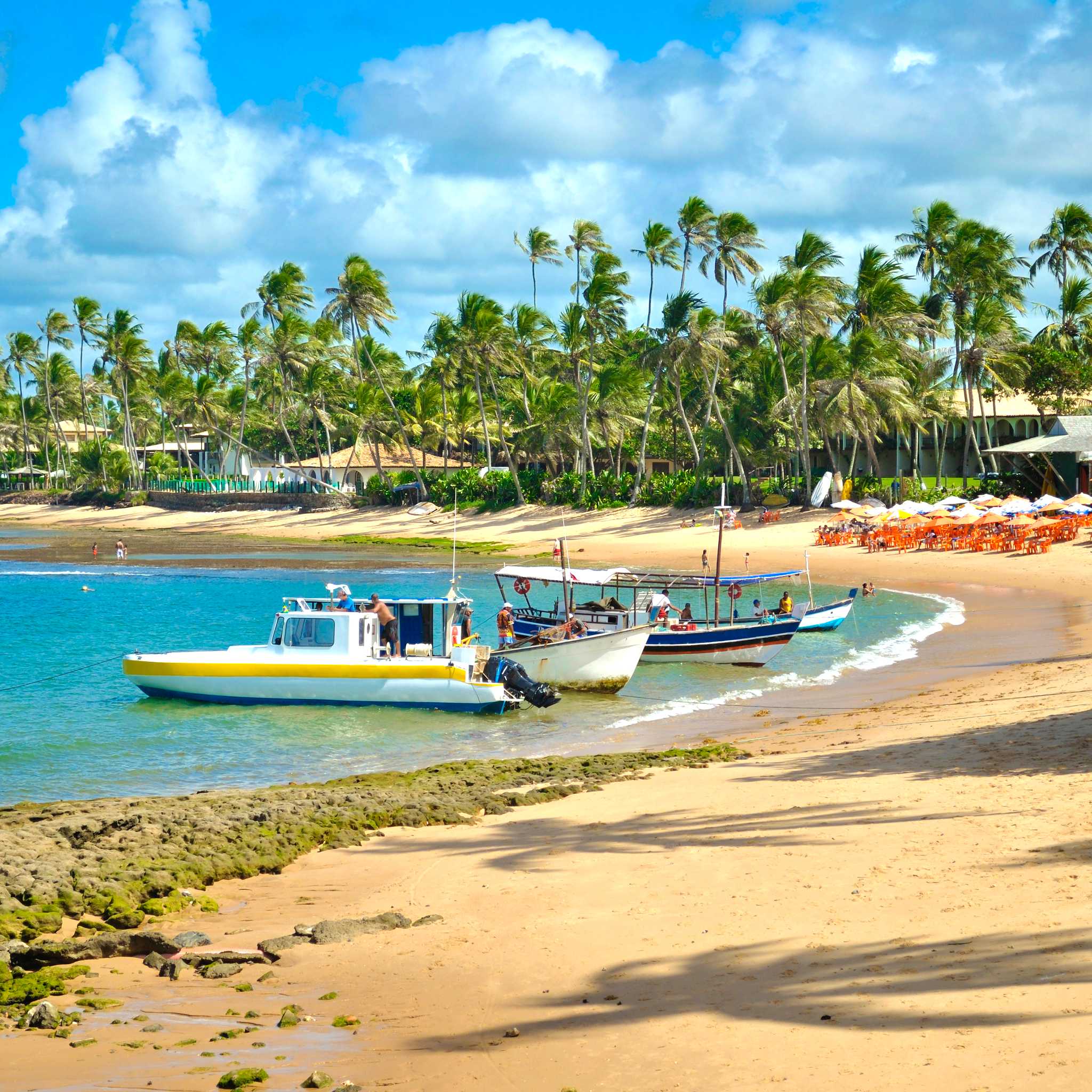
The piscinas naturais are shallow pools formed by an offshore reef, generally calmer than open ocean and known for clear water and small fish visible near the surface. Conditions change with the tide and season, so it's worth checking locally on the day before wading or snorkeling.
Praia do Forte sits about 80 km (50 miles) north of Salvador along Bahia's Coconut Coast. A private transfer typically covers the drive in around 1.5-2 hours depending on traffic leaving the city, dropping you right at the edge of the village, since the sandy main street itself is closed to cars. That's a more direct, flexible option than relying on shared coastal buses or vans that make multiple stops along the way.
Most visitors spend around half a day in the village itself, enough to walk the main street, visit the turtle center, and wade in the tide pools at low tide. Add extra time if you want to see the castle ruins outside the village or simply linger on the beach, since the pace here is meant to be unhurried rather than packed with stops.
Projeto Tamar's base in Praia do Forte is a research and conservation center focused on protecting sea turtle species found along the Brazilian coast, including loggerhead, hawksbill, green, leatherback, and olive ridley turtles. Visitors can typically see turtles in viewing tanks and learn about the organization's conservation work. Nesting season and hatchling releases are seasonal and not guaranteed on any given visit, so check Projeto Tamar's official information for current activity before you go.
Praia do Forte packs a lot into one coastal village: a sea turtle conservation center, the ruins of a 16th-century colonial castle, natural tide pools formed by an offshore reef, and a car-free village center lined with coconut palms. It's a compact enough stop that you can cover the highlights and still have time to relax on the sand before heading back.
The ruins mark one of the oldest European settlements in Brazil, founded in 1549 when Garcia de Sousa d'Avila built a fortified complex of fort, castle, and chapel, later the seat of a vast colonial cattle-ranching estate. Today the weathered stone walls sit within an ecological reserve a short drive from the village, giving visitors a glimpse of Brazil's early colonial period.