Yes, the historic University of Salamanca opens daily for visits to its remarkable Plateresque facade (look for the hidden frog carved on a skull, said to bring good luck to students), ornate lecture halls, and original library. The 15th-century lecture halls maintain historic atmosphere with wooden benches. The Schools building features the elaborate entrance showcasing Spanish Renaissance architecture. Tickets include access to the university chapel and courtyard. Guided tours explain the university's role in Spanish intellectual history. The institution still operates, combining tourist site with active academic community.
Salamanca sits approximately 215 kilometers (134 miles) northwest of Madrid in Castile and Leon region. The journey takes about 2.5 hours by car via highway through Spanish countryside. High-speed trains also connect Madrid's Chamartin station to Salamanca in just under 2 hours. Many travelers visit both experiencing Madrid's capital attractions alongside Salamanca's university heritage and golden architecture. The distance makes Salamanca feasible as a long day trip or overnight destination while exploring central Spain's historic cities.
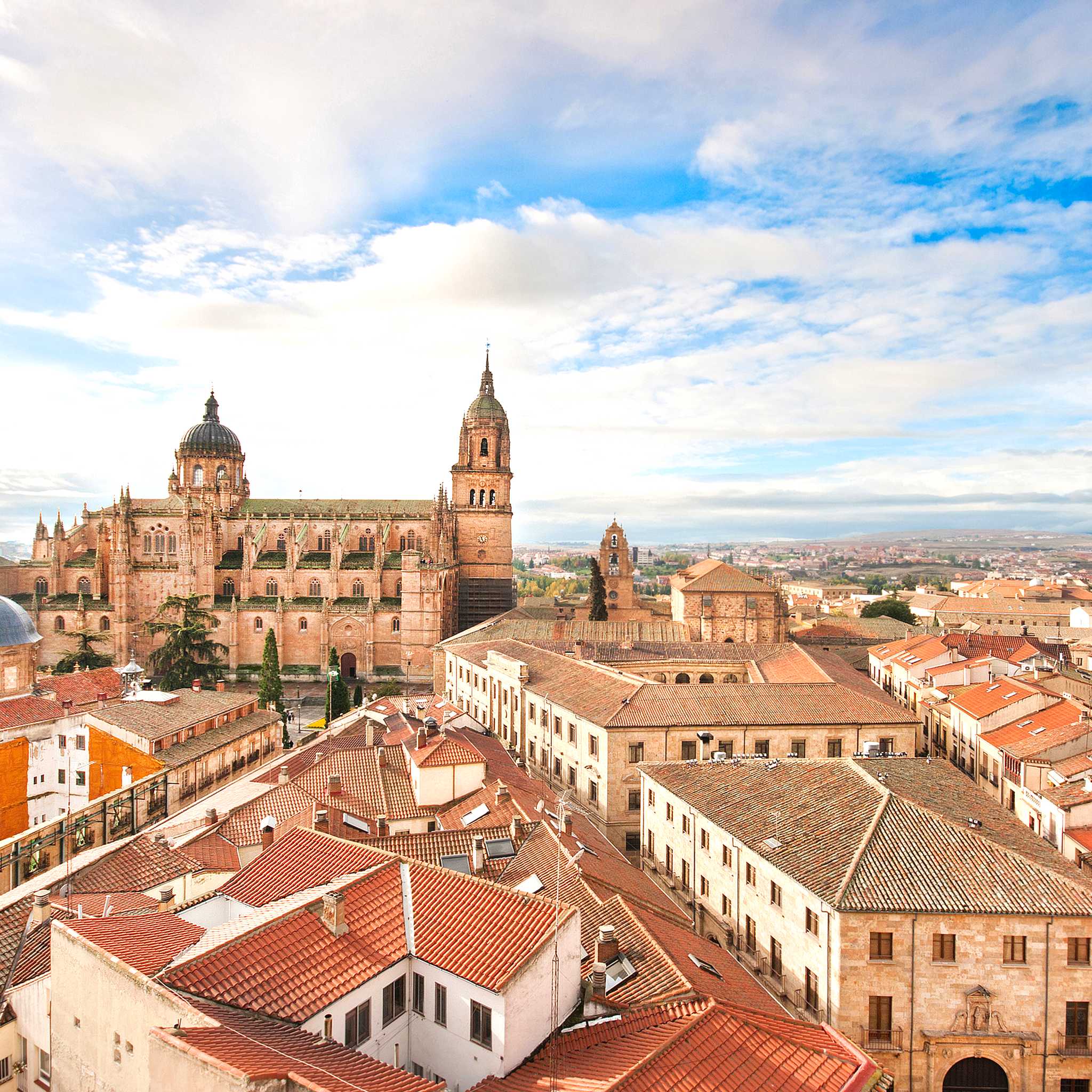
Salamanca uniquely features two attached cathedrals: the Old Cathedral (12th century Romanesque with notable altarpiece and Torre del Gallo tower) and New Cathedral (16th-18th century Gothic-baroque with astronaut carving added during 1990s restoration as a mason's signature). Both are accessible with one ticket. The New Cathedral's facade includes the controversial modern astronaut and dragon eating ice cream, delighting visitors seeking these hidden details. The conjoined structures represent architectural evolution spanning six centuries. The cathedrals dominate Salamanca's skyline.
Salamanca specializes in Castilian cuisine including jamon iberico (Iberian ham), hornazo (meat-filled pastry), farinato (pork sausage), and cochinillo (roast suckling pig). The city's tapas culture thrives with free tapas accompanying drinks at many bars. Local cheeses, particularly queso de la Sierra de Francia, complement wine. The student population ensures affordable dining options. Traditional taverns and modern gastro-bars serve regional specialties. The tapas bar-hopping tradition allows sampling numerous dishes. Castile's agricultural heritage influences the hearty, meat-focused cuisine reflecting Spanish interior culinary traditions.
Plaza Mayor is Salamanca's magnificent baroque square built 1729-1756, considered Spain's most beautiful plaza. The symmetrical arcaded square features golden sandstone buildings with medallions depicting Spanish royalty and famous figures. The plaza serves as Salamanca's social heart with cafes, restaurants, and shops under the porticos. Evening paseos (strolls) and gatherings create lively atmosphere. The square hosts events and provides stunning sunset views when the sandstone glows. The architectural harmony and grand scale make it Salamanca's most iconic sight and essential gathering place.
Salamanca is a Spanish university city famous for its stunning sandstone architecture glowing golden at sunset, historic University of Salamanca (founded 1218, one of Europe's oldest), enormous Plaza Mayor, and two cathedrals. This UNESCO World Heritage site combines student energy with cultural heritage, featuring baroque buildings, medieval streets, and the famous frog carved on the university facade. Salamanca offers authentic Spanish atmosphere, tapas culture, and rich intellectual history spanning eight centuries while maintaining vibrant contemporary life from its large student population.
The tiny carved frog sitting on a skull on the University of Salamanca's elaborate Plateresque facade is the city's most famous symbol. Finding it brings good luck to students and visitors. The challenging hidden detail measures just a few centimeters among the facade's intricate carvings. Various theories explain its meaning, from memento mori (death reminder) to symbol of lust requiring students' repentance. The frog-finding tradition attracts visitors worldwide. Its location won't be revealed here, preserving discovery excitement! Many spend considerable time scanning the detailed stonework.
Spring (April-June) and fall (September-November) offer pleasant weather for exploring the city without extreme summer heat. May brings student celebration events. Summer (July-August) sees scorching temperatures often exceeding 35 degrees Celsius but also brings festivals. The university term (September-June) creates vibrant student atmosphere with tapas bars bustling; summers feel quieter when students depart. Winter (December-February) brings cold weather but fewer tourists and authentic local life. The sandstone buildings glow beautifully at sunset year-round.