Santa Cruz do Sul sits roughly 155 km (96 miles) from Porto Alegre, generally about 2 to 2.5 hours by car depending on traffic and route. Because it isn't on the main tourist circuit, a private transfer is especially useful here: you leave on your own schedule, travel door to door, and avoid trying to piece together bus or train connections to a smaller regional city.
Most visitors spend half a day to a full day covering downtown, Parque da Gruta, and a meal stop, which fits comfortably into a round trip from Porto Alegre. Since you're traveling by private transfer rather than a fixed group tour, you can also add a stop in another Rio Pardo valley town on the way there or back, tailoring the route instead of following a set itinerary.
If your travel dates line up, yes. Santa Cruz do Sul hosts one of Brazil's larger Oktoberfest celebrations, held annually at the dedicated Parque da Oktoberfest with music, traditional German dress, and regional food and beer. Since dates shift each year, check the current festival calendar before planning around it. Outside the festival itself, the city's German influence is visible year-round in its architecture, breweries, and restaurants.
Parque da Gruta is Santa Cruz do Sul's main green space, built around a small grotto and lake with shaded walking paths. It's a relaxed, low-key stop rather than a headline attraction, making it a good way to break up a day otherwise focused on the city's German heritage sites, downtown streets, and local restaurants.
The city's German-Brazilian roots show up clearly at the table, with hearty German-style dishes, baked goods, and cured meats sitting alongside typical Rio Grande do Sul fare. Chimarrão, the shared mate tea central to gaucho culture, is part of everyday life here, and local breweries carry on the same German brewing traditions that shaped the region. It's a good stop for travelers curious about a different regional food identity within southern Brazil.
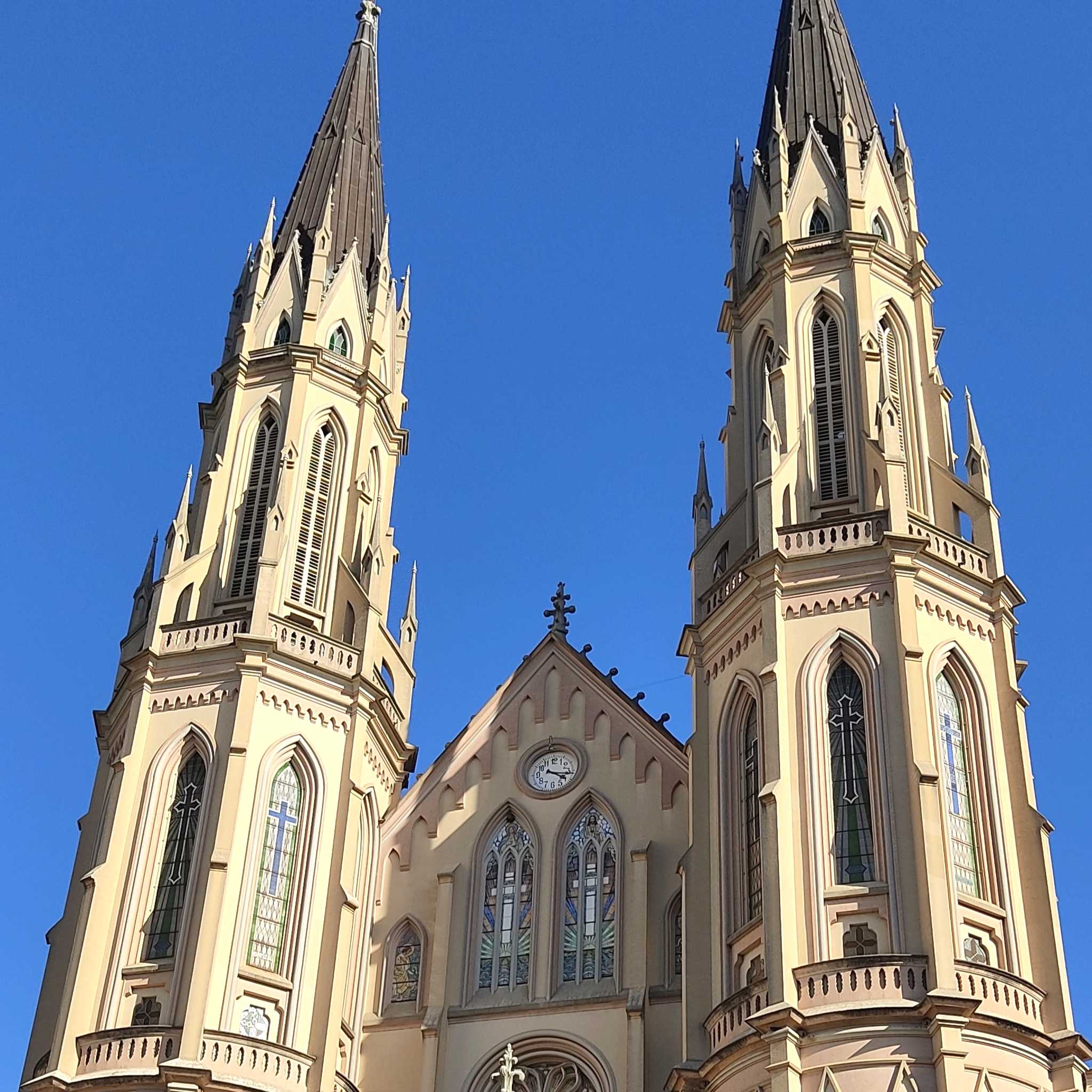
Santa Cruz do Sul shows a different side of Rio Grande do Sul than the usual coastal or wine-region trips. The city was built up by German immigrants, and that heritage still shapes its architecture, food, and local customs today. It's also one of Brazil's key tobacco-growing and processing centers, so the surrounding Rio Pardo valley is lined with farms and drying barns rather than vineyards. Combine that with a walkable downtown, a leafy central park, and strong chimarrão culture, and you get a day that feels genuinely distinct from a typical Porto Alegre excursion.