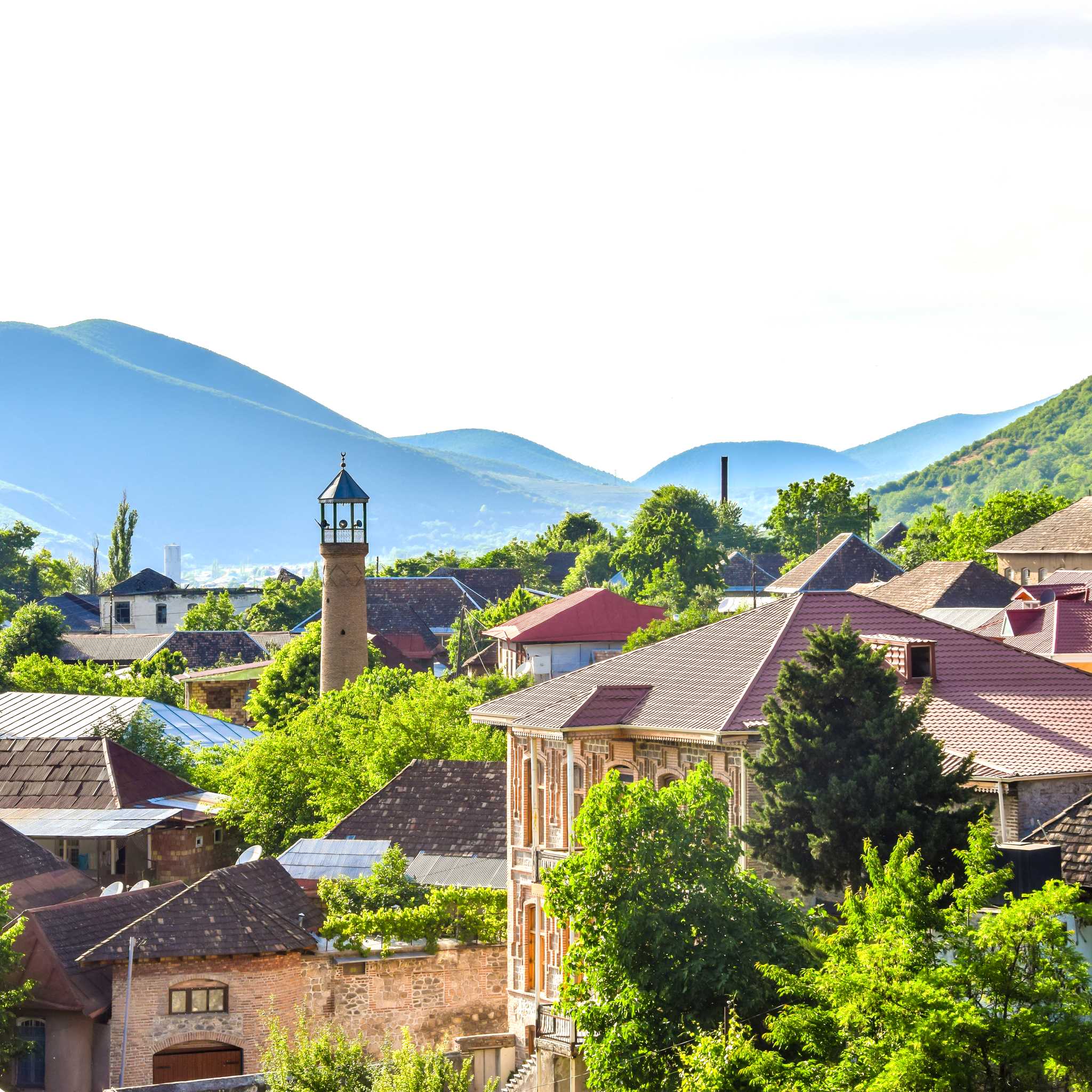
Sheki sits roughly 300-330 km (186-205 miles) from Baku, depending on the route through the foothills of the Greater Caucasus. A private transfer typically takes approximately 5 to 6 hours, letting you relax and enjoy the changing scenery from lowland plains to mountain villages, rather than tracking a fixed departure time.
Most travelers spend around 3 to 4 hours exploring central Sheki, enough time to tour the palace, walk the fortress and church, and browse the craft market. Combined with travel time from Baku, a full day trip works comfortably, and a private itinerary lets you linger longer at whichever site interests you most.
Sheki is known for handmade silk textiles, a nod to its Silk Road trading history, along with other locally crafted souvenirs like woodwork and ceramics. The market is a good spot to pick up something authentic and specific to the region rather than mass-produced tourist items.
Beyond the palace, the fortress walls enclose the Three Saints Church, a rare round-shaped Caucasian Albanian church with its own layered history. Walking the fortress grounds gives context to Sheki's role as a fortified trading center along the Silk Road, making it easy to pair with the palace visit in the same stop.
Don't leave without trying Sheki halva, a dense, syrup-soaked pastry made with nuts and saffron, often patterned to echo the city's famous stained glass windows. Local tea houses serving it alongside strong Azerbaijani tea make for a fitting break between sightseeing stops.
This 18th century summer residence is Sheki's architectural showpiece. Its facade and interior walls are covered in vivid glass mosaic windows called shebeke, assembled without nails or glue, alongside richly painted Persian-style murals and floral patterns. It's a compact but visually stunning stop that showcases the Sheki Khanate's wealth and craftsmanship.