Sisteron sits roughly 100 km (62 miles) north of Marseille and about 195 km (121 miles) from Nice along the Route Napoléon. A private transfer covers either distance in comfort without the transfers or fixed timetables of public transport, so more of the day goes to sightseeing.
A half day covers the essentials: the citadel, a wander through the old town, and the cathedral. Add the Musée Terre et Temps or extra time exploring the ramparts and river views, and it easily fills a full day. Either way, Sisteron rewards a relaxed pace rather than a rushed checklist.
Sisteron's old town is made for wandering, with narrow lanes, small squares, and old stone fountains at nearly every turn. The 12th century Romanesque cathedral, one of the largest in Provence, holds striking gilded artwork worth stepping inside for. Nearby, the Musée Terre et Temps, set in a former chapel, tells the story of timekeeping through objects ranging from meteorites to an automated water clock.
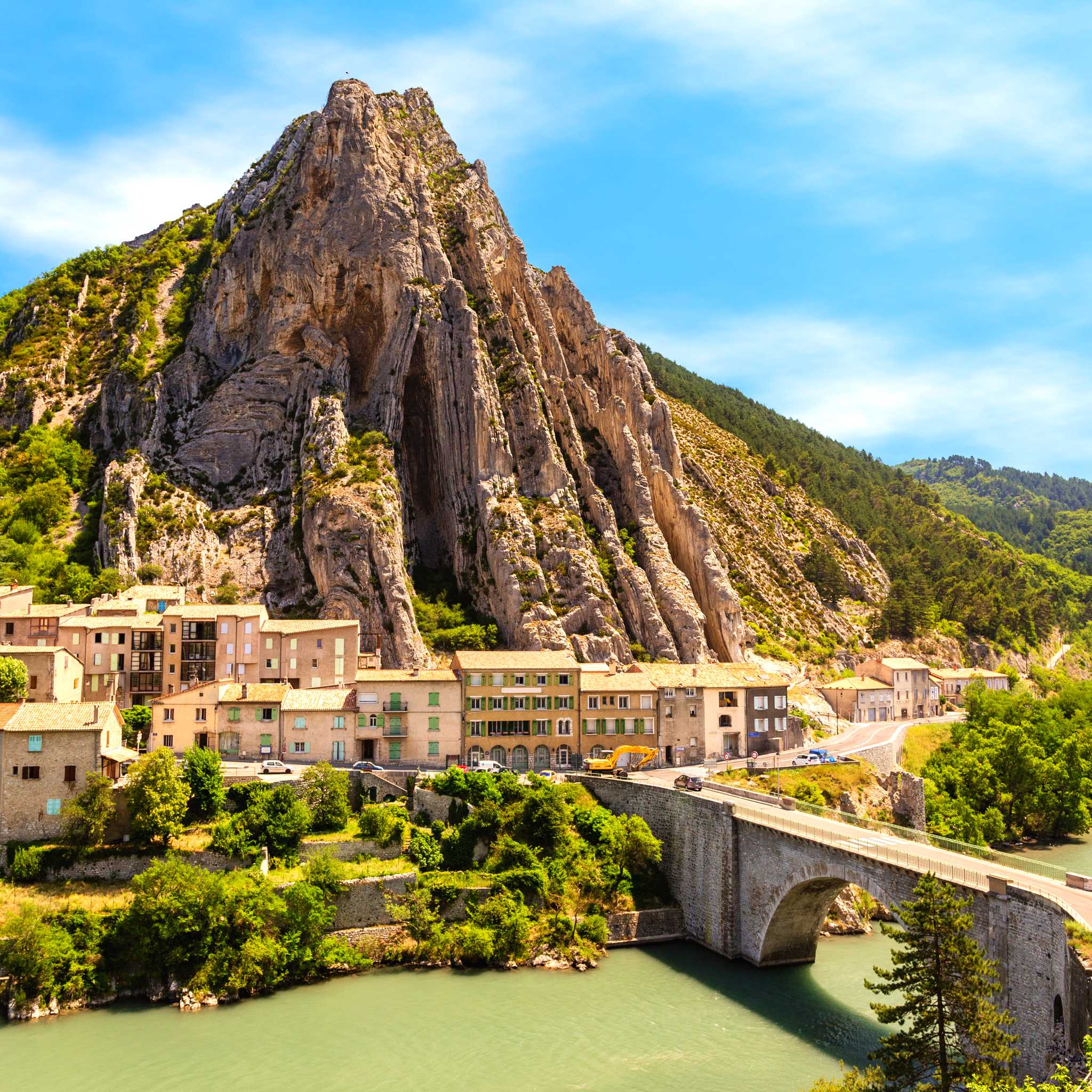
Few towns in the region combine a history stretching back to around 2000 BC with such a striking natural setting, wedged between two limestone cliffs on the Durance. The fortress skyline and gorge views give Sisteron a rugged, dramatic character that sets it apart from the lavender-field villages more typically associated with Provence.
Perched on a cliff above the Durance river, the citadel has guarded this gorge since the 11th century, with major reworking in the 13th, 16th, and 19th centuries. Inside, a museum traces Napoleon's passage through town on his return from Elba, alongside a collection of horse-drawn carriages. The ramparts also open up sweeping views over the river and surrounding mountains.
Sisteron sits at the midpoint of the historic route linking Grenoble to the Riviera, marking the transition from alpine terrain to the hills of Provence. Its dramatic setting between two cliffs makes it a natural place to break up a longer journey, rather than just passing through.