Siwa is approximately 560 km (348 miles) from Cairo and around 590 km (367 miles) from Alexandria by road. The drive from Alexandria typically takes around 5 to 6 hours depending on road conditions and stops, making Alexandria the most practical departure point for reaching Siwa by private car. From Cairo, expect a journey of roughly 8 to 9 hours. A private transfer lets you set your own pace, stop when you want, and arrive rested rather than cramped on an overnight bus.
Most travelers who make the journey find that two to three days is the sweet spot. One day covers the key historical sites and a spring or two; a second day opens up the Great Sand Sea and a proper desert excursion. Rushing Siwa into a single afternoon shortchanges the place — the distance alone justifies a proper stay. Plan your transfer to arrive with a full day ahead of you, and you'll leave feeling like you actually experienced it rather than checked it off a list.
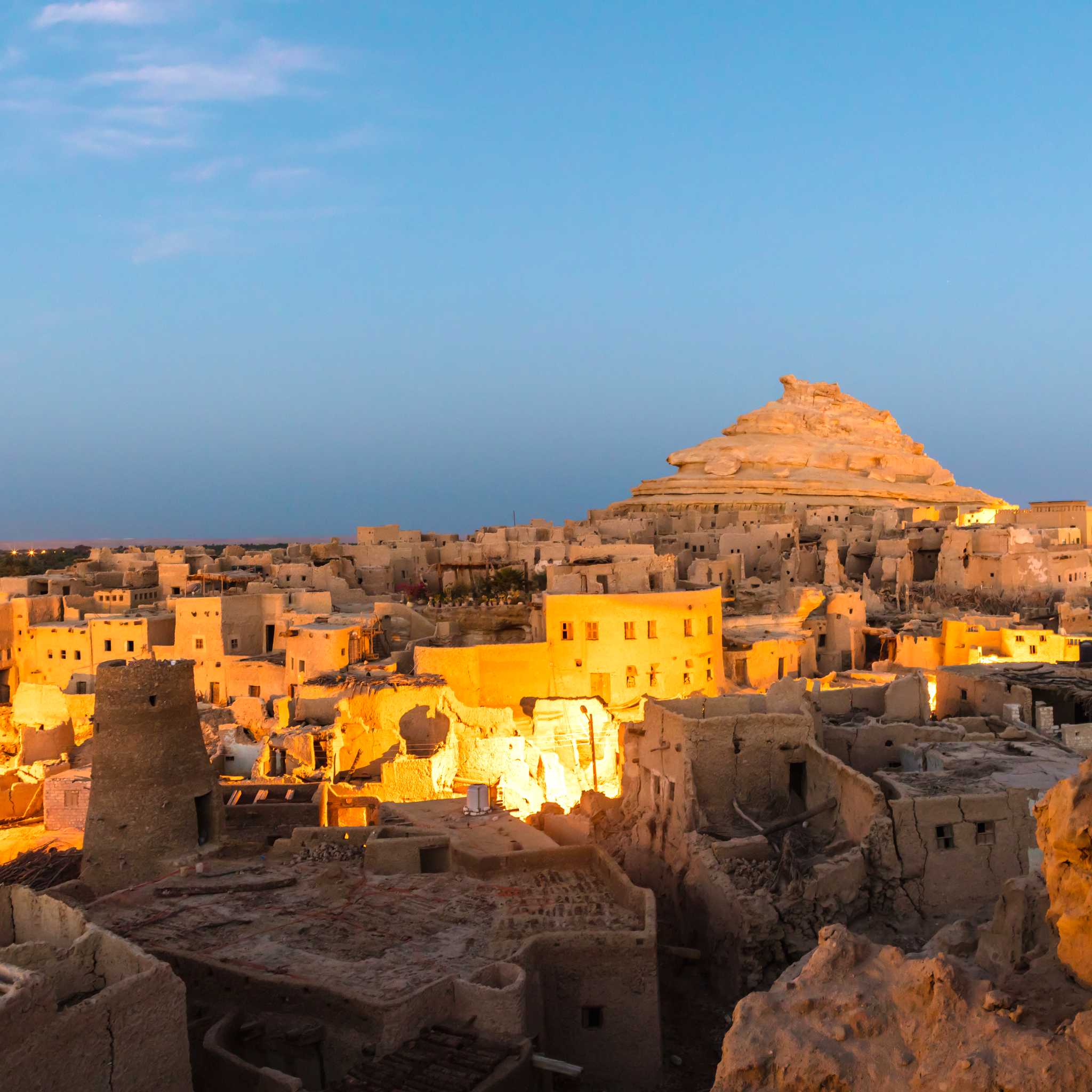
The must-sees cluster around the town center and the desert just beyond it. The Temple of the Oracle — where Alexander the Great sought divine legitimacy in 331 BCE — is a genuinely stirring ruin. The Mountain of the Dead holds rock-cut tombs dating back to the 26th Dynasty. Cleopatra's Spring is a natural freshwater pool still used by locals. Out in the Great Sand Sea, the towering dunes offer sandboarding and sweeping desert panoramas. Fatnas Island, a short ride from town, is the place to be at sunset — palm trees, a salt lake, and the sky turning gold over the Sahara.
The Great Sand Sea is one of the largest continuous sand dune fields on Earth, stretching hundreds of kilometers westward into Libya. Some of its dunes rise above 140 meters. The terrain requires a 4x4 vehicle and local knowledge of the routes — you cannot drive into it independently in a standard car. Most visitors join a local desert guide for a half-day or full-day excursion from Siwa town. The experience typically includes dune riding, a stop at a natural hot spring, sandboarding, and a sunset or stargazing session. It's the kind of landscape that justifies the entire trip.
Siwa is unlike anywhere else in Egypt. Tucked deep in the Western Desert near the Libyan border, it sits at the edge of the Great Sand Sea — one of the most dramatic dune landscapes on Earth — and has been inhabited since ancient times by the Siwi Amazigh people, who still speak their own Berber language and maintain centuries-old traditions. You can float effortlessly in salt lakes, explore pharaonic tombs carved into a hillside, stand at the temple where Alexander the Great was declared a god, and watch the desert sunset from a palm-fringed island. It's a world that feels genuinely removed from the rest of the country.
Siwa has always stood apart. Its indigenous Siwi people are Amazigh (Berber), not Arab, and many still speak Siwi — an ancient Berber dialect unrelated to Arabic. The oasis developed in relative isolation for centuries, producing a distinct material culture: hand-embroidered textiles, intricate silverwork, basket weaving, and mud-brick architecture. Even the rhythm of daily life feels different here — quieter, more communal, oriented around the oasis itself. Picking up a piece of local silverwork or watching a craftsperson at work is a reminder that Egypt is far more culturally layered than the standard tourist trail suggests.