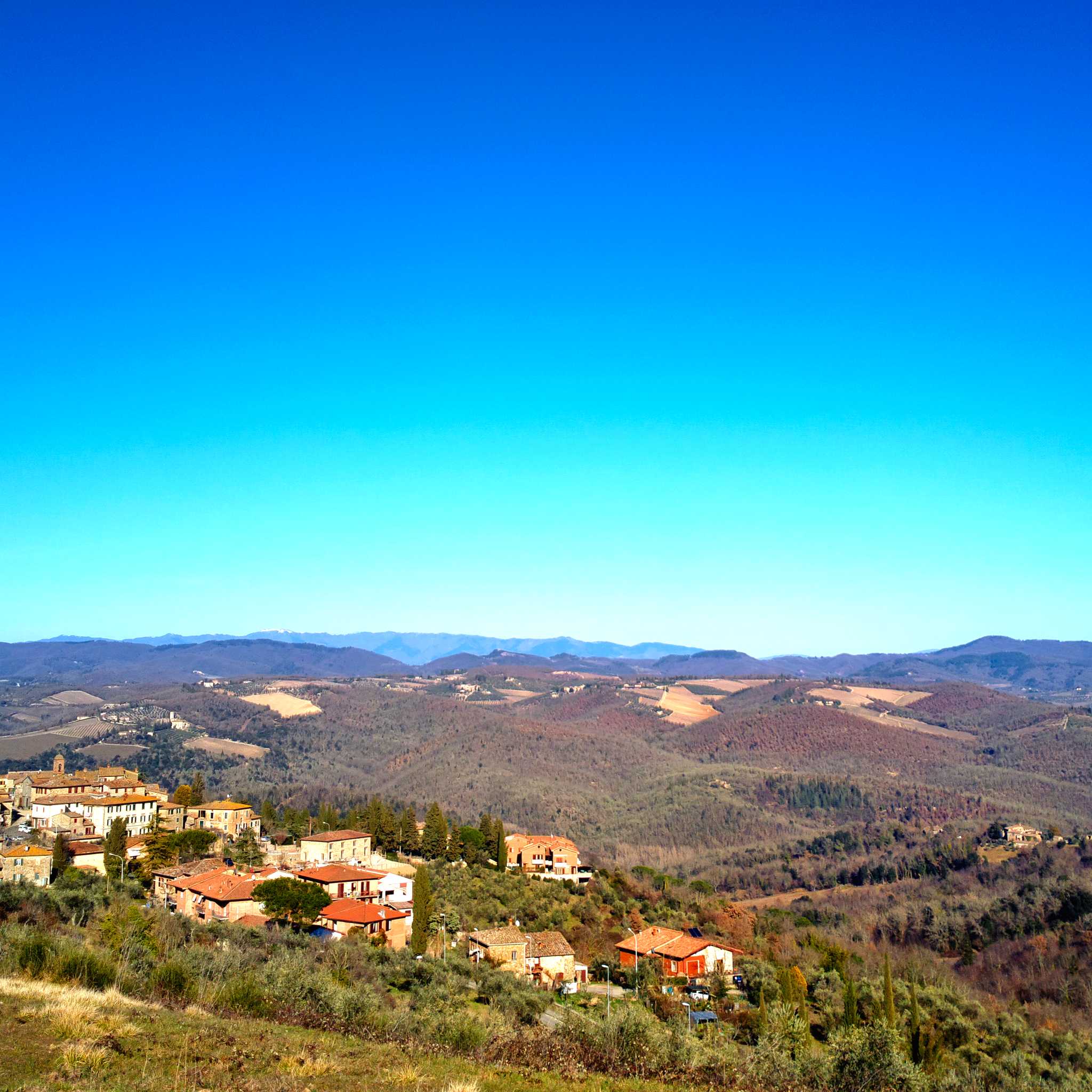
Vagliagli is a very small village with narrow, stone-paved streets typical of medieval Tuscan hamlets. While the village is compact and easy to walk, the uneven surfaces and steps can make it challenging for wheelchairs and strollers. Most of the surrounding Chianti countryside and winery estates require a car to reach. For any mobility concerns, it's worth contacting specific venues in advance to check accessibility.
Absolutely. Vagliagli's central location in the Chianti region makes it an excellent starting point for exploring Tuscany. Siena is just 15 km (9 miles) away, Florence is about 40 km (25 miles) north, and San Gimignano is roughly 30 km (18 miles)to the west. Arezzo and Montepulciano are also reachable within an hour. Having private transportation makes it especially easy to move between these destinations at your own pace.
Tipping is not mandatory in Italy. Many restaurants include a coperto (cover charge) or servizio (service charge) on the bill. If neither is included, rounding up or leaving a euro or two for good service is a kind gesture. At casual trattorias, simply leaving spare change is perfectly appropriate. Tipping is never required, but always appreciated for exceptional service.
Vagliagli is a fantastic base for exploring the Chianti wine region. Visit local wineries like Fattoria di Vagliagli for tastings, wander the medieval village streets, and admire the Romanesque Church of San Cristoforo. Nearby highlights include the Chianti Sculpture Park, the city of Siena, and a scenic drive along the famous Strada Chiantigiana, one of Tuscany's most iconic routes.
Italy uses the euro (EUR). Credit and debit cards are widely accepted at most restaurants, shops, and accommodations, but it's a good idea to carry some cash for smaller purchases, rural markets, or farmstand wine shops in the Chianti countryside. ATMs are available in nearby towns like Castelnuovo Berardenga and Siena.
Late spring (May to June) and early fall (September to October) are ideal for visiting Vagliagli. The weather is warm and pleasant, the vineyards are at their most scenic, and the crowds are smaller than in peak summer. The harvest season in October is a particularly special time, when local wineries are buzzing with activity and the surrounding Chianti countryside looks especially beautiful.
Italian is the official language of Italy. In rural Tuscan villages like Vagliagli, English is less widely spoken than in major cities, but you'll generally find that people at wineries, agritourism estates, and accommodations catering to international visitors are comfortable communicating in English. Learning a few basic Italian phrases like "grazie" (thank you) and "buongiorno" (good morning) will go a long way.
The Chianti region is a food lover's paradise. Don't miss the local Bardolino-style crostini, ribollita (a hearty Tuscan bean soup), pappa al pomodoro (bread and tomato stew), bistecca alla Fiorentina (Florentine T-bone steak), and hand-rolled pici pasta. Of course, pair everything with a glass of Chianti Classico, the signature red wine produced from Sangiovese grapes grown right in the surrounding hills.