Yes, Wurzburg has a lively events calendar. The Africa Festival, one of Europe's largest African music and culture festivals, takes place in late May along the Main River. The Wurzburg Mozart Festival is held in June and July in the stunning setting of the Residence. The Kiliani Folk Festival in July is the largest folk event in Lower Franconia. The Christmas market in late November and December is one of the city's most beloved traditions.
Wurzburg sits at the heart of Franconia's wine country, and local Silvaner and Riesling wines served in traditional Bocksbeutel (flask-shaped bottles) are a hallmark of the region. The city is dotted with atmospheric wine bars (Weinstuben). On the food side, look for Franconian classics such as Bratwurst, Schaufele (cured pork shoulder), pretzels, and hearty regional soups. Juliusspital winery is a historic local institution for wine tasting.
Wurzburg's city center is compact and very walkable. The tram and bus network is reliable and covers the main areas well. The old town's cobblestoned streets can be bumpy for strollers and wheelchair users, and the path up to Marienberg Fortress is steep. However, much of the flat riverside area, the Residence gardens, and the main shopping streets are accessible. The Residence itself has accessible facilities, and the fortress can also be partially visited by those with limited mobility.
Tipping in Germany is polite but not mandatory. In restaurants, rounding up the bill or leaving around 10% for good service is the standard practice. It is considered polite to tell the server the total you wish to pay rather than leaving cash on the table. In taxis, rounding up the fare is common. At cafes and bars, leaving small change is appreciated but entirely optional.
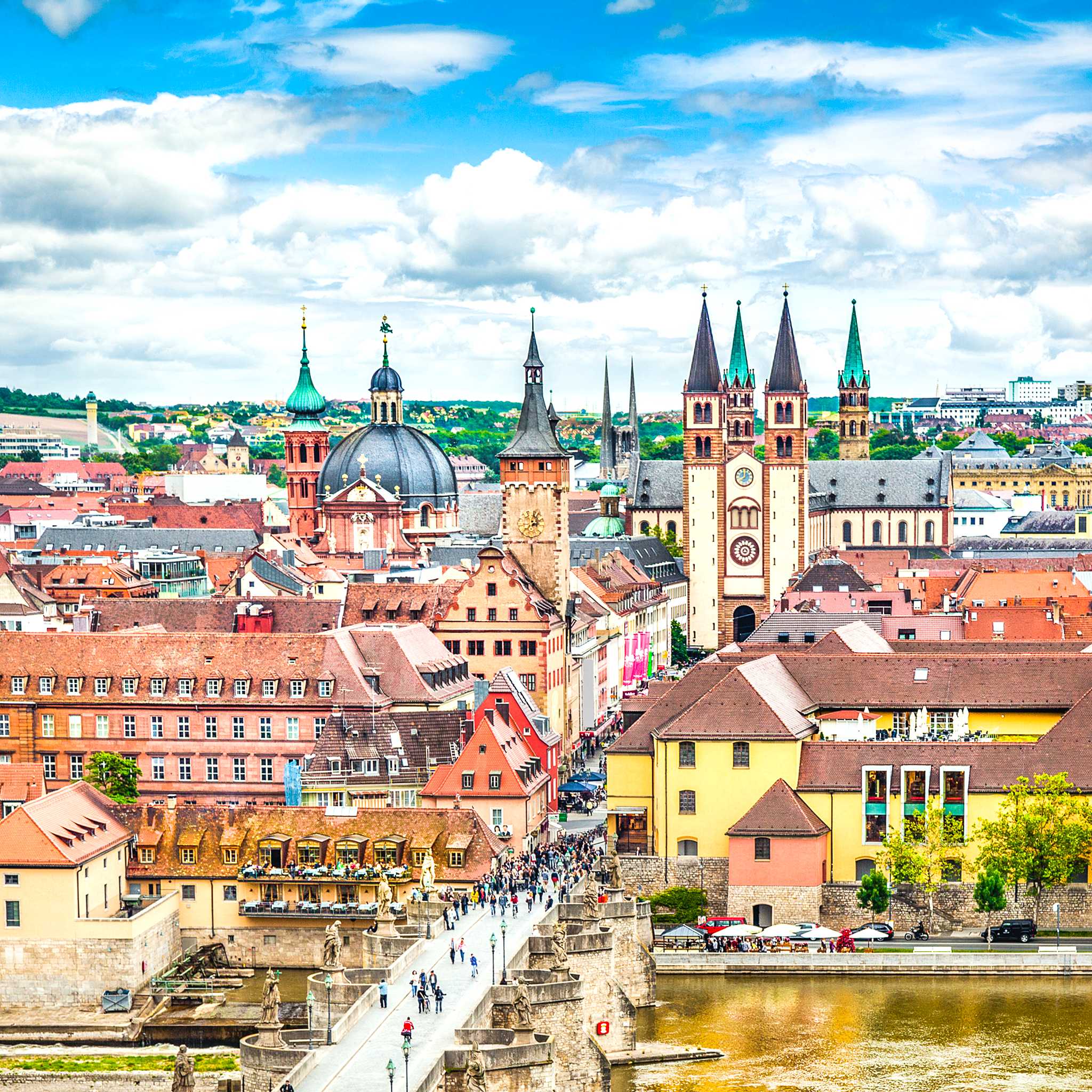
The Wurzburg Residence is the crown jewel, a stunning Baroque palace with one of the world's largest ceiling frescoes, set within beautiful court gardens. The hilltop Marienberg Fortress offers sweeping views over the city and houses an excellent regional museum. The 15th-century Alte Mainbrucke (Old Main Bridge), lined with sandstone saint statues, is a beloved gathering spot. St. Kilian's Cathedral and the pilgrimage church Kappele are also well worth a visit.
Germany uses the euro (EUR). Credit and debit cards are widely accepted throughout Wurzburg's hotels, restaurants, and shops. That said, some smaller wine bars, market stalls, and traditional eateries still prefer cash, so it is a good idea to have some euros on hand, especially when visiting local markets or the Old Bridge area.
The official language is German. In Wurzburg, English is understood in most hotels, major restaurants, and at the key attractions, but the city retains a strongly local character where German is the everyday language. A few basic German phrases are appreciated; "Bitte" (please) and "Danke" (thank you) are always welcomed by locals.
Spring and early summer are wonderful, with mild weather and the vineyards coming into bloom. Autumn is especially scenic, with golden Franconian vineyard landscapes and harvest-season wine events. The famous Wurzburg Christmas market, held across several old town squares in late November and December, is one of Germany's most atmospheric. Summer is warm and lively, with open-air festivals along the riverfront.