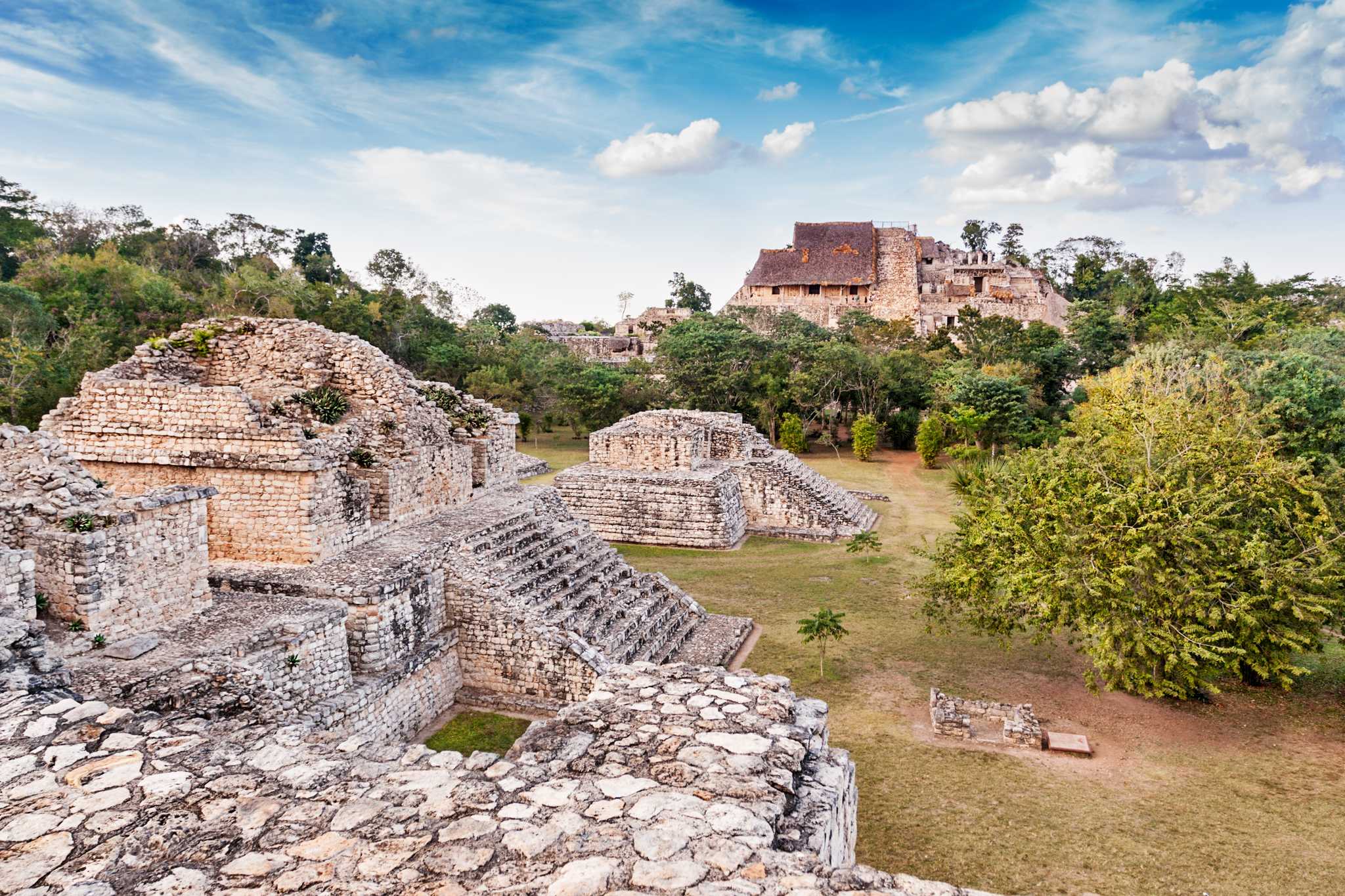
Votre chauffeur vous retrouvera à votre adresse à Merida.
Service porte-à-porte
Aide avec vos bagages
Voyage
Vous voyagerez confortablement pendant 3 h 10 min.
Visite touristique facultative
Voiture propre et confortable
Chauffeur professionnel
Eau en bouteille
Sièges enfants
Préparé pour les handicapés
Non-fumeur
Animaux acceptés
Depose
Votre chauffeur vous déposera à votre adresse à Tulum.
Service porte-à-porte
Aide avec vos bagages
Au total
259 km3 h 10 min
Questions et réponses sur le voyage de Merida à Tulum
Is Mérida worth visiting?
Yes, Mérida is definitely worth visiting because of its cultural heritage, which continues to live through traditions and monuments, colonial architecture, markets full of fresh products, and its close proximity to archaeological sites and cenotes. Visiting Mérida is a deep dive into Yucatecan culture and history, with many festivals and local cuisine.
What is the fastest way to get from Mérida to Tulum?
The fastest way to get from Mérida to Tulum is by driving and door-to-door private car service. A car trip takes only around three and a half hours or up to four hours, depending on the time you set off. It also gives the utmost flexibility to get to know more about Mexico on your way.
Is Tulum close to Mérida?
Tulum is approximately 160 miles (259 km) from Mérida, which is a relatively close distance. The drive between the two cities takes about three and a half hours by car, making it feasible for a day trip or a short stay.
Can I drive from Mérida to Tulum?
Yes, you can drive from Mérida to Tulum. It would take you around three and a half hours via well-maintained highways. Make the most of renting a car by stopping along the way and choosing different restaurants to try the local cuisine.
How do I get from Mérida to Tulum?
You can travel from Mérida to Tulum by car, bus, shuttle, or a combination of a flight to Cancun and then bus or car, and finally by a private car service like Daytrip. The most direct and flexible option is booking Daytrip and avoiding public transportation or the stress of driving.
Is Mérida hotter than Tulum?
Mérida tends to be hotter than Tulum, especially during the summer months. Mérida’s inland location means higher temperatures and less breeze, while Tulum enjoys coastal breezes that help balance the hot weather.
Questions fréquemment posées
Si vous avez des questions, voici les réponses.
Daytrip est le moyen le plus pratique de découvrir 14 600+ villes à travers le monde.
Chaque voyageur mérite une véritable compréhension des cultures des pays qu'il visite. Et chaque endroit incroyable sur Terre mérite d'être visité et apprécié. Nous croyons que des connaissances locales uniques et une véritable connexion humaine sont irremplaçables pour vraiment comprendre une autre culture.
The Yucatan Peninsula lies with its rare natural and cultural heritage on the way from Mérida to Tulum. You begin in the capital of the state of Yucatan and leave the city made of Mayan and Spanish cultures and richness combined. As Mérida stays behind, you continue on to Valladolid on a straight road surrounded by the greenery of tropical trees on each side, with glimpses of small villages scattered along.
One of the best parts of this section of the car trip is the locals selling fresh fruits and handmade artifacts by the roadside; don’t skip stopping by some of their stands and picking a piece of Yucatan home with you. After enjoying your midway stop at Valladolid and exploring its historic buildings in the town square, you continue deep into the dense jungles.
Keep an eye out for traditional Mayan homes with thatched roofs, and if you’re lucky, you’ll catch a glimpse of exotic birds, iguanas, or even a howler monkey! This 160-mile-long (259-km) journey is nothing but amazing. The views get even better once you approach Tulum, and with Daytrip those three and a half hours spent in the car are guaranteed to be worth your while.
About Tulum
Tulum used to be known as the quiet alternative to busy party cities like Cancun and Playa del Carmen, but now the fame of its miles-long beaches of golden sand, crystal clear Cenotes, and ancient Mayan ruins spread across the globe. Its beauties are appreciated by travelers from all around the world. Once you arrive from Mérida to Tulum, you might relate to those awestruck wanderers.
The most attractive feature that Tulum offers people is most likely its location; who wouldn’t be down for spending days by the Caribbean Sea, though? But actually, Tulum preserves a precious history in its borders. It was one of the last cities built and inhabited by the Mayans.
Having stood out as a major port for the nearby city of Coba, it played a crucial role in maritime and land trade routes. The Caribbean Sea mesmerized Tulum’s Mayan founders as well, so much that they named the site originally “Zama,” meaning “City of Dawn.” This name obviously referred to the sunrise views over the Caribbean Sea that stunned the city’s dwellers.
Apart from its integrated history throughout the city, visiting Tulum will also be like an open exhibition of some of Mexico’s most noteworthy natural wonders. For example, Tulum sits atop a wide network of underground rivers and cenotes. A cenote is a limestone sinkhole holding cold and clear water.
Though natural, it looks like it was made just for everyone to dive right in! Cenote Dos Ojos, for example, is one of the most famous ones in the region. You’ll understand why once you see the inviting blue-green water hidden under the cave that covers it!
From Mérida to Tulum: travel tips
Traveling from Mérida to Tulum is easier and smoother with these tips; take a look!
Properly time your departure
Start your trip as early in the morning as possible and avoid the midday heat and traffic. You’ll enjoy more daylight hours for sightseeing along the way and arrive at Tulum at a more reasonable time.
### Keep your energy high with snacks and water
There are roadside eateries, and stopping by one for lunch is almost necessary (explore the local cuisine on the way!), but having your own snacks and plenty of water makes sure you're not reliant on finding a stop when hunger strikes. Go for local fruits like mangoes or papayas that you can buy at the locals’ stands.
### Cash is king
Many small towns and roadside vendors only accept cash. Make sure to carry small banknotes and coins of Mexican Peso for easy paying.
### Be eco-friendly-supplied
Bring eco-friendly supplies such as reusable water bottles, utensils, and shopping bags to minimize your environmental impact and support Tulum’s eco-conscious ethos.
How to get from Mérida to Tulum
Given the adjacent distance between the two cities, getting from Mérida to Tulum is quite feasible and offers several options, including driving, taking a bus or a plane, joining a shuttle, or booking a private car service.
### Mérida to Tulum by car
Driving from Mérida to Tulum means approximately a four-hour car trip that goes through the most direct route of Highway 180D and Highway 109. The roads are well-maintained, and toll roads (cuotas) are faster but come with a fee. You can take a free road as an alternative for more views but it would take longer to arrive at Tulum. You’ll be free to explore on the way, but renting a car comes with fuel costs, foreign traffic rules, and finding parking in Tulum.
### Mérida to Tulum shuttle
Private companies offer shuttle services, which can be booked in advance. These shuttles provide door-to-door service and are a convenient option for groups or families. Shared shuttles are also available and are more economical than private shuttles. However, they will most likely have multiple stops along the way, which might take your time. Travel time is the same as driving yourself, around four hours, but it changes according to the number of stops.
### Mérida to Tulum by bus
Three bus services operate between Mérida and Tulum: Autobuses Oriente, ADO, and Autobuses Mayab. While Mayab buses travel the distance between the two cities every hour a day, it takes the longest time to get to Tulum because of the route they take, which can be up to seven and a half hours.
Traveling with other services takes as much time as driving, but keep in mind that they offer no flexibility to get to know the route you are passing. Expect bus tickets to cost around $29.
### Mérida to Tulum by plane
Since Tulum doesn’t have an international airport, you need to fly to Cancun if you’d like to integrate flying into your travel. You’d take one of the flights from Mérida to Cancun that lasts around an hour and 20 minutes. After your flight to Cancun, a bus or a car ride would take you to Tulum in one and a half hours.
Taking a flight and combining it with ground transportation is more expensive and less convenient since there are easier, direct overland travel options.
### Mérida to Tulum by private car service
A door-to-door private car service like Daytrip is the simplest way to get from Mérida to Tulum because it’s more than just a direct car trip. Traveling with Daytrip looks like this: your local driver picks you up at your exact location, and you set off on a journey tailored just for you.
You add the stops you’d like to see when you are booking your trip, and when you’re on the way, your driver knows where to take you and waits for you while you’re busy exploring. Once you arrive at Tulum, you are not exhausted but satisfied and full of sights of new places. So why not try? Secure a seat for just $95.
Things to do when you get to Tulum
After the distance from Mérida to Tulum is traveled safe and sound (and fun), and you are finally in this City of Dawn, you’ll quickly realize you’re in for a treat from the get-go. So let’s take a look at some of the many things you’ll be enjoying during your time in Tulum:
### Swim in the Kaan Luum Lagoon
Within a short distance from Tulum lies the Kaan Luum Lagoon, a swimming experience like no other. Everyone knows this lagoon for its bright turquoise waters and deep cenote at its center.
The waters of these two stark contrast in color. What really gets to its visitors is its relatively quiet and peaceful environment, so you’ll be able to relax and inhale the natural beauty in your own time. Plus, these pristine waters are enclosed by the greenery of mangroves, making you feel deep inside nature.
### Explore the Muyil Ruins and Sian Ka’an Biosphere Reserve
After getting to know Tulum’s main ruins, try the nearby Muyil Ruins for a more intimate exploration of Mayan history. It sits amidst the dense jungle within the Sian Ka’an Biosphere Reserve, so walking through the thick green to find this archaeological site is like discovering it yourself as you wander through the ancient city.
Definitely climb the El Castillo pyramid before taking a boat tour through the lagoons of Sian Ka’an. You can float down ancient Mayan canals and drift gently through the bright blue waters.
### Participate in a Temazcal Ceremony
A Temazcal ceremony is a traditional Mayan sweat lodge ritual that offers a profound spiritual and physical cleansing experience. These ceremonies are led by experienced shamans and involve entering a small, dome-shaped structure where hot stones are used to create steam. You sit in the dark, steamy environment while the shaman chants, plays instruments, and uses aromatic herbs to cleanse you.
The ceremony purifies the body, mind, and spirit, helping everyone who joins to release stress, detoxify, and connect with ancient traditions. Many wellness centers and eco-resorts in Tulum offer Temazcal ceremonies, so if you are interested in diving deeper into the culture, this is a very achievable way to do so.
When is the best time to visit Tulum
The high season in Tulum, from December to April, offers warm, sunny days and cool nights, ideal for beach time, yoga retreats, and music festivals. This period is great for sightseeing, but expect crowds and high hotel rates if you’re planning your trip from Mérida to Tulum around these times, especially near Christmas and spring break.
The shoulder season, July to August, is hot and humid (around 83°F/28°C), and it attracts travelers for nightlife, beach parties, and bar hopping. Despite occasional rain showers, hotel rates rise, and Tulum is bustling.
If you’re a budget traveler, you should visit during the low season (May, June, and September to November). Though heat and rain reduce crowds, this period has great hotel deals. However, be mindful of poor ocean visibility and hurricane warnings. November stands out as a perfect month to visit since it combines good weather with lower prices.
Visitez ces sites en chemin
Izamal
This charming yellow city was built atop a Mayan city with monuments so massive, the Spanish treated them as hills. It Was All Yellow
Cenote Yokdzonot
Roots and vines from the verdant jungle hang into the brilliant blue waters of this sinkhole. The Hanging Hole
Chichen Itza
The mightiest Mayan city in the Yucatan was named a UNESCO World Heritage Site for its amazing marriage of Mayan and Toltec cultures. Mayan Magic
Ek Balam
This ancient Mayan city bears some of the most intricate ornamentation in the Yucatan, including a king's tomb with a jaguar-mouth as its entrance. Enter the Jaguar
Valladolid
Filled with colorful colonial houses, simply wandering this laid-back city is a delight. Quiet Colors
Coba
The largest network of Mayan highways radiates out from the tallest pyramid in the Yucatan located in the heart of this ancient city. The High Road
Pourquoi les gens aiment Daytrip
5 100+ avis
758 passagers ont emprunté cet itinéraire avec nous
“J’ai utilisé ce service pour un transfert de Split, en Croatie, à Perast, au Monténégro. Mon expérience a été exceptionnelle. Mon chauffeur, Bojan, était serviable, informatif et a veillé à ce que mon voyage soit confortable et agréable. Je recommande vivement ce service.”
“Nous avons été extrêmement satisfaits de la qualité du service que nous avons reçu de Day Trip. Nous avons effectué deux trajets avec Day Trip : le 31 août d’Athènes à Lefkada et le 7 septembre de Lefkada à Athènes. Les deux trajets comprenaient des arrêts sur des sites pittoresques en Grèce. Les deux chauffeurs étaient excellents et accommodants. Toutefois, nous aimerions particulièrement remercier Panos Peppas, qui a été notre chauffeur de Lefkada à Athènes. Panos a été incroyablement gentil et agréable, et a offert un service client exceptionnel, qui comprenait la gestion de tous nos bagages, la fourniture d’eaux fraîches tout au long du voyage, de barres protéinées, de documents imprimés sur le canal de Corinthe (l’un des arrêts pittoresques), la recherche et la transmission des informations sur le terminal et la porte de notre vol de retour, ainsi que la remise d’une recette de tzatziki.”
Évalué par le voyageur Tripadvisor Daydream20046758137
“Nous adorons vraiment cette entreprise et l’avons utilisée de nombreuses fois au fil des ans pour aller d’un point A à un point B sans les tracas de louer une voiture nous-mêmes. Des chauffeurs excellents à chaque fois. Efficaces et professionnels. Cela vaut chaque centime, et nous recommandons sincèrement Day Trip à tout le monde. Ses 5 étoiles sont amplement méritées.”
“Nous avons voyagé de Nuremberg à Munich dans une belle Audi. Le chauffeur est venu nous chercher à notre hôtel exactement à l’heure demandée. Il nous a conduits à Munich avec beaucoup d’avance pour notre prochaine visite. Le chauffeur a veillé à ce que nous soyons à l’aise.”
“Gonzalo de Daytrip était notre chauffeur et il était absolument incroyable. Il a tout fait pour nous retrouver car notre service mobile ne fonctionnait pas très bien. Il a attendu patiemment notre arrivée dans le hall afin de nous conduire du Tulum Dreams Resort à notre autre hôtel à Cancún, à une heure et demie de route près de l’aéroport, avant notre vol de retour. Il était poli, respectueux et aimable. Il s’est assuré que nous étions à l’aise pendant tout le trajet. Rapide et efficace. Je recommande cette entreprise, car trouver un trajet aller simple de Tulum à Cancún n’est ni facile ni bon marché, et cette entreprise offre un excellent service à un bon prix. Je les réutiliserai sans aucun doute lorsque je serai dans la région de Cancún/Tulum. Merci, DayTrip et Gonzalo.”
“Marianna est venue nous chercher pour nous conduire de Héraklion à La Canée. Le temps était terrible et, à cause de cela, Marianna est arrivée avec quelques minutes de retard. Elle m’a contacté pour m’en informer. Marianna vit à La Canée et a rendu notre trajet très intéressant en nous parlant des choses locales à faire et à voir là-bas. Marianna conduit prudemment, et nous nous sommes tous sentis à l’aise avec sa vitesse et sa conduite sous une pluie battante. C’est une personne charmante qui parle couramment anglais. Nous recommandons vivement Daytrip, et si vous êtes à Héraklion ou à La Canée, assurez-vous de demander Marianna.”
“J'ai utilisé le service pour aller de Louxor à Hurghada, en Égypte. Ahmed H était notre chauffeur et il était parfait. La voiture était neuve, propre, il avait de l'eau et des collations pour nous, et il a pris en compte nos arrêts. Excellent service de sa part, je le recommande.”
“Nous avons utilisé Daytrip pour deux trajets au Mexique, et les deux étaient excellents. Très confortables, et nous sommes arrivés à chaque destination à un moment parfait. Les deux chauffeurs étaient incroyables, et nous nous sommes sentis très en sécurité. L’un de nos chauffeurs, Miguel, a également mis la meilleure musique ! Nous utiliserons certainement Daytrip lors de notre prochain voyage au Mexique.”
Évalué par le voyageur Tripadvisor Golourdesduarte
“Nous ne savions pas à quoi nous attendre avec ce voyage et avons réservé depuis l'Australie. Nous cherchions initialement un moyen facile de voyager de Grenade à Malaga. Nous avons décidé de ne pas perdre l'opportunité de voir quelque chose en plus en chemin. Miguel a certainement dépassé nos attentes. Son anglais était excellent (malheureusement, nous parlons très peu espagnol), et il était très amical et serviable. Nous avons beaucoup apprécié entendre parler des régions que nous traversions et aussi discuter de certaines coutumes locales. Miguel nous a emmenés à Antequera comme prévu et s'est assuré que nous puissions facilement obtenir nos billets pour les attractions sans nous sentir pressés. Nous avons été pris en charge et déposés ponctuellement et avons vraiment apprécié notre voyage. Nous espérons retourner en Espagne et pouvoir utiliser ce service à nouveau un jour.”
“Nous avons utilisé le service deux fois alors que nous étions en Thaïlande. Service client extrêmement rapide et efficace. Le meilleur tarif proposé à Chiang Mai pour les voyages. Chauffeurs polis, ponctuels, professionnels et anglophones. Véhicules propres et confortables. Étant un visiteur régulier de la Thaïlande, c'était de loin le meilleur service. Très satisfait de l'entreprise. J'espère qu'elle maintiendra l'excellence du service qui nous a été rendu.”
Évalué par le voyageur Tripadvisor Omar
Bon à savoir
Enfants
Si vous voyagez avec des enfants, assurez-vous de nous en informer lors de la réservation afin que nous puissions préparer les sièges enfants appropriés !
Animaux de compagnie
Les animaux de compagnie sont autorisés (et aimés) ! Nous devons juste le savoir à l'avance. Vous pouvez nous en parler à la prochaine étape de la réservation.
Pourboires
Le pourboire n'est pas inclus ni obligatoire, mais si vous avez vraiment apprécié votre voyage, vous pouvez montrer votre appréciation à votre chauffeur avec un pourboire facultatif (10 % est suffisant).
Bagages
Gros bagages
29x21x11 pouces
74x53x28 cm
Petit bagage
22x14x9 pouces
56x36x23 cm
Chaque passager est autorisé à avoir un bagage enregistré et un bagage à main. Si vous voyagez avec plus de bagages ou des bagages surdimensionnés, vous pouvez ajuster cela lors de la réservation.
Méthodes de paiement
Payez par carte de crédit en ligne, ou en espèces directement à votre chauffeur!
Daytrip est une plateforme qui vous met en relation avec des chauffeurs locaux qui vous transporteront de porte à porte, d'une ville à l'autre. Nous vous donnons également la possibilité d'explorer des sites/attractions en chemin. Nous conduisons, vous découvrez.
Toutes les réservations avec Daytrip sont des trajets simples. Si vous avez besoin d'un retour à une date différente, réservez-le simplement comme un autre trajet simple. Pour une excursion le même jour, veuillez demander un voyage personnalisé. Si vous prévoyez de rester plus de quelques heures, nous vous recommandons tout de même de réserver deux trajets simples afin de ne pas payer un chauffeur pour attendre.
Pour le service privé de Daytrip, vous pouvez annuler et obtenir un remboursement complet jusqu'à 24 heures avant le départ. Pour le service Daytrip Pool (navette partagée), nous proposons 3 options de billet lors de la réservation : Non-remboursable, Flexible avec annulation 24 heures avant le départ, et Super-flexible avec annulation jusqu'à 15 minutes avant le départ. Vous pouvez annuler votre réservation pour un remboursement complet jusqu'à 24 heures à l'avance, mais les changements demandés sous 36 heures sont soumis à la disponibilité des chauffeurs, surtout en haute saison.
Choisissez simplement votre lieu de départ et votre destination via notre page d'accueil et entrez la date et l'heure de départ. Parcourez et ajoutez des arrêts touristiques en suivant les instructions de réservation affichées à l'écran. C'est un moyen simple, facile et amusant de réserver votre prochaine aventure ! Et si vous ne voyez pas votre route souhaitée sur notre site, vous pouvez demander un voyage personnalisé. Vous pouvez même réserver sans connaître l'adresse exacte de prise en charge ou de dépose - nous vous permettons de les ajouter plus tard !
Chaque passager a droit à un grand sac (74 x 53 x 28 cm) et un petit sac (56 x 36 x 23 cm). Les berlines de luxe ne peuvent accueillir que 2 grands sacs. Nous envoyons toujours le véhicule le plus adapté pour vous et vos bagages, alors assurez-vous de sélectionner le nombre réel de bagages lors de la réservation. Si vous avez des bagages surdimensionnés ou si vous n'êtes pas sûr que vos bagages rentreront, contactez-nous.
Partout sauf aux États-Unis, les chauffeurs fourniront des sièges pour enfants appropriés (faites-le nous savoir lors de la réservation). Aux États-Unis, certains États vous obligent à fournir vos propres sièges auto pour enfants.