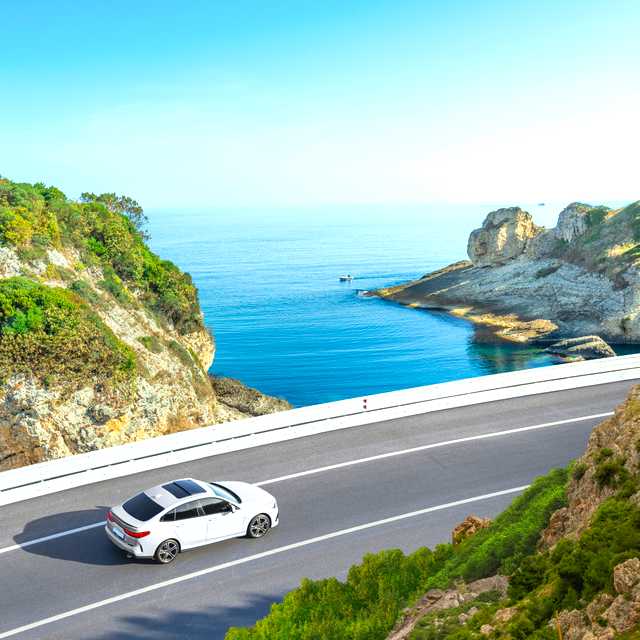
If you drive from Munich to Vienna with Daytrip, you will pass through many of Central Europe's most interesting and picturesque areas. The additional benefit of traveling with a private car service is that you will get to stop and sightsee at many of these scenic locations!
How long is the train ride between Munich and Vienna?
The train ride from Munich to Vienna usually takes four hours and ten minutes. However, this time will depend on the train line you book with and if you encounter any stops or are going to travel directly. Direct train trips are the fastest.
How much does the train from Munich to Vienna cost?
The train from Munich to Vienna costs between $55 and $130. How much you pay will depend on when you choose to travel, the type of ticket you book, and the train line you book your ticket with. Just note that holiday and weekend travel can cost more.
What makes Vienna special?
Vienna is special in many ways, but what stands out is its cultural legacy. Its historic center is a UNESCO World Heritage Site, and since Vienna was once home to many musical greats like Haydn, Mozart, Schubert, Schoenberg, and Beethoven, it has aptly earned the name the "City of Music." So don't be surprised if you hear musical notes during your visit while you're wandering the streets, touring museums, or enjoying a cup of coffee at a cafe.
What cities lie between Munich and Vienna that you can stop and explore?
On the 269-mile distance between Munich and Vienna there are lots of cities that you can stop and explore while driving. We often recommend travelers spend an hour to two hours in Salzburg, Hallstatt, or Melk. The most popular choice is Hallstatt, a charming village sitting on an alpine lake, and a UNESCO World Heritage Site.
What is the best way to travel from Munich to Vienna?
The best way to travel from Munich to Vienna depends on your goals. However, usually, you can't go wrong with booking an affordable and reputable door-to-door private car service like Daytrip. With Daytrip, you'll have a comfortable and stress-free door-to-door ride filled with insightful travel tips from your driver, and enriching sightseeing stops.
A car trip from Munich to Vienna will transport you from Munich's impressive modern museums and lively laid-back atmosphere to Vienna and its imperial palaces, Baroque streetscapes, coffee house culture, and beautiful woods. As you leave Munich behind, you'll journey across vividly stunning landscapes and see incredible sights.
With Daytrip's private door-to-door car service, your journey will take you past Schliersee, a lively city center and cheerful marketplace where you can find a few shopping gems to take home. Then there is Berchtesgaden—Eagles Nest to tour, an architectural masterpiece that used to belong to Hitler. The building, with ties to a complex history, perches atop a sheer rock face, affording travelers incredible views.
Should you work up an appetite, you can make a quick pit stop in the UNESCO-listed city of Salzburg. Here, you can enjoy a scrumptious quick bite to eat at one of the city's many cafes while keeping your ears open for the pervasive melodies of Mozart. With your appetite and curiosity sated, you'll be ready for your drop off in Vienna by your professional English-speaking driver.
About Vienna
Vienna is Austria's capital and biggest city, with a population of more than 1.9 million. As such, it is the country's economic, cultural, and political center and a long-reigning artistic and musical hub. It was also rated as the city with the highest quality of life globally from 2009 to 2019. With such an impressive achievement, it's not hard to imagine that traveling to this spectacular city would be an experience unlike any other.
Vienna is located along the banks of the beautiful Danube River, a little over 400 kilometers from Munich. Traveling from Munich to Vienna can take a fair amount of time. Still, the drive, train, bus trip, or flight is usually well worth it, considering everything that awaits, especially if you travel with Daytrip and stop along the way.
Historically, Vienna has undergone many incarnations. It was an imperial city between 1558 and 1918 and, until 1806, the seat of the Holy Roman Empire before becoming the capital of the Austro-Hungarian Empire. In 1918, Vienna became the capital of the newly established Republic of Austria after World War One. From 1938 to 1945, Austria was annexed by Nazi Germany. During this time, it was known administratively as "Greater Vienna" under Adolf Hitler's tumultuous reign.
In the following decade, after World War Two, Vienna was divided into four occupation zones and occupied by the British, American, French, and Soviet forces until 1955, when the country regained its independence. Despite its turbulent and violent past, Vienna is one of the least spoiled of the great Western European capitals.
It managed to hold onto its beauty throughout its history and has well-preserved architectural wonders, imperial gardens, magnificent cathedrals, old and cozy restaurants, opulent opera houses, and one of the world's oldest still-functioning amusement parks. It is a city that is known nowadays for its impressive innovation, culture, and history, and it has an undeniable air of charm and mystery.
From Munich to Vienna: travel tips
Those looking to travel from Munich to Vienna are in for an incredible experience, considering there is much to see and do along the way and in the city itself. However, to ensure the trip is a success, it's a good idea to remember a few key travel tips. Below, we've shared a few tips you'll need when undertaking this exciting journey.
Tipping is expected
Unlike many other destinations, tipping is expected at most cafes or restaurants in Vienna, and many eateries are found along the way from Munich to Vienna.
However, there's no need to stress and make drastic changes to your budget as tipping is often more modest than tipping culture in other countries like the US, UK, and Australia.
Often, simply rounding up the bill and leaving a few coins on the table will suffice. At cafes and restaurants, a 10 to 15 percent gratuity is more than enough unless you want to tip more. And if you don't want to, you don't have to—it's not mandatory.
### Plan enough time to explore
If you want to explore everything Vienna offers and stop and sightsee in towns and cities like Salzburg, Hallstatt, and Schliersee, you need to plan enough travel time. Typically, to explore the highlights of Vienna, you need two to three days in the city.
So, if you're going to spend time exploring cultural and historical landmarks and attractions during the drive with Daytrip from Munich to Vienna, you must add another day or two.
### Save on your international data plan by using free WiFi
Unfortunately, international data plans can be incredibly expensive. Many telecommunications companies charge more than $3 per MB used overseas.
Unless you get a specific travel sim card or eSim, you must try using public WiFi. Luckily, you can usually easily use public WiFi at cafes, restaurants, libraries, museums, and hotels along the way.
With these free WiFi services, you can check your emails, request Uber or taxis, save directions from Google Maps, and upload photos to Facebook and Instagram without an international data plan. Just be sure to use a VPN to protect any sensitive and private information while using public networks.
How to get from Munich to Vienna
To get from Munich to Vienna, you must take a train, bus, flight, or private car service. Taxis are also available but are often incredibly expensive, significantly raising your travel budget. Have a look below to learn more about these travel options.
From Munich to Vienna by train
There are quite a few train options available for those who want to travel by train from Munich to Vienna. You can also decide to travel by train in the daytime or the evening since night trains are available. If you choose a night train, you won't experience much of the incredibly passing scenery.
Two train lines also offer trips between these cities daily. They are WESTbahn and the Deutsche Bahn Intercity-Express. The former is the cheaper alternative, with trip fares costing between $55 and $130, while the latter train lines' ticket fare prices range from $75 to $90.
It's important to note that most trips offered are direct with no stopovers, and the average trip length is four hours and 10 minutes. However, some trains travel to Vienna via Passau and Salzburg so be sure to check the schedule.
### From Munich to Vienna by bus
The bus might be the slowest way to travel, but it is often the most affordable, which is why it's a popular transportation option among budget travelers. If you want to take the bus, you should consider booking with Flixbus as it is one of the more reliable and trustworthy bus lines that offer trips from Munich to Vienna.
Flixbus tickets cost between $35 and $50 per trip, and if you travel with a direct ticket, the trip will take about five and a half hours. Since multiple trips are offered daily, you can usually book a morning, afternoon, or early evening bus trip. Should you not want to travel with Flixbus, other options include Garo Reisen, Eurobus SK, and BlaBlaCar Bus.
### From Munich to Vienna by flight
Despite what you might believe, flying is not much faster than taking a train or private car service. A direct Munich to Vienna flight will take about 3.5-4 hours (including the extra time getting to and from the airport and 2 hours for check-in and security), so it is a little faster. Yet, you'll pay dearly for those few minutes. A flight from Munich to Vienna usually costs between $394 and $1350, which is incredibly expensive.
If you want to book a Munich to Vienna flight, you can choose between Lufthansa, Alitalia, Scandinavian Airlines, Brussels Airlines, Eurowings, Sun Express, and Swiss Airlines. The one offering the cheapest flights is usually Lufthansa.
### Private car transfer from Munich to Vienna
The most comfortable and convenient way to travel from Munich to Vienna is with a private car service like Daytrip. Daytrip will bring you door-to-door, so you won't even have to get to a train or bus station, and your English-speaking driver will load your luggage into the car before setting off.
Daytrip is well known for offering comfortable, exciting, and efficient trips from Munich to Vienna. Travelers can customize when they travel, where they are dropped off, and what they stop and sightsee along the way. You heard that right---you can visit the UNESCO World Heritage Site of Hallstatt, Salzburg, Mozart's birthplace, or several other enriching sights along the way!
If you choose to travel with Daytrip, booking prices can start as low as $102 (94 euros) per seat, and the trip will take just under 4.5 hours. Your professional English-speaking driver will even handle your luggage and share travel insights about the places you want to visit.
Things to do when you get to Vienna
So what should you do when you get to Vienna? If you've driven with Daytrip, you've likely explored many wonderful sights along the way, but what's next? To help you with your travel schedule plans, we've shared a few of the best things to do when you get to Vienna to ensure you have an enjoyable trip.
Schönbrunn Palace
It's located a bit outside of the city center, but you can't not visit the Austrian Versailles. Schönbrunn Palace was once the summer residence of the Habsburg emperors and now is a UNESCO World Heritage Site displaying their staggering wealth and influence. You'll get glorious views of the Vienna skyline from the Gloriette, so don’t miss it!
Along with one of the world's most opulent palaces, there's also the Schönbrunn Zoo. It's the oldest zoo in the world, one of the best in Europe, and one of only a handful with giant pandas!
### Hofburg Palace
The Hofburg Palace was a medieval fortified castle dating back to the 13th century. It is a sprawling asymmetric complex believed to consist of 19 courtyards, 18 wings, and a whopping 2,600 rooms.
Today, more than 1,000 people live and work at the palace, which is the official residence of the president of Austria. This is fitting, considering it was the beating heart of the Austro-Hungarian empire. Should you choose to tour the palace, you can visit any of its interestingly opulent galleries, Baroque-style state halls, or museums.
### Albertina Modern
It's true that there is no shortage of museums in Vienna, but one of the best museums worth visiting is the Albertina Modern. This museum—an offshoot of the Albertina Museum—houses postmodern, modern, and contemporary art and is known to hold two of the most important Austrian art collections, including the Jablonka and Essl collections. When you tour the museum, you’ll find an exhibition of 60,000 works by over 5,000 artists, which are exhibited at different times of the year.
### Palmenhaus
There might be many grand greenhouses in the world, but are there ones more grandiose than the Palmhaus in Vienna? Not likely—at least, visitors have said. This greenhouse features an incredible display of plants from all over the world and is easily identifiable by its towering tropical trees.
S
Its location in Burggarten Park makes it easily accessible and worth a look-see if you're already planning a trip to the park. The Palmenhaus is also unique in that it doubles as a swanky restaurant and bar serving traditional Austrian cuisine.
When is the best time to visit Vienna?
The best time to visit Vienna is undoubtedly in the spring. You'll find lower accommodation prices, cooler, more pleasant temperatures, and most importantly fewer tourists. Summer is the most popular time to visit, but we find it too hot and crowded.
With cooler temperatures, you won't mind as much when traveling from one attraction to the next. But if you do get hot, you can escape into the blissfully cool and air-conditioned museums, galleries, and palaces. Should spring be a no-go for the budget, then consider the much cheaper winter season. You might not enjoy sunny weather, but you can have fun at Christmas festivals and markets.
沿途参观这些景点
Schliersee
Schliersee, located in the Bayern region of Germany, has history that dates back 1,200 years starting with the creation of a monastery by five brothers. Waterfalls and Whisky
Berchtesgaden – Eagles Nest
Eagles Nest was the name given to Hitler’s ‘teahouse’ by the American soldiers who occupied Bavaria in 1945. *Closed November-May An artful symbol of madness
Salzburg
UNESCO-listed Salzburg ranks among the most prestigious cities in Europe, is the birthplace of Mozart and provided the setting for the classic musical, ‘The Sound of Music’. The city with the sound of music
Hallstatt
The town of Hallstatt lies in a sensational mountain setting, nestled among the lakes of the UNESCO World Heritage region of Hallstatt Dachstein Salzkammergut. Medieval UNESCO alpine village
Mauthausen
A forced labour camp for intellectuals, artists, aristocrats and political enemies of the Nazi Regime, Mauthausen is the Concentration Camp you won't have read about in history books. Austria's Secret Nazi Death Camp
Melk
Located on a small arm of Strauss' 'Beautiful Blue Danube', this quiet town still retains an imperial air. Abbey town on the Danube
每位乘客可以携带一件大行李(29" x 21" x 11" / 74 x 53 x 28 cm)和一件小行李(22" x 14" x 9" / 56 x 36 x 23 cm)。豪华轿车最多可容纳 2 件大行李。我们始终会为您安排最合适的车辆,以确保您的行李能够容纳。如有超大行李,或您不确定行李是否能放下,请 联系我们。