Yes, and for travelers moving between Rijeka and destinations further south along the coast, Krk makes a logical detour without significant backtracking. A Daytrip driver can build the stop into your route, allowing you to spend two to three hours in the old town — enough time to walk the walls, visit the churches, and find a quiet cove — before continuing to your final destination. Because the stop is arranged in advance, there are no timetables to catch and no need to coordinate separate transport back to the mainland.
Krk Island is accessible by bus from Rijeka, but services are infrequent and schedules do not always align with how long visitors want to stay. The buses also stop at multiple island towns before reaching Krk Town, extending journey times considerably. A Daytrip private transfer takes you directly from your starting point to the old town entrance, with no connections, no fixed return time, and no shared space with other passengers. For families with luggage, travelers combining Krk with other island or coastal stops, or anyone who simply wants to leave when they are ready rather than when a timetable permits, the difference in convenience is substantial.
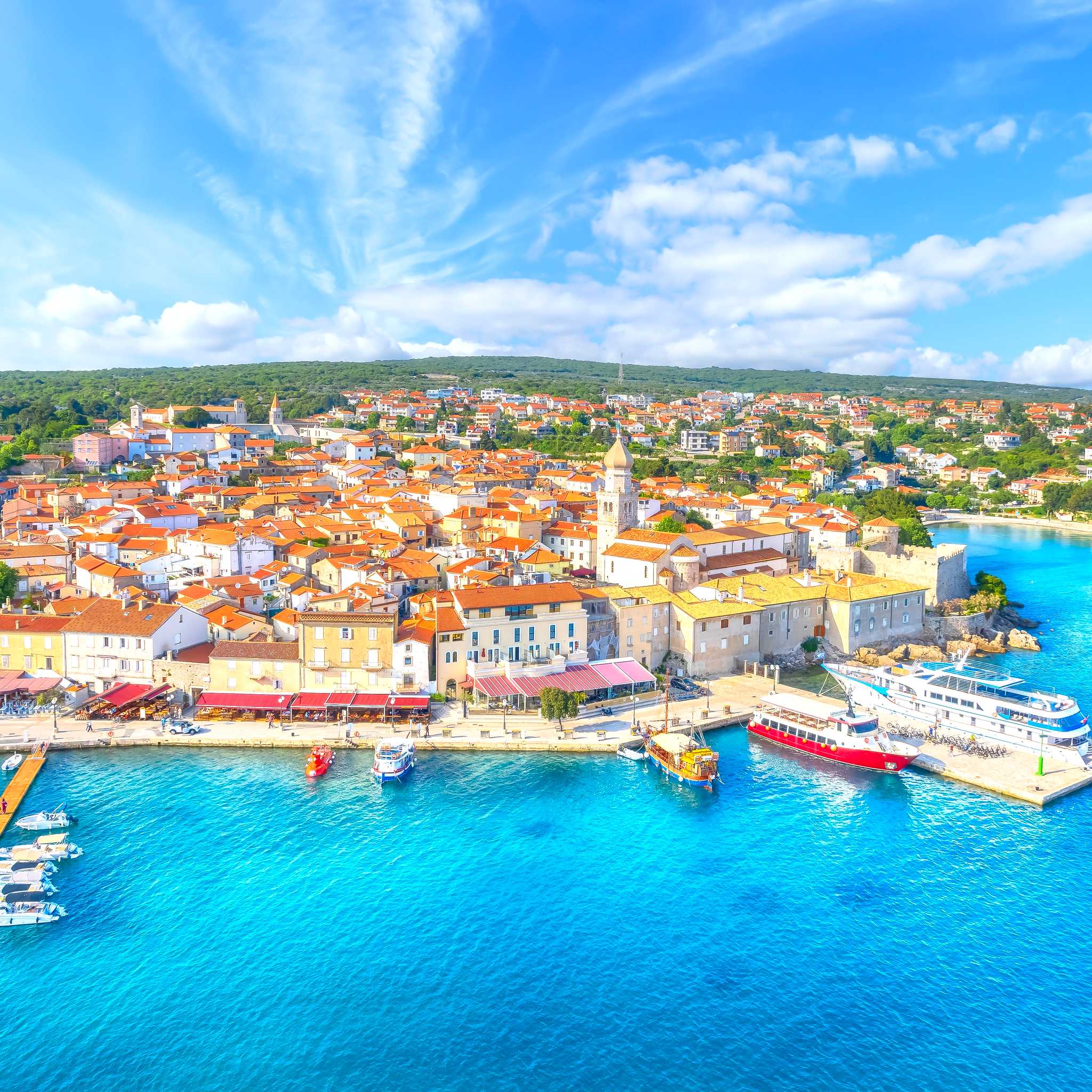
The Town of Krk sits at the southern end of Krk Island, connected to the Croatian mainland via the Krk Bridge — one of the longest sea bridges in the Adriatic. From Rijeka, the distance is approximately 55 km (34 miles), with a private transfer typically taking around 50 to 70 minutes depending on traffic. From Zagreb, the journey covers roughly 185 km (115 miles) and takes approximately 2 to 2.5 hours. The drive across the bridge and down the island offers coastal and island scenery that makes the journey feel like part of the destination rather than time spent in transit.
The Gothic Church of St. Francis, nicknamed the 'Little Vatican', is the most striking single site — a sacred Franciscan complex that feels unexpectedly grand for a small Adriatic town. The Cathedral of the Assumption of the Virgin, built on the foundations of a Roman basilica, and the early Christian Church of Our Lady of Health round out a trio of religious landmarks that reflect centuries of overlapping cultures on this island. Beyond the churches, the Roman-era town walls and the Frankopan Castle give the old town a walkable, layered quality where each turn reveals another era. For a complete contrast, the coastline immediately outside the old town offers quiet coves and clear water a short distance from the main sights.
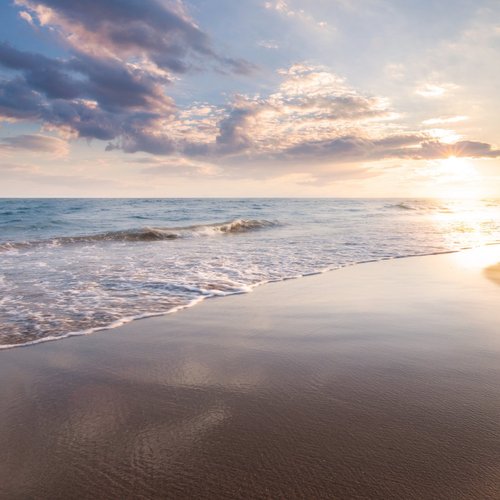
The coves closest to the town are reachable on foot from the old town walls, making them accessible without a car or organised tour. The clearest and most secluded spots tend to be along the rocky coastline heading away from the main town beach — a short walk rewards you with noticeably fewer people and water that is typically very clean. For anyone arriving by private transfer, your driver can advise on parking points closest to specific stretches of coast, saving the time you would otherwise spend navigating an unfamiliar island. Having a vehicle waiting also means you are not committed to a single beach for the day.
The Town of Krk is one of the oldest continuously inhabited cities on the Adriatic, with defensive walls first built in the first century BC still standing today. That two-thousand-year arc of history is visible everywhere — in the Roman foundations beneath medieval streets, in three sacred churches spanning Roman, Franciscan, and Benedictine traditions, and in a compact old town that has never been rebuilt from scratch. Alongside the history, the surrounding coastline offers hidden coves and secluded beaches that require no more than a short walk to find. It is a rare combination of genuine antiquity and easy natural access that larger, more-visited Croatian towns rarely deliver together.