There are no direct flights between Nice and Marseille since the two cities are not really far from each other so it makes flying an impractical option. The most efficient methods of travel are by Daytrip which is a door-to-door service, or train, which takes about two and a half hours.
How much is the train fare from Nice to Marseille?
The train fare from Nice to Marseille can vary widely. Fares start around $11 (âŹ10) if booked in advance, but last-minute tickets can be much more expensive. Regional TER trains offer cheaper alternatives, with prices depending on the time of booking and class of service.
How long is the train from Nice to Marseilles?
The train ride from Nice to Marseille takes around two and a half hours on the TGV (high-speed train) and slightly longer on regional TER trains, which would be around three hours. This can change depending on the delays of trains.
Is the train from Nice to Marseille scenic?
Yes, the train ride from Nice to Marseille is scenic, especially on the TER services that often travel closer to the coast, providing beautiful views of the French Riviera's landscapes and the Mediterranean Sea.
How can I get to Marseille from Nice?
You can travel from Nice to Marseille by train, car, bus, or by a private car service like Daytrip. The fastest, most convenient and comfortable way is a private car service, which provides a door-to-door and fun experience full of exploration on the way.
Is it possible to get from Nice to Marseille by ferry?
No, there is no direct ferry service between Nice and Marseille. The main ways to travel between these two cities are by taking a train, driving, having a bus ride, or booking a private car service like Daytrip.
The distance from Nice to Marseille is one that stretches along the shimmering Mediterranean Sea by the coast of the French Riviera. This 123-mile (199-km) road goes through the admirable regions of Provence through colorful landscapes embellished with vineyards, thick green hills, and bright blue views of the Mediterranean Sea. It only takes two and a half hours to travel this road by car, but with Daytrip and the stops youâll take and explore, thanks to their service, you might spend way more time enjoying the distance between the two cities.
On the first stop, youâll take, youâll be in for a winery treat. This abbey set in the green hills around the Cotes de Provence preserves a history of 11 centuries; Chateau Sainte Roseline was renovated into an art haven offering a contemporary winery with the possibility of touring the cellars.
On the next one, a fascinating monastic church will be waiting for you. Despite surviving several fires and revolts, in between its high ceiling and adorned altar, La Basilique Sainte-Marie-Madeleine preserves the significant roles it played during the Second and Third Crusades.
Another stop can be Aix-en-Provence, a university city that dates back to 123 BC and used to be Provenceâs capital. In this artistic city, youâll find the touch and works of world-renowned artists like Cezanne and Picasso.
About Marseille
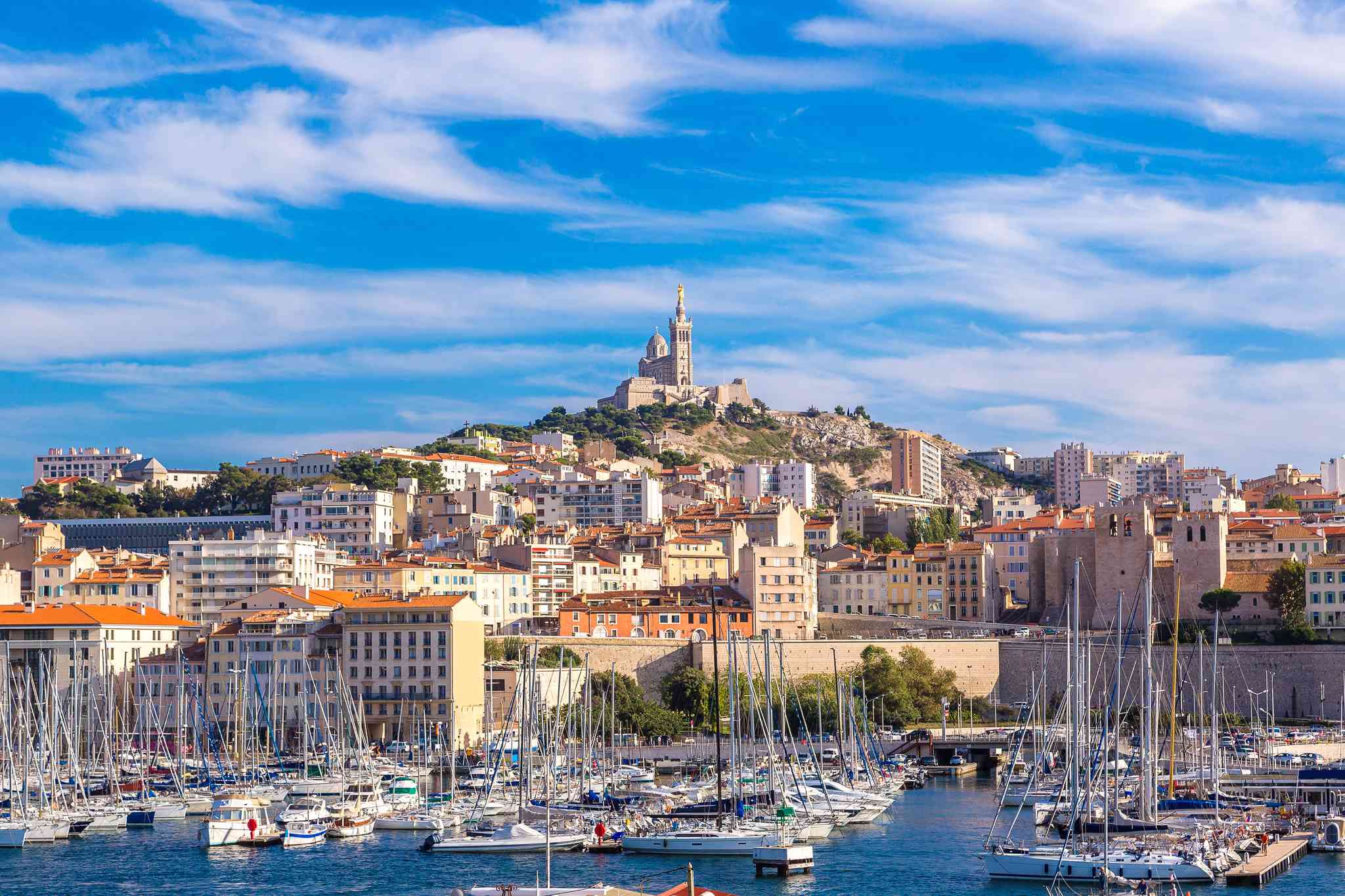
When you think back to the time youâve spent in Marseille, the summary might be a lovely mixture of light blue waters and sky against the background of pale-colored architectural marvels. Getting from Nice to Marseille will take you to Franceâs oldest and second-largest city after Paris, a dynamic port metropolis generously rich in history and cultural diversity. Located on the Mediterranean coast, this city is an amazing blend of warmth, sea, fresh food, and deep blue everywhere!
Letâs start with the history of Marseille. It was founded by Greek sailors in 600 BC and, therefore, has a very valuable heritage. For centuries, it has maintained its importance as a crucial Mediterranean port, and this strategic position it holds has influenced its architecture, culture, and economy deeply.
We can say that Marseilleâs history is as layered as the city itself. During its Greek and Roman Eras, it was a major trading post in the ancient world. The Middle Ages marks a chaotic time in Marseille, putting it through periods of both prosperity and decline. Being ruled by numerous powers such as the Visigoths, the Franks, and later the Counts of Provence gave the city the quality of its colorful diversity.
During the Renaissance, Marseille became part of the Kingdom of France. The cityâs fortifications were expanded, and it became an important naval base. With the industrial growth of the 19th century and its continuous growth as a gateway between Europe and North Africa, Marseille has become the major Mediterranean port and cultural melting pot it is today.
Youâll appreciate the profound history of Marseille through the notable landmarks youâll come across on your walks. Notre-Dame de la Garde, a basilica sitting on a limestone outcrop overlooking the city, is one of the most outstanding ones. Another one is, of course, where the heart of Marseilles beats: Vieux Port, or the Old Port. It has been the natural harbor of the city since ancient times, and now itâs lined with cafes and luxurious yachts.
All in all, Marseille's blend of ancient charm and modern dynamism will likely leave you captivated by the French Mediterranean coast and its beauties.
From Nice to Marseille: travel tips
You can make your trip from Nice to Marseille a different, more comfortable, and definitely more fun experience with Daytrip than your usual travels. And by following these tips, you can make sure traveling with Daytrip will be one of your best memories of your France trip.
Pack smartly
When traveling from Nice to Marseille, it's essential to consider the varied activities and weather you might encounter. Pack light, breathable clothing suitable for the Mediterranean climate, which can be warm during the day and cooler in the evenings. Include a versatile jacket or sweater for nighttime strolls along the Marseille waterfront or hikes in the hills around.
Donât forget comfortable walking shoes, which are a must, as Marseilleâs old towns and scenic paths are better explored on foot. Don't forget to bring a sun hat, sunscreen, and sunglasses to protect against the strong southern French sun. If you're planning to visit upscale restaurants or attend cultural events, include one or two smart-casual outfits in your luggage.
### Better depart early
Leaving Nice in the early hours of the morning can affect your travel experience to Marseille quite a lot. An early start helps you avoid the heavy traffic that can build up on the A8 motorway, especially during peak tourist season or on weekends.
Additionally, an early departure allows you to make the most of your day in Marseille, arriving with plenty of time to explore the city's attractions or settle into your accommodation without rushing. Enjoying the cooler morning hours also makes any planned stops along the way more pleasant, especially during the hotter months.
### Stop for a delicious bite on the way
A delightful stop on the drive from Nice to Marseille is the restaurant L'Oasis in Mandelieu-la-Napoule, near Cannes. It stands by the water's edge and is renowned for its exceptional cuisine and lovely garden setting. The Michelin-starred menu is a fusion of traditional French and Mediterranean flavors crafted by talented chefs using local, seasonal ingredients.
How to get from Nice to Marseille
Traveling from Nice to Marseille is possible through several convenient transportation options, each with different cons and pros. Take a look at a detailed look of your choices:
Nice to Marseille by car
The distance from Nice to Marseille can be traveled by car if you prefer driving when you are visiting a different country. With your rental or private car, youâll follow the primary route, which is the A8 motorway known as La Provençale. The car ride would take you around two and a half hours to travel, which is not that long, so itâs quite manageable.
You can also move solely according to your schedule. But do keep in mind that the route involves toll fees, and the fuel costs and parking in Marseille will be your responsibility, as well as driving according to the French traffic rules.
### Nice to Marseille by train
There are direct trains operating from Nice to Marseille, with multiple departures set in the timetables of TGV and OuiSNCF. Just like the drive, the train ride also takes around two hours and 30 or 45 minutes. Itâs a quick journey because there are fewer stops, and the train doesnât stop long enough at any of these stops to give you some time to explore, which is the biggest downside of traveling by train. Buy your tickets via their website, app, or at the train station. But booking in advance is better. Tickets start around $11 (âŹ10).
### Nice to Marseille by bus
Direct buses depart from Vauban bus station in Nice, mostly two times a day. The major operator on this route from Nice to Marseille is Flixbus, and the bus ride generally takes three hours. The buses usually have comfortable seats and free Wi-Fi, but not every bus is equipped with onboard bathrooms and power outlets. Similar to trains, it is not possible to take some time to stop along the way and explore. Purchase a ticket starting around $7 (âŹ6).
### Nice to Marseille by private car service
Traveling by a private car service, such as Daytrip from Nice to Marseille, is simply the best option you choose. The main advantage Daytrip has, and other options donât, is the flexibility to explore the amazing towns and historic sites along the way without worrying about driving on a road you are not familiar with, parking, or catching buses or trains. With the possibility of sightseeing in a comfortable car driven by a local Daytrip driver, youâll have an amazing trip on your way to Marseille. Secure a seat starting at $137 (âŹ126).
Things to do when you get to Marseille
The road from Nice to Marseille leads you to a fascinating port city by the Mediterranean coastline of France. Marseille overflows with activities that will fill you with joy, historical buildings that reflect the importance of the city, and restaurants displaying fresh cuisine. Here are some of the things you better make sure not to miss:
Tour the MUCEM
MUCEM is dedicated to celebrating Mediterranean civilization's historical and cultural contributions since its opening in 2013. Its location at the entrance of the Vieux Port, the avant-garde design that includes a black-lace concrete facade crafted by architect Rudy Ricciotti, already prepares you for the striking exhibition awaiting.
Traveling from Nice to Marseille is a different but great experience in every season; you just need to set your preferences straight. In summer, particularly in July and August, Marseille is quite busy with travelers enjoying its beaches like LâEstaque, Catalans Beach, and the Prado, sunbathing, doing water sports, and chilling by the refreshing Mediterranean sea.
As the day cools, the evenings are perfect for dining at terraced restaurants in the Vieux-Port, enjoying the sea views from Corniche Kennedy, or settling in a cozy cove like Vallon des Auffes to indulge in local fish dishes.
Dedicated to masterworks from The Levett Collection by female artists, this private collection is featured in a stunning remodelled medieval residence. A Lasting ImpactÂ
Chateau Sainte Roseline
This medieval abbey turned contemporary winery offers visitors a taste of prestigious wine and pious history in one place. A Sanctified PaletteÂ
La Basilique Sainte-Marie-Madeleine
Designed to capitalise the Summer Solstice, this Medieval basilica is an open, airy space thatâs has had its ups and downs. Mary and BrightÂ
Aix-en-Provence
The leafy boulevards, Romantic mansions, and plethora of fountains give a chic air to the former Provencal capital. A Provencal Fountain of ChicÂ
Camp des Milles
This former factory served as an internment camp during World War II, and is now a memorial spreading the message of acceptance. Looking Back, Looking ForwardÂ