What is the best way to travel from Porto to Lisbon?
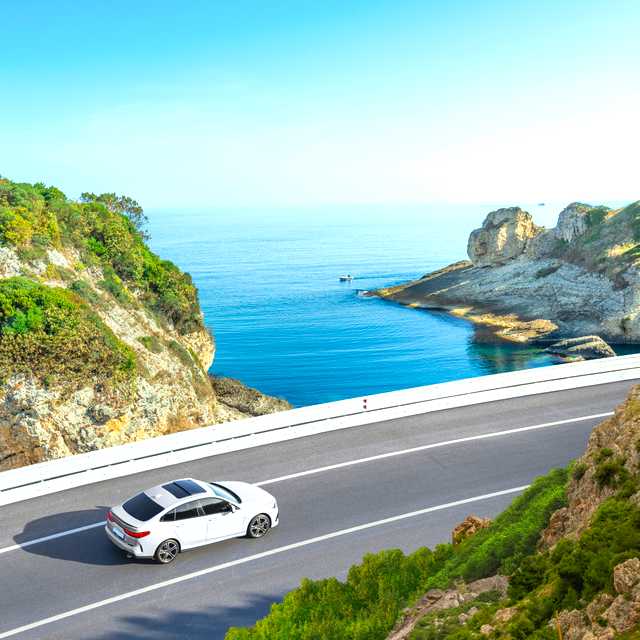
The best way to travel from Porto to Lisbon is by car service. It offers a seamless door-to-door experience, the comfort of traveling at your own pace, and most importantly, freedom to stop for sightseeing along the way.
How long does the car trip take?
The drive from Porto to Lisbon typically takes just under 3 hours, but this can vary depending on traffic, especially during rush hour and peak tourist season.
Should I rent a car to get from Porto to Lisbon?
Driving is definitely the best mode of transportation because of the option for sightseeing. You could rent a car to visit these places yourself, but then you have to worry about navigating foreign roads and finding parking once you reach Lisbon. Using a car service like Daytrip gives you the convenience of door-to-door transportation and enriching sightseeing stops without these drawbacks.
What should I expect to pay for a car service from Porto to Lisbon?
Prices can vary based on the type of vehicle you choose and the season. It's best to book in advance for the best rates, but expect to pay around €350 for a one-way trip in a sedan. Daytrip’s price is per vehicle, not per passenger, so for large groups it can be as low as €70 per person, which is cheaper than some of the train tickets.
Is there a direct public transportation option from Porto to Lisbon?
Yes, you have multiple public transportation options! There are multiple train and bus departures from Porto to Lisbon every day. You can even fly, but this is usually slower and more expensive than other transportation options.
Can I stop along the way to take pictures or visit attractions?
Yes, one of the advantages of using Daytrip’s private car service is the flexibility to stop along the way. You can arrange for sightseeing detours right on the website, and ask your driver to pause for photos.
What is the distance from Porto to Lisbon?
The distance is approximately 320 kilometers or 200 miles.
Are there any travel tips for making the journey more enjoyable?
Traveling early in the morning or later in the afternoon can help you avoid traffic and enjoy the journey with fewer crowds. Don't forget to carry water and sunscreen, and remember many places are closed for siesta from 1:00 to 3:00.
Taking a car trip from Porto to Lisbon doesn’t just mean driving between Portugal’s two largest cities. Going by car is the perfect way to experience more of Portugal's beautiful natural scenery, vivid culture, and rich history.
Leaving behind Porto’s sumptuous dishes and sweet wine, the drive ahead of you is filled with exciting possibilities. Do you take a detour to Aveiro, the Venice of Portugal, to walk along the canals and see the colorful fishing boats bobbing in the bay? Or maybe visit Coimbra, Portugal's former capital, where medieval houses line the streets around the world’s second-oldest university. And if you love Gothic architecture, Batalha, with its spectacular UNESCO-listed monastery, can’t be missed. Then, right before you arrive in Lisbon, there’s Pena Palace, a UNESCO World Heritage Site that might just be the most exciting example of Romantic architecture in the world!
Fortunately, when you travel from Porto to Lisbon by car, all of these are possibilities. Every stop and detour enriches your experience in Portugal, creating unforgettable memories that you’d just pass by on the bus or train. And unlike public transportation, you can explore on your own schedule, traveling door-to-door in comfort without having to lug your bags around bus stations and train terminals.
If you choose to take a car service like Daytrip rather than rent a car, you can expect unparalleled safety, comfort, and convenience. Your friendly, professional driver will meet you at your accommodation in Porto safely drive you to your final destination in Lisbon. You don’t have to worry about finding parking or navigating narrow streets. Even better, you can easily add sightseeing stops, which they’ll be happy to bring you to. And on the road, they’ll share their insights about local culture and give you tips on what to see and do when you arrive in Lisbon.
About Lisbon
Lisbon, Portugal’s capital and largest city, is one of the oldest in Europe, having been founded by pre-Celtic tribes before the Phoenecians arrived. From a far-flung outpost at the edge of the known world, Lisbon became the base for Portuguese exploration in the 15th century, which brought unimaginable wealth to the city. A devastating earthquake in 1755 leveled much of the city, so Prime Minister Sebastião José de Carvalho e Melo, rebuilt the city center in an open rectangular plan with two main plazas. These mark Lisbon’s two main districts: the central commercial district, with cafés, theaters, and restaurants, and the port which welcomes returning ships with an impressive triumphal arch. From there, Lisbon stretches across a series of rolling hills overlooking the Tagus River.
Each neighborhood has its own unique identity, from seaside Belem with its iconic Torre de Belem tower to Mouraria, the Moorish quarter that survived the 1755 earthquake. With the famous São Jorge Castle standing watch over the city high in Alfama, and the Monastery of Jerónimos on the opposite side of the city, visiting the top sights in Lisbon may seem like a daunting task. But fortunately, Lisbon’s iconic yellow trams make it easy to move between neighborhoods. Tram 28 in particular brings you to historic areas like Graça and Alfama. The tram ride is an attraction in itself, with captivating scenes rolling by at every hairpin turn as the tram cuts through the cobbled stone streets.
The weather in Lisbon is almost unerringly pleasant, with 290 days of sunshine a year, and temperatures rarely dropping into the 50s (15 celsius) and peaking in the low 80s (28 celsius). This means you’re almost guaranteed perfect weather for relaxing in the broad squares, or exploring the narrow, cobbled alleys. This perfect weather, combined with the city’s architectural beauty and proud history probably explains why Lisboetas are universally warm and inviting. As one of the happiest cities in the world, and one of the most hospitable, interacting with locals is always a pleasant experience, whether it’s asking for directions, or ordering Lisbon’s famous pastel de natas, egg custard pastries that have become Lisbon’s culinary symbol.
From Porto to Lisbon: Travel tips
If you decide driving from Porto to Lisbon best suits your transportation needs, we have some essential travel tips to make the most of your journey.
Selecting a reputable car service is crucial
Opt for a provider like Daytrip, that offers a fleet of well-maintained vehicles and experienced drivers who can navigate Lisbon’s narrow, hilly streets with ease. This will ensure your comfort and safety, as well as provide an opportunity to gain local insights during your ride. Using a reputable service also guarantees the price and travel time up front.
Timing is key
The drive usually takes about 3 hours, depending on traffic and the time of year. To avoid congestion and enjoy a more leisurely ride, consider departing early in the morning or late in the afternoon. If you’re planning on sightseeing on the way, starting early also ensures you’ll beat the crowds at the more popular attractions (just don’t go too early when things are closed).
### Pack wisely for the trip
Even though it’s a short ride, it's wise to have essentials such as water, sunscreen, and a camera ready. The sun can be strong, even through the windows of a car - and as you approach Lisbon, chances are it’s going to be sunny. And if you’re making a sightseeing detour, you’ll want your camera handy so you don’t waste time digging through your luggage.
### Communicate with your driver
A knowledgeable local driver can enrich your trip with stories and facts about the region. Daytrip’s drivers love sharing their insights, so don’t hesitate to ask for recommendations or more information. Your driver will happily give you advice on everything from what to do in Lisbon, to some signature dishes to try.
How to get from Porto to Lisbon
You have several transportation options to get from Porto to Lisbon. Which is best for you depends on your travel preferences. Do you want to get to Lisbon as quickly as possible, are you looking for the cheapest transportation, or do you want to experience as much of Portugal as possible? We can pretty confidently say skip flying though.
From Porto to Lisbon by train
Taking the train is one of the most popular ways to travel from Porto to Lisbon. The modern railway is efficient and comfortable. The train ride from Porto to Lisbon takes around 2.5 hours, and tickets cost between $40 and $90 depending on your departure time. Since you don’t have to worry about traffic, taking the train is the fastest way to get from Porto to Lisbon - especially if you spring for the high-speed Alfa Pendular.
From Porto to Lisbon by bus
For travelers on a budget, the bus is the cheapest way to get from Porto to Lisbon. Tickets start at 16 EUR (about $17), and the travel time is closer to 3 hours, which can be even longer if there’s traffic. The buses have air conditioning and comfortable seating and depart several times a day, so it’s easy to find one to fit your schedule.
### From Porto to Lisbon by plane
While a flight from Porto to Lisbon takes just one hour, and tickets can be even cheaper than the train if you book in advance, we don’t recommend this option. You still need to get to and from the airport in both Porto and Lisbon, which adds to the travel time and cost. And then you also need to arrive an hour early for your flight. Between the added costs of getting to and from the airport, and having to get to the airport early, it usually ends up being the most expensive and slowest option.
### From Porto to Lisbon by car
Probably the best way to travel from Porto to Lisbon is by car. It takes about 3 hours, but the travel time doesn’t matter here, because driving lets you explore the countryside and experience more of Portugal’s culture and beauty. With public transportation you can’t swing by Aveiro to see the canals and traditional fishing boats, or marvel at the intricate architecture at UNESCO-listed Batalha Monastery. While you can rent a car and drive yourself, taking a car service like Daytrip is even more convenient; you get all the benefits, including sightseeing, without having to worry about traffic or finding parking. You get all that for not much more than the train.
Things to do when you get to Lisbon
When you arrive in Lisbon you’ll find it’s an exciting modern capital on par with Europe’s other major cities with a rich history. After dropping off your luggage at your accommodation, take a ride on Tram 28 into the old Alfama district. This scenic tram ride is the perfect way to get your first taste of Lisbon. It leaves you at the foot of the Estrela Basilica, one of Lisbon’s largest churches and most beautiful monuments. From here, dive into the Alfama district’s winding warren of cobbled streets. Dating back to the Moors, it’s the oldest part of the city, with historic monuments aplenty, from the great Lisbon Cathedral to the remains of the old city walls. The crowning landmark here though is St George’s Castle. Dominating the Alfama District, the foundations of Lisbon’s most visible landmark date back to the Romans over 2,000 years ago. Today, the castle shows the influence of the city’s subsequent rulers, from the Berbers to the Reconquista knights, and its ramparts offer amazing views of the city below.
From the heights of Alfama, head down to the beaches of Belem. Along with swimming and enjoying Lisbon’s perpetually perfect weather, it’s here you’ll find the Torre de Belem, which has commanded the mouth of the Tagus River since the 16th century. Its fusion of every architectural style, from Romanesque to Moorish, Mudejar to Gothic, combined with its picturesque location in the waters of the Targus has made the Torre de Belem perhaps the single most iconic monument in Lisbon. While you’re down by the water, be sure to head to the huge Lisbon Oceanarium. One of the largest indoor aquariums in Europe, you’ll find 16,000 creatures from 450 species. It’s one of only a few aquariums in the world where you’ll be able to see an ocean sunfish (mola mola).
Lisbon has a wealth of other cultural attractions that will vie for your attention. Portugal is world-renowned for its ceramics, and there’s no better place to see the country’s mastery than the National Tile Museum. It will walk you through the history of tile making from when the Moors first introduced the art to Iberia, exhibiting many amazing ceramics, including, of course, incomparable azulejos. The National Museum of Ancient Art showcases a prestigious art collection spanning everything from Renaissance paintings to Baroque decor, metalwork, and ancient Roman sculptures. The Museu do Oriente stands as a fascinating reminder of Portugal’s former far-flung empire, pulling together artifacts from everywhere Portugal had a colony or trading post.
One experience that locals will always recommend is a day trip to Sintra. The town is a UNESCO World Heritage Site filled with rich churches, mansions, and multiple palaces of former Portuguese kings and queens. The Romanticist Pena National Palace with its bold colors and mix of styles is one of the most unique buildings in the world. But you may want to plan more than a day in Sintra to be able to visit the medieval Castle of the Moors and the Renaissance Sintra National Palace as well.
沿途参观这些景点
Aveiro
Dubbed “the Venice of Portugal” because of its canals and gondola-like boats, visitors will find Aveiro has its own unique identity. The “Venice” of Portugal
Coimbra
Halfway between Lisbon and Porto, this varied and captivating city has a long history and vibrant atmosphere built around the country's oldest university. The Medieval Capital of Portugal
Fatima
After 3 children had visions of the Virgin Mary, this farm-town transformed into a miraculous mecca. Portugal’s Holy City
Batalha
Dominated by the great Dominican monastery of Santa Maria da Vitória, Batalha was developed alongside the Monastery after securing Portugal's independence. A City Built on Victory
Nazare
This historic fishing village attracts beach-goers, culture-lovers, and surfers, who come to ride its record-breaking waves. A Real Catch
Obidos
Traditionally owned by the Queen of Portugal, every house in this hilltop town had to meet the royal aesthetic. The Town of Queens
Pena Palace in Sintra
King Ferdinand II’s fantastical jumble of architectural styles is Romanticism on the grandest scale. Genius or Madness
每位乘客可以携带一件大行李(29" x 21" x 11" / 74 x 53 x 28 cm)和一件小行李(22" x 14" x 9" / 56 x 36 x 23 cm)。豪华轿车最多可容纳 2 件大行李。我们始终会为您安排最合适的车辆,以确保您的行李能够容纳。如有超大行李,或您不确定行李是否能放下,请 联系我们。