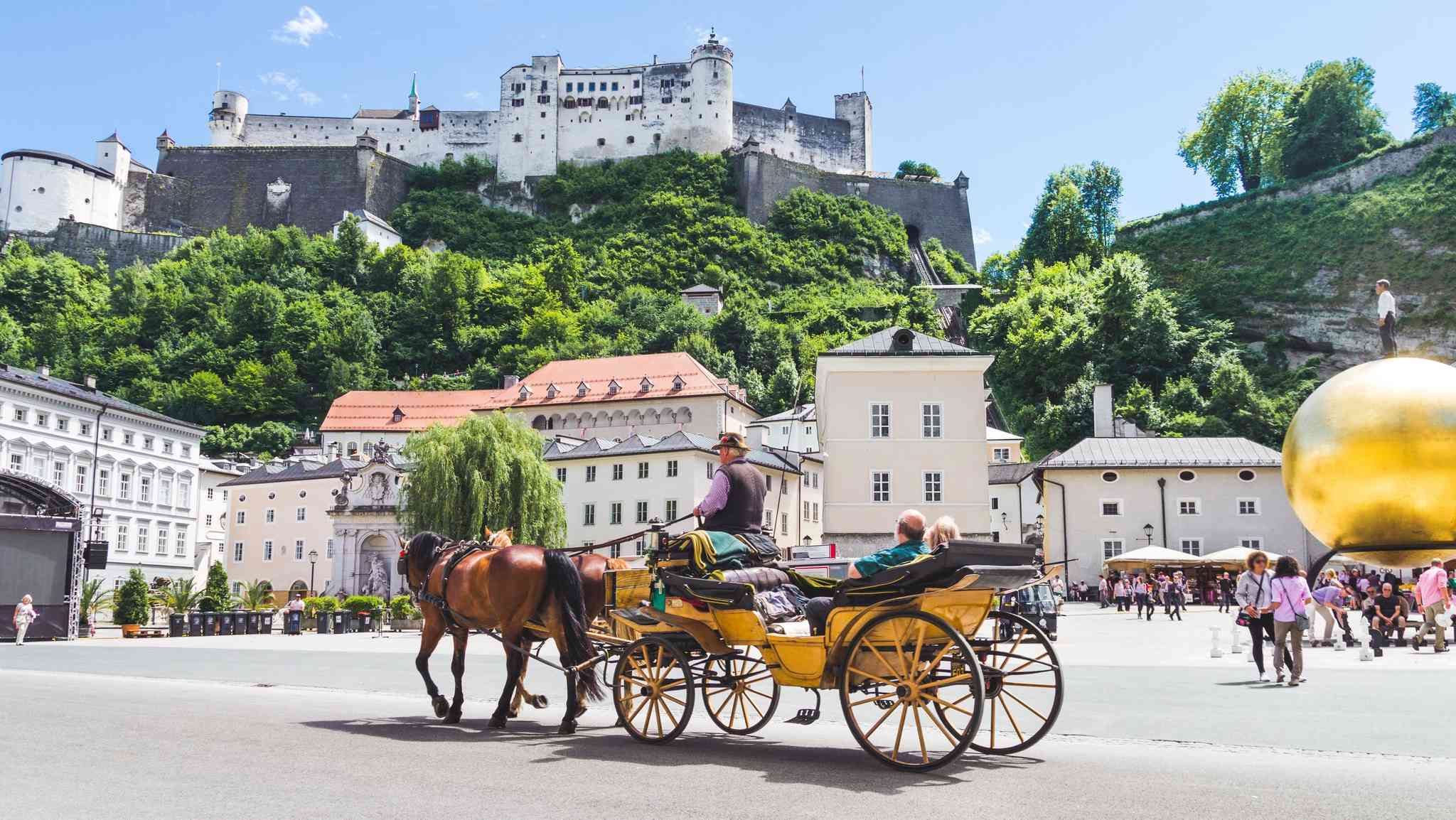
私人汽车接送从 Salzburg 到 Munich
在 1小时 40 分钟
的车
行程信息
上车点
您的司机将在Salzburg与您会面。
- 上门服务
- 帮您拿行李
行程
您将享受舒适的旅程,持续 1小时 40 分钟。
- 可选观光
- 干净、舒适的车
- 专业司机
- 瓶装水
- 儿童座椅
- 为残疾人准备
- 无烟
- 宠物友好
下车
您的司机将在Munich将您送到您的地址。
- 上门服务
- 帮您拿行李
Overview: car trip from Salzburg to Munich
The distance from Salzburg to Munich is only about 90 miles (about 145 kilometers) and is a scenic drive that connects two of Europe's most vibrant cities. This route, popular among tourists for its picturesque views and historical landmarks, provides a unique opportunity to explore the heart of Central Europe.
If you didn’t make a day trip to Hallstatt while you were in Salzburg, the ride to Munich is the perfect opportunity! Sitting on an alpine lake and surrounded by mountains, it isn’t just one of the most beautiful towns on the planet. The salt mines in the mountains above this UNESCO World Heritage Site are some of the oldest on the planet!
Before leaving Austria, you can also stop by Melk, a small riverside town with a big history. “The Abbey” was originally a royal palace, and still retains all the decadent trappings. Walk the Emperor's Gallery to see portraits of the Austrian nobility crushed beneath Napoleon’s heel. Then be awed by the decadent decor of the Baroque church, lavishly embellished with marble and frescoes, and topped off by a heavy layer of gold.
There are plenty of other sightseeing options too. From the mighty Kreuzenstein Castle to the chilling Mauthausen Concentration Camp you have almost endless opportunities to immerse yourself in European history and culture.
Fortunately, when you take a private car transfer with Daytrip, you don’t have to worry about navigating rural roads to find them! You can pick your stops with a click on the website, and your local driver will deftly deliver you on the day of—simple! Not like public transportation that requires transfers between trains or buses with limited service.
Even if you decide not to stop for sightseeing, say because you have dinner reservations in Munich, you can still look forward to an enriching trip. Daytrip’s drivers speak English, so you can chat about local history and culture, and get some insider tips on the best things to do when you get to Munich. You’re not going to get that level of service on a crowded bus or basic taxi.
As you enter Munich’s city limits, your driver will bring you to your accommodation and offload your luggage. You don’t need to lift a finger the whole trip!
About Munich
After the breathtaking drive from Salzburg to Munich, you’ll have made your way into the capital of Bavaria and the third-largest city in Germany (after Berlin and Hamburg). It’s the largest city in South Germany and has an estimated population of over 1.5 million people.
The distance between Munich and the north of the edge of the Alps is about 30 miles (50km) and the Isar River divides the city into two.
Early Munich
Munich started off as a small 8th-century friar settlement, known as zu den Munichen (“to the monks"). It refers to the monks of the Benedictine order who had a monastery at the site of what would come to be known as the Old Town of Munich.
Over the centuries, Munich blossomed, weathered periods of hardship, and eventually emerged as a pivotal center of the Renaissance, the Reformation, and later, the Bavarian monarchy.
Post-World War II Munich
Munich’s growth dived World War II when it faced significant damage. However, after the war, the city, like a phoenix, rose from its ashes into the vibrant and dynamic city we know today, all the while maintaining its historical heritage.
Modern-Day Munich
Munich is recognized for its unique fusion of historical heritage and modernity. The city’s skyline is a mix of the old and the new. Notable architectural pieces include the Old Town with the Marienplatz, Frauenkirche, palaces and castles, modernist architecture, and high-rise buildings.
It is also the birthplace of BMW (Bayerische Motoren Werke) and there’s even a museum at their headquarters. This Bavarian city is also home to the soccer club Bayern Munich.
The social customs and traditions of Munich
Munich has the soul of a little village compared to the skyscraper city it is. The word that best describes the ambiance is gemutlich, which translates to cozy.
Additionally, the Bavarians here, like the rest of Germany, are pretty direct. If you commit an offense, say, walk into the bike lane, someone will let you know. On the other hand, if you leave your wallet in a cafe, someone will run after you to return it.
You might want to brace yourself for the Bavarian dialect which is oftentimes hard to figure out, even for native Germans. Good thing our Daytrip drivers are local and ready to help you navigate language barriers en route.
Do you want to revel in the local drinking experience? Then visit one of the city’s boazn. This is the same as a dive bar. They are quite cozy, with affable locals and unreserved bartenders who’ll serve you a freshly tapped beer and some life advice.
Culture
The Bavarian capital is mostly famous because of Oktoberfest, but that’s not the only festival to attend while in Munich. The Tollwood Festival takes place twice yearly (summer and winter) and boasts international food, live music, and a circus.
The city is also home to opera, comedy, theater, and music festivals which are well attended and sell out rapidly. What’s more, every neighborhood holds its own annual street festival, consisting of live music, hot food, and kids’ activities.
From Salzburg to Munich: travel tips
The trip from Salzburg isn’t especially strenuous, especially when you’re taking a door-to-door car transfer with Daytrip. Still, you should make a few essential preparations to avoid any hiccups.
Traveling from Salzburg to Munich involves not only crossing the distance between these two beautiful cities but also navigating the nuances of international travel within Europe. This is because Munich is in Germany while Salzburg is in neighboring Austria. For this reason, preparation is key to ensuring a smooth and enjoyable journey.
General travel tips for Germany
Ensure your passport is valid for at least 6 months from your date of entry. While EU citizens can travel freely with an ID card, non-EU travelers should check visa requirements.
Germany uses the Euro (€). While major chains and shopping outlets may accept your credit card, most restaurants and stores accept cash only and in some cases, electronic cards. Having some Euros on you will make your visit to Munich smooth.
German is the official language. English is commonly spoken in tourist areas, but learning a few basic German phrases can enhance your travel experience. On the other hand, having a driver will come in handy as they can speak both English and the local language.
Specific tips for Munich
Munich boasts an efficient public transport system, including U-Bahn (subway), S-Bahn (suburban trains), trams, and buses. Purchasing a day or multi-day pass can be cost-effective for exploring the city. Furthermore, you can find taxis pretty much anywhere in the city.
If you’re opting for a car rental, remember that Germany drives on the right-hand side. Adhering to the Autobahn speed limits and city parking regulations is crucial.
Munich is generally safe for tourists. However, exercising standard precautions against pickpocketing in crowded areas and being aware of your surroundings at night is recommended.
Packing essentials
Munich’s weather can be unpredictable. Layering is advisable, with a waterproof jacket for sudden showers.
As for power for your gadgets, Germany uses type F sockets. A universal travel adapter is essential for charging your devices.
In case of medical care, ensure you have travel health insurance that covers the Schengen zone. Pharmacies (Apotheke) are well-stocked, but prescription medications should be brought from home.
How to get from Salzburg to Munich
The trip from Salzburg to Munich can be made through various transportation methods, each with its distinct advantages and downsides. Now we’ll look into the available options, focusing on train, bus, car rentals, and flight connections, concluding with an overview of why Daytrip’s private car service provides an unparalleled travel experience.
Salzburg to Munich by train
The train journey between Salzburg and Munich is famed for its scenic routes, going through picturesque landscapes. Deutsche Bahn operates regular services, ensuring a seamless travel experience. Ticket costs on the Bayern Bahn vary, starting at around $31 (€29) for second-class seats if booked in advance. The timetable is tight, with trains running hourly, making it a flexible option for travelers.
While train travel is efficient and environmentally friendly, it requires transfers to local transport upon arrival in Munich for city exploration. Additionally, during peak seasons, trains can be crowded, and prices may surge.
Salzburg to Munich by bus
The bus service presents an economical alternative for travelers. Operators provide regular connections between these cities. Prices are competitive, with fares as low as $18 (€17), making it a budget-friendly option.
However, the bus journey depends on traffic conditions, potentially extending travel time. Furthermore, buses will not veer off-route to some of the sites along the way. They also offer direct routes but may be less comfortable over longer distances. Limited legroom and varying onboard amenities might affect the overall travel experience.
Salzburg to Munich by rental car
Renting a car is attractive because of flexibility and the freedom to explore off-the-beaten-path sights between Salzburg and Munich. Car rental prices fluctuate based on the vehicle model and rental duration, with a daily price starting from $50 (€45). Remember to consider fuel prices and potential toll fees.
While a car rental provides door-to-door convenience and the opportunity to visit attractions at your own pace, navigating foreign roads and parking in Munich can be challenging. Then there’s the hassle of figuring your way to the sites.
Salzburg to Munich by flight
Because Munich is not far from Salzburg there are no direct flights available. It is still possible to book the route with airlines like Lufthansa, but with at least one layover, the fastest travel time is about three hours. Add to that the two hours at the airport for check-in and security, plus travel time to and from the airport, plus getting off the plane, waiting for your luggage, and all the other little things that go with air travel and you’re looking at 6 hours total, or longer!
Flight prices are significantly higher than other options, starting at $150 (€135) per person.
Salzburg to Munich by private car transfer with Daytrip
Make your experience seamless. Daytrip provides a unique, door-to-door service that combines the comfort of private travel with the ease of sightseeing. Local drivers, fluent in English, provide insights into the culture and history of the regions you’ll be traveling through, making the journey from Salzburg to Munich as memorable as the destination itself.
Stay comfortable & flexible. Unlike other modes of transportation, Daytrip allows you to customize your itinerary, including stops at attractions like Chiemsee Lake or Neuschwanstein Castle, without the stress of balancing public transport schedules or the cost of multiple tickets.
While each transportation method from Salzburg to Munich has its merits, Daytrip’s personalized service provides a compelling blend of convenience, comfort, and cultural immersion. This sets it apart as the ideal choice for travelers seeking a more intimate and flexible journey through Bavaria. After all, no other option lets you stop for sightseeing or chat with a friendly local as you travel!
As we journey onward to Munich, the array of activities and experiences awaiting in this vibrant city beckons. Let's explore the myriad things to do upon arrival in Munich.
Things to do when you get to Munich
Upon traveling from Salzburg to Munich, you’ll be introduced to a city that strikes the right balance between historical preservation and contemporary evolution. Munich is famous for its contributions to arts, culture, and science. It has a bunch of activities that cater to diverse interests. Take a look at some of these interesting places to visit.
Cultural exploration and museums
First off is the Deutsches Museum. Situated on an island in the Isar River, this museum is recognized as the world’s largest repository of science and technology exhibits. Its comprehensive collections cut across numerous disciplines, including physics, transport, and natural sciences. The museum's emphasis on interactive and participatory exhibits makes it an invaluable educational resource for visitors of all ages.
Next is Alte Pinakothek. As one of the oldest galleries worldwide, it is not only famous for its architectural merits but also for its extensive collection of European paintings. The gallery's holdings, which range from the 14th to the 18th centuries, provide insight into the evolution of art styles and techniques during this period. The works of Dürer, Raphael, and Rembrandt, among others, are pivotal to understanding the cultural and historical contexts of their times.
Authentic Bavarian experiences
You have to visit the Viktualienmarkt. This market represents the culinary heart of Munich, and is touted as the city’s best foodie attraction, offering a wide range of local and international foods. Initially established as a farmers' market, it has grown into a vibrant space where both locals and tourists can savor Bavarian specialties and artisanal products. The market also serves as a social hub, reflecting the communal lifestyle unique to Munich's culture.
For the ultimate drinking experience, visit Hofbräuhaus. Known as one of Munich's oldest beer halls, it is more than a dining establishment; it is a cultural institution that celebrates Bavarian beer culture. The hall's history, dating back to the 16th century, mirrors the social and economic importance of beer in Bavarian society.
Outdoor activities and green spaces
The English Garden is an expansive urban park, one of the largest globally, illustrating the marriage between natural landscapes and urban settings. Designed in the English style, the park features a range of landscapes, from formal gardens to naturalistic areas, presenting spaces for recreation, relaxation, and cultural events. The Eisbach Wave, a man-made river surf spot, highlights the park's role in urban leisure activities.
The Olympiapark was constructed for the 1972 Summer Olympics and has transcended its original purpose to become a center for cultural and sporting events. Its iconic tent-style roofing and innovative design have earned architectural acclaim, contributing to Munich's modern skyline.
Festivals and events
The Oktoberfest festival, renowned globally, represents Bavarian culture. It attracts millions of visitors annually. Beyond its celebration of beer, it gives a window into traditional Bavarian music, dance, and attire, fostering a sense of community and heritage.
Munich's Christmas markets, particularly the Christkindlmarkt, capture the festive spirit with their array of crafts, foods, and decorations. These markets are not merely commercial venues but social spaces where the warmth and joy of the season are shared among community members and visitors alike, reflecting the city's historical and cultural values.
When is the best time to visit Munich
When to make the trip from Salzburg to Munich involves considering the city's climate, cultural calendar, and the influx of tourists. This evaluation seeks to guide travelers in selecting a time that aligns with their preferences for weather, activities, and crowd levels.
The spring (March to May) season marks a transition from the cold, snowy winter to warmer temperatures. With averages ranging from 32° F to 59° F (0° C to 15° C), the city begins to bloom, and you'll enjoy pleasant conditions for outdoor activities
Munich's summers (June to August) are warm, with temperatures averaging 75° F (24° C) in July and August. This period is ideal for outdoor dining, beer gardens, and festivals. However, it's also the peak tourist season, with higher accommodation prices and more crowded attractions.
Autumn (September to November) brings a cooler climate, with temperatures dropping to as low as 37°F (3°C) in November. The season is famously marked by Oktoberfest, which typically occurs from late September to the first weekend in October. Unsurprisingly, Oktoberfest is when Munich is most crowded and most expensive.
Winters (December to February) in Munich are cold, with temperatures often below freezing. Despite this, the city's Christmas markets and New Year's celebrations attract visitors looking for festive holiday experiences.
关于从 Salzburg 到 Munich 旅行的问答
How much does a train ticket cost from Salzburg to Munich?
Is Munich a safe place to visit?
What are the advantages of taking a train from Salzburg to Munich?
Is Munich cheap or expensive?
Is the train ride from Salzburg to Munich scenic?
How can I get from Salzburg to Munich?
沿途参观这些景点
为什么旅行者喜欢这条路线
- 17 条 reviews 适用于此路线
- 5,047 名 travelers 乘坐了这条路线与我们同行
“这是从慕尼黑机场到萨尔茨堡的绝佳旅程。车内宽敞且非常舒适。司机Aleš非常友好、乐于助人且驾驶安全。总体上我们非常满意。继续保持良好的服务。”
“Daytrip在慕尼黑的酒店接我们,直接送我们到萨尔茨堡的酒店。真是非常方便。价格与我们六个人支付火车票的费用差不多。车非常舒适,且司机提前到达。当他到达时我们收到了短信。我对这家公司非常印象深刻,预定报价非常简单。之后,我还考虑在旅程的其他部分使用他们的服务。每当考虑从A地到B地的最佳出行方式时,我都会考虑他们。”
从慕尼黑到萨尔茨堡,再到布拉格,再到斯洛伐克,再到布达佩斯的旅行,包括分站
“根据不同城市,我们9-10人(来自美国不同州)全程使用了mydaytrip服务。真是一次美妙的体验!!我们从慕尼黑机场接机,然后进行了萨尔茨堡、布拉格、布拉迪斯拉发和布达佩斯的分站旅行。司机准时到达,英语流利,知识丰富且非常亲切。车子/面包车干净安全。我计划以后每次去欧洲旅行都会使用这项服务。”
“我最近使用了Daytrip两次。一趟是从慕尼黑到萨尔茨堡,中途在库夫施泰因和哈莱因停留,另一趟是从萨尔茨堡到维也纳。我认为Daytrip是个绝佳的主意。它省去了我很多规划的麻烦,也避免了其他交通方式(火车/飞机)的繁琐。司机准时,车内干净,整个旅程很顺利。如果价格能再便宜点就更好了。😆”
“我们刚刚从欧洲的七周之行回来。我们使用了Daytrip提供的四次旅行服务:布达佩斯到克拉科夫,克拉科夫到布拉格,布拉格到萨尔茨堡,以及萨尔茨堡到慕尼黑。感谢您提供如此棒的服务!坐下来放松,享受美丽的景色,而您的出色司机们与我们进行交流并安全地带我们到达目的地,真是一种享受。在两次较长的旅行中,我们还安排了短途旅行,这给我们提供了机会,既能运动又能欣赏到我们不会去到的地方。如果我们再需要司机,我们一定会使用这项非常棒的服务!非常感谢,Dyann和Wild”
“DayTrip为我们组织了从萨尔茨堡到慕尼黑的私人单程接送。各方面的体验都非常出色。面包车是梅赛德斯(8人座,我们只有4个人),看起来几乎是新的。司机Harald非常礼貌、衣着得体,帮我们搬运行李,帮助我们这些年长的乘客进出车,并且开车非常安全。由于我们不着急,他还带我们走了风景路线而不是高速公路,结果多花了15分钟。费用是机票的三分之一,而且门到门的时间比飞行还要短。强烈推荐,尤其是对于4到8人的团体。”
“我们与Marjot一起从慕尼黑到萨尔茨堡的旅行非常棒。我们选择了途中停留两个地方,参观了赫伦基姆湖宫(停留时间比预定的稍长)。她帮我们购买了门票,并确保我们知道乘坐哪艘渡船回到她等待的码头。我们还在一个美丽的地方享用了午餐,并且在Schönau Königsee做了一个很棒的停留。她带我们走了许多漂亮的乡村小路,让我们更加享受阿尔卑斯山的旅程。我觉得她对这段壮丽的旅行可能比我们还要兴奋。强烈推荐这次旅行。”
“我们第一次使用Daytrip从慕尼黑到萨尔茨堡,因为我们想在路上停下来参观科尼希湖。司机准时在酒店接了我们(和我们的行李)。他非常友好,聊天也很愉快。这是一次非常棒的体验,以至于我们在一周后又选择使用Daytrip返回慕尼黑。再次遇到了一位非常有趣且富有娱乐性的司机(Michal),他带我们走了一条风景优美的德国路线。与公司合作非常愉快。在线预订非常简单,且当我们需要更改接送时间时,客服反应非常迅速。”
“在萨尔茨堡探亲时,我母亲膝盖受伤,导致我们原定的乘火车返回慕尼黑计划变得不可能。萨尔茨堡机场也因翻修完全关闭,航空旅行也无法进行。于是我丈夫做了一些搜索,找到了Daytrip。真是太解脱了!Daytrip的工作人员非常有沟通能力且乐于助人。我有一些关于流程的问题,他们总是立即接电话,并在几小时内回复邮件。我们的司机准时到达,两个小时内就把我们送到了慕尼黑。虽然比火车贵,但对于我母亲和我来说,这项服务比从萨尔茨堡到慕尼黑的机票还便宜,而且方便得多。未来我一定会考虑Daytrip。”
“我们是一组4个大人,在欧洲旅行。我们使用了Daytrip的服务,从慕尼黑到萨尔茨堡,中途在科尼格湖停留了很长时间。 Marjut是我们的司机,她从开始到结束都非常棒。 预定过程非常简单,没有隐藏费用。特别好的一点是,我们可以在旅程结束时直接用现金支付给司机——避免了因为司机不出现而丢失钱款的麻烦。 我们强烈推荐这家公司,并且未来一定还会成为他们的客户。”
值得注意
儿童
如果您带着孩子旅行,请在预订时告知我们,以便我们准备合适的儿童座椅!
宠物
允许携带宠物(并且我们很喜欢)!我们只需要提前知道。您可以在预订的下一阶段告诉我们。
小费
小费不包括在内,也不是必须的,但如果您非常享受您的行程,可以选择给司机小费以表示感谢(10% 就足够了)。
行李
- 大件行李
- 29x21x11 英寸
- 74x53x28 厘米
- 小件行李
- 22x14x9 英寸
- 56x36x23 厘米
每位乘客允许携带一件托运行李和一件随身行李。如果您携带更多行李或超大行李,可以在预订时进行调整。
支付方式
在线使用信用卡支付,或直接向您的司机支付现金!
常见问题
如果您有任何问题,这里有答案。Daytrip是体验全球14,500+个城市的最便捷方式。
每位旅行者都应当深入了解他们所访问国家的文化。地球上每一个美妙的地方都值得被参观和欣赏。我们相信,独特的本地知识和真实的人际联系在真正理解另一种文化时是不可替代的。
我们被刊登在
更多路线
Austria - Slovenia
Austria - Germany
Austria - Switzerland
Austria - Germany
Austria - Italy
Austria - Germany
Austria - Italy
Austria - Croatia
Austria - Italy
Austria - Italy
Austria - Germany
Austria - France
Austria - Italy
Austria
Austria - Italy
Austria - Germany
Austria - Germany
Austria - Croatia
Austria - Italy
Austria - Germany
France - Germany
Germany
Austria - Germany
Austria - Germany
Czech Republic - Germany
Austria - Germany
Austria - Germany
Germany
Germany
Italy - Germany
Italy - Germany
Austria - Germany
France - Germany
Italy - Germany
Slovenia - Germany
Switzerland - Germany
Austria - Germany
Belgium - Germany
Germany
Austria - Germany