Daytrip's guide to Sicily
Ask a Sicilian whether they are Italian, and you may get a shrug. Sicily was its own thing long before Italy existed, a large island at the center of the Mediterranean that Greeks, Arabs, Normans, and Spanish each ruled and reshaped in turn. What is left is a distinct place, with its own dialect, its own cooking, and a temperament all its own.
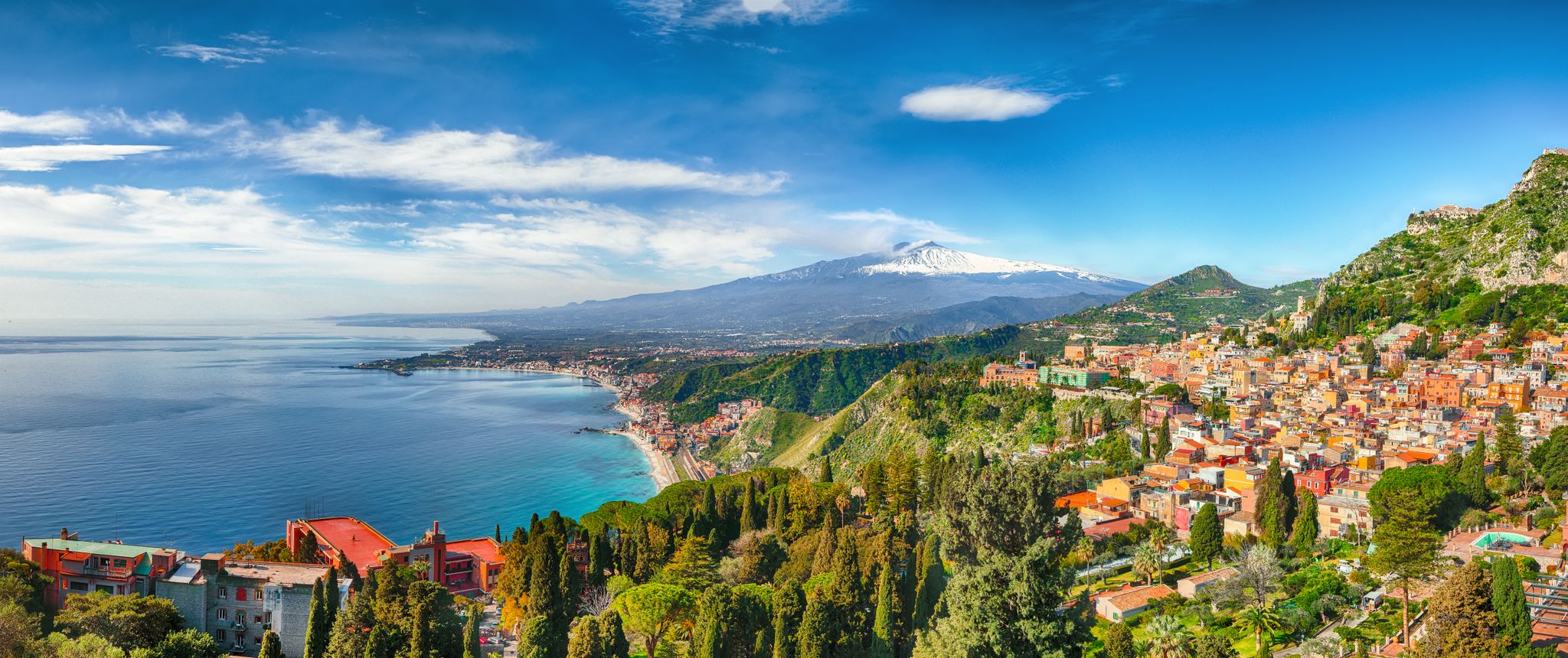
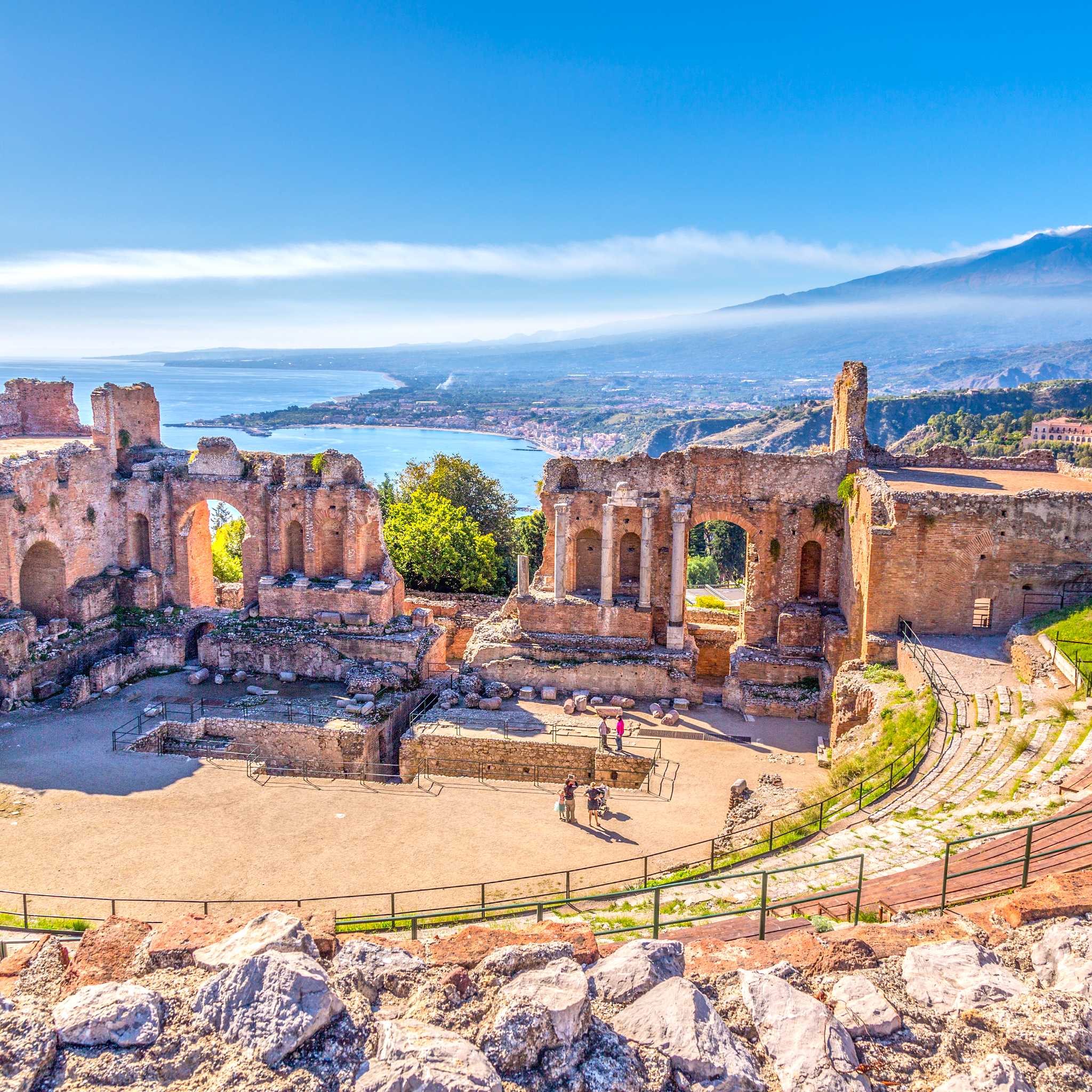
Etna looms over the east coast — Europe's most active volcano, almost always steaming or glowing. Sicilians call her simply 'a Muntagna, the Mountain, and farm her rich slopes for wine and pistachios. Elsewhere the island runs through contrasts: Greek temples at Agrigento and Selinunte, the theater at Taormina with the volcano behind it, Syracuse on its old island of Ortigia, the Roman mosaics hidden inland at Piazza Armerina, the Baroque towns of Noto and Ragusa rebuilt after the devastating 1693 earthquake, and Palermo, chaotic and Arab-Norman, in the northwest. Seven of its sites are UNESCO-listed, the Aeolian Islands among them.
Food ties the whole story together. You taste North Africa in Trapani's couscous, Arab sweetness in cannoli and cassata, the sea in a plate of swordfish, and volcanic soil in Etna's wines and Bronte's pistachios. Sicily is bigger and slower than most expect, its roads winding and its trains unhurried, so plan loosely, drive between the regions, and let the island set its own pace.
Main airports:
- Catania–Fontanarossa Airport (CTA)
- Palermo Airport (PMO)
- Trapani–Birgi Airport (TPS)
Sicily in brief
Regional capital
Palermo
Language
Italian, Sicilian
Currency
Euro (€)
Time zone
CET (UTC+1) / CEST (UTC+2) in the summer
Our favourite cities in Sicily
Sicily packs a continent's worth of history onto one island: Greek temples, Arab-Norman churches, Baroque cities, and a live volcano. These six destinations are our travelers' favorites, each with its own pull. Here is where to start.
Sicily packs a continent's worth of history onto one island: Greek temples, Arab-Norman churches, Baroque cities, and a live volcano. These six destinations are our travelers' favorites, each with its own pull. Here is where to start.


When to go
Spring
Best overall. April to June brings warm, dry days. Almond blossom fades into wildflowers, and the ruins are perfect for walking. Crowds and prices stay low.
Summer
Best for the beaches and the islands. July and August turn hot, and inland sites bake with little shade. The coast and Aeolians fill up. Crowds and prices peak.
Autumn
Best for food and wine. September keeps the warmth as crowds thin. Etna's grape harvest begins, and the sea stays swimmable. Rain returns by late fall.
Winter
Best for quiet and low prices. December to February runs mild but wet. Towns empty out, Etna may wear snow, and some coastal spots close.
Our picks: things to do in Sicily
No island has been layered by more hands than Sicily, and it shows in everything from the temples to the dinner table. Greeks, Arabs, Normans, and Spanish all left a mark; a volcano runs the east, and half of Italian cinema was shot here. Six ways into a place that never sits still.
No island has been layered by more hands than Sicily, and it shows in everything from the temples to the dinner table. Greeks, Arabs, Normans, and Spanish all left a mark; a volcano runs the east, and half of Italian cinema was shot here. Six ways into a place that never sits still.
Trace the Arab-Norman thread
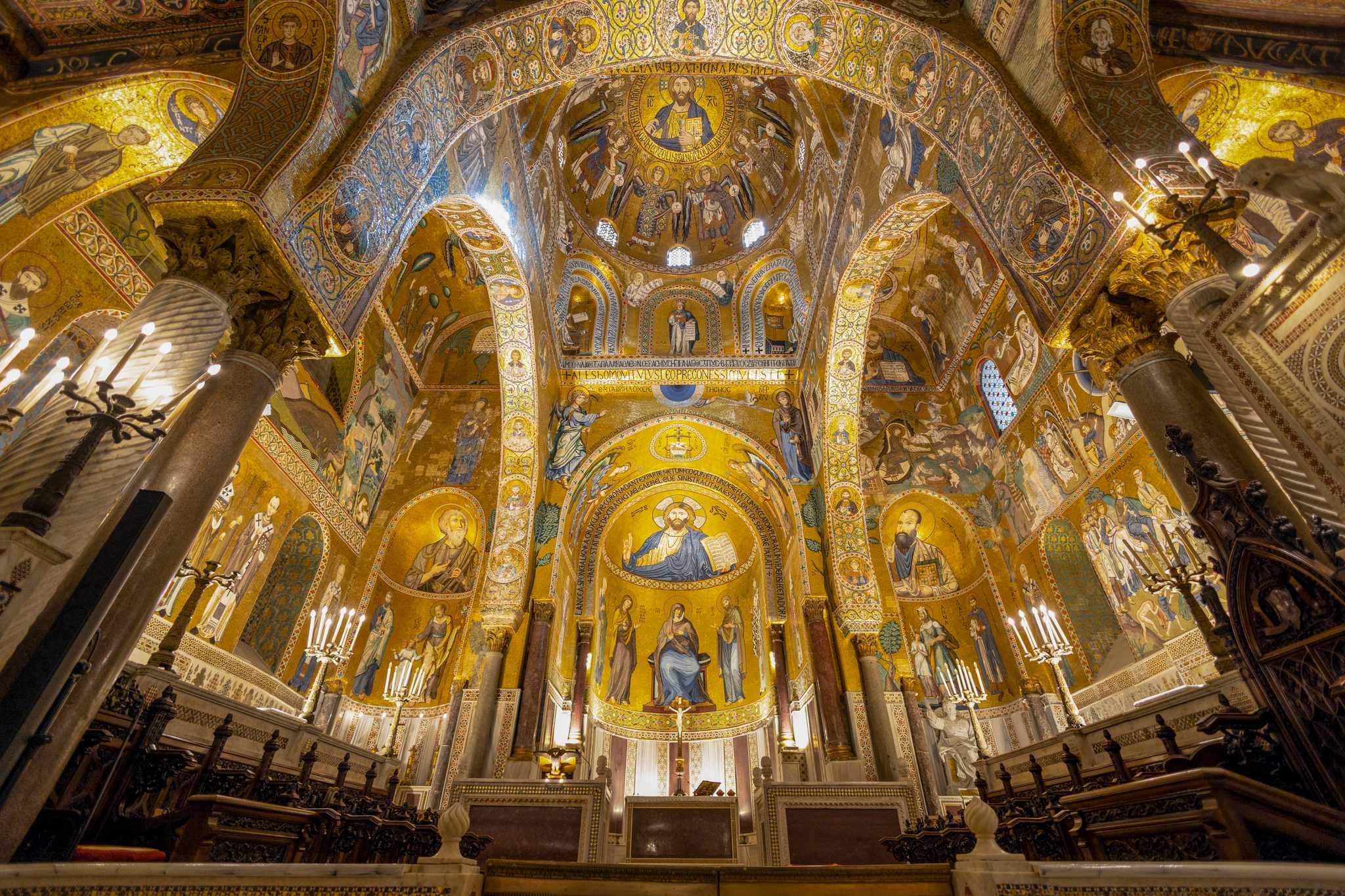
For two centuries Sicily was ruled by Arabs, then by Normans who kept their craftsmen on. The blend they made, Arab geometry under Byzantine gold, exists nowhere else, and much of it now carries UNESCO's stamp.
- Look up at the Cappella Palatina's gold mosaics and Arab ceiling
- Monreale's cathedral holds one of the world's largest mosaic cycles, crowned by a vast Christ
- Cefalu's Norman cathedral holds a beautiful mosaic of Christ
- La Martorana sets Byzantine mosaics in a Norman church
- Palermo's cathedral stacks Arab, Norman, and later styles
- La Zisa is a Norman hunting lodge and summer palace built with Arab flair

Walk among the Greek temples
Sicily was the jewel of the ancient Greek world, and its temples have outlasted many of the ones back in Greece. They turn up along the coasts and in bare inland hills, still golden at sunrise and hit with spotlights after dark.
- Agrigento's Valley of the Temples lines a ridge with stone masterpieces
- Selinunte scatters colossal temple ruins above the sea
- Segesta's Doric temple sits in empty green hills
- Syracuse's Greek theater still stages classical plays
- In Ortigia, a cathedral was raised inside a Greek temple
- Taormina's theater looks past its columns to Etna

Wander the UNESCO Baroque
When a 1693 earthquake flattened the southeast, its towns rose again in a single wave of Baroque, all curves and honey-gold stone. Eight of them now share one UNESCO listing as the Val di Noto.
- Noto is the Baroque showpiece, all golden stone
- Climb to Ragusa Ibla, stacked on its ridge
- Modica splits across a gorge and makes grainy chocolate
- Scicli hides Baroque churches down quiet lanes
- Catania builds its Baroque from black lava stone
- Caltagirone climbs a staircase tiled in painted majolica
Live with Etna
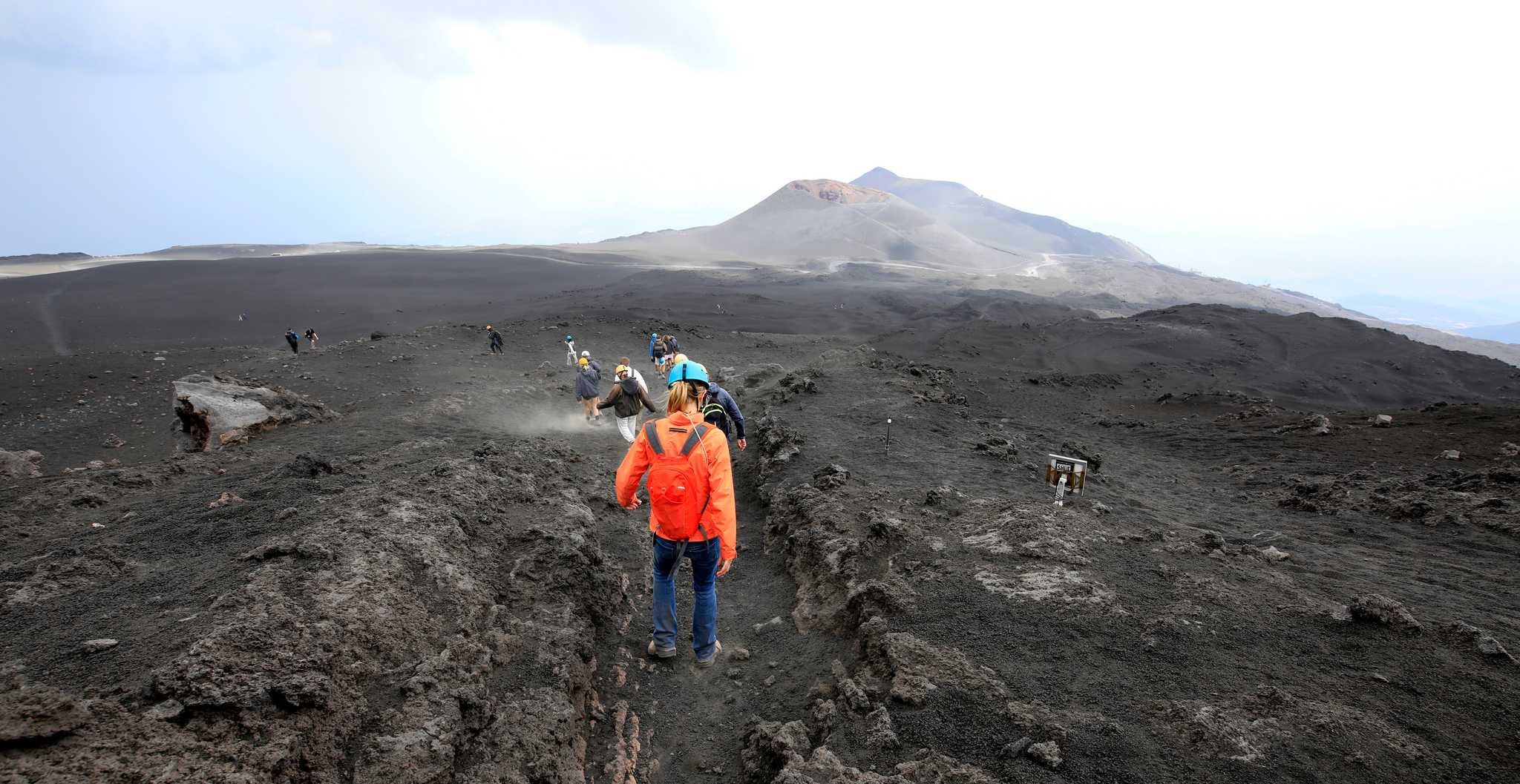
Etna sets the terms on the east coast, Europe's tallest and most active volcano. It smokes and snows by turns, feeds the vineyards on its slopes, and grounds Catania's flights when it flares.
- Ride the cable car, then hike with a guide to the summit craters
- Walk the Silvestri craters lower down, easy on foot
- Circle the base on the vintage Circumetnea railway
- Explore lava caves and cooled flows on the slopes
- Ski or sled Etna's snowfields in winter
Eat like a Sicilian
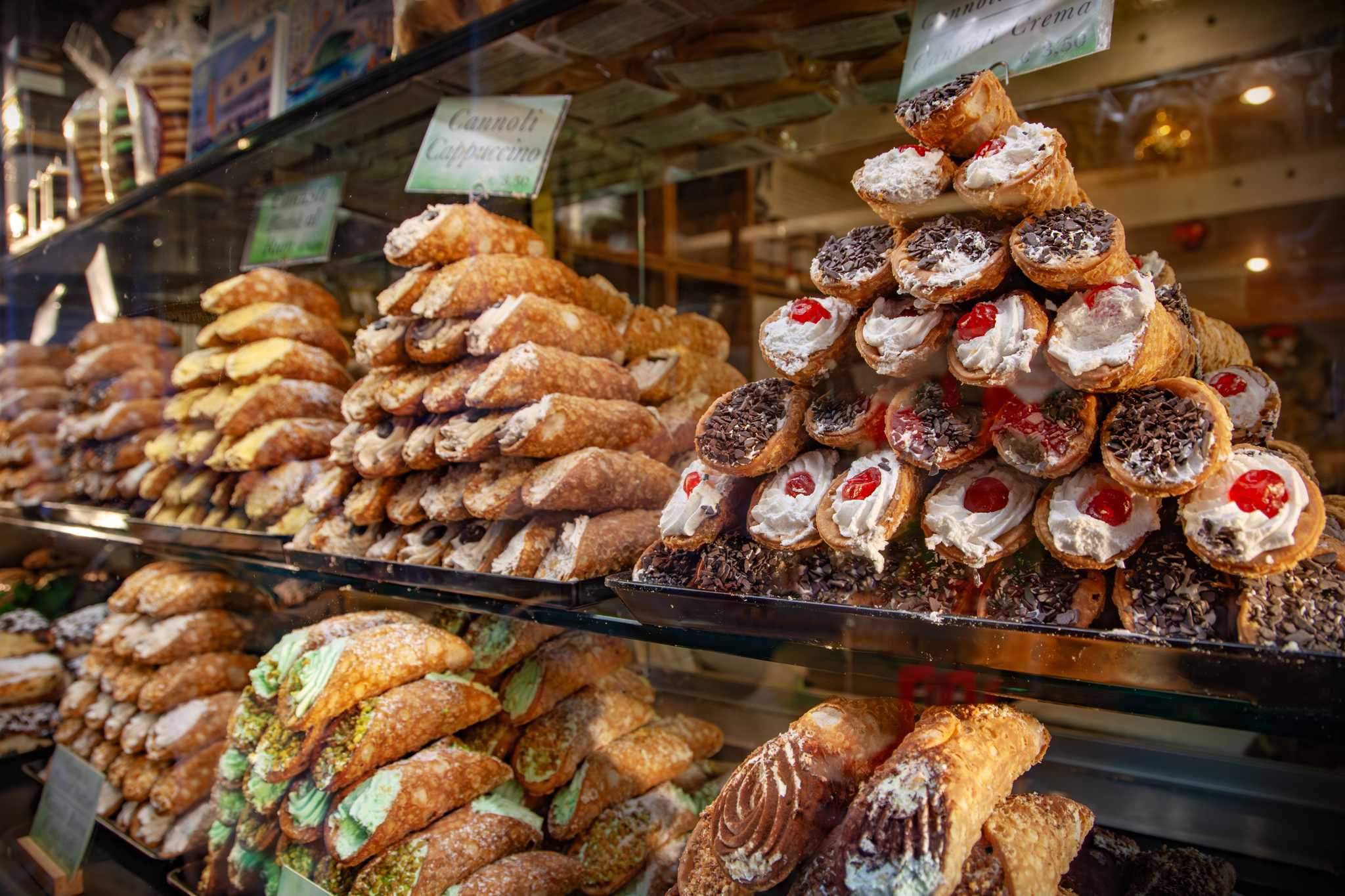
Sicily has a sweet tooth and a salty one, both centuries in the making. The Arabs left sugar, citrus, and almonds, and the sea and the street stalls handle the rest. Graze widely, and save room for dessert.
- Bite into an arancino, the island's fried rice ball
- Order pasta alla Norma, Catania's eggplant classic
- Explore Palermo's street food at the Ballaro market
- Fill a cannolo with ricotta, or split a jeweled cassata
- Spoon almond granita into a soft brioche for breakfast
- Taste Bronte pistachio gelato, ground from the green DOP nuts grown in Etna's lava soil
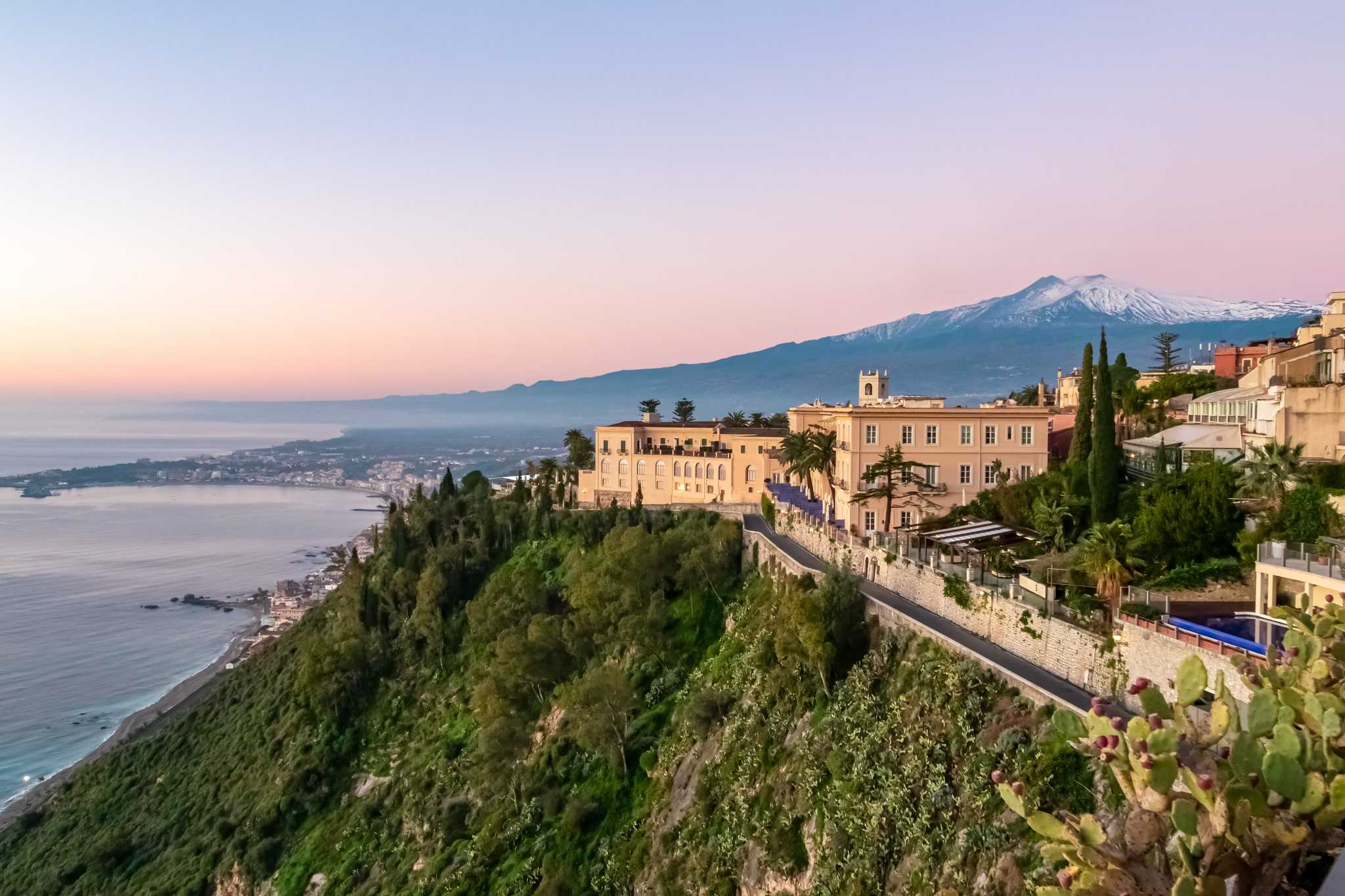
See Sicily on screen
Filmmakers have used Sicily as a backdrop for decades, and you can walk straight into the shots. From mob sagas to prestige TV, the island has played itself, and a few other planets besides.
- Sip at Bar Vitelli in Savoca, from The Godfather (1972)
- Taormina played the resort in The White Lotus (2022)
- The seaside home of Inspector Montalbano (1999-2001) can be found in Punta Secca
- Palazzo Adriano's square starred in Cinema Paradiso (1988)
- The Leopard (1963) filmed its grand ball in a Palermo palace
- Etna's eruptions became the lava planet Mustafar in Star Wars: Episode III Revenge of the Sith (2005)
What to eat, drink, and order
Sicily eats differently from one shore to the next. The western towns keep their North African leanings, the east cooks in Etna's shadow, and the ports live off the day's catch. Here are six dishes worth crossing the island for, and the places where each one still tastes the way it should.
Sicily eats differently from one shore to the next. The western towns keep their North African leanings, the east cooks in Etna's shadow, and the ports live off the day's catch. Here are six dishes worth crossing the island for, and the places where each one still tastes the way it sh...
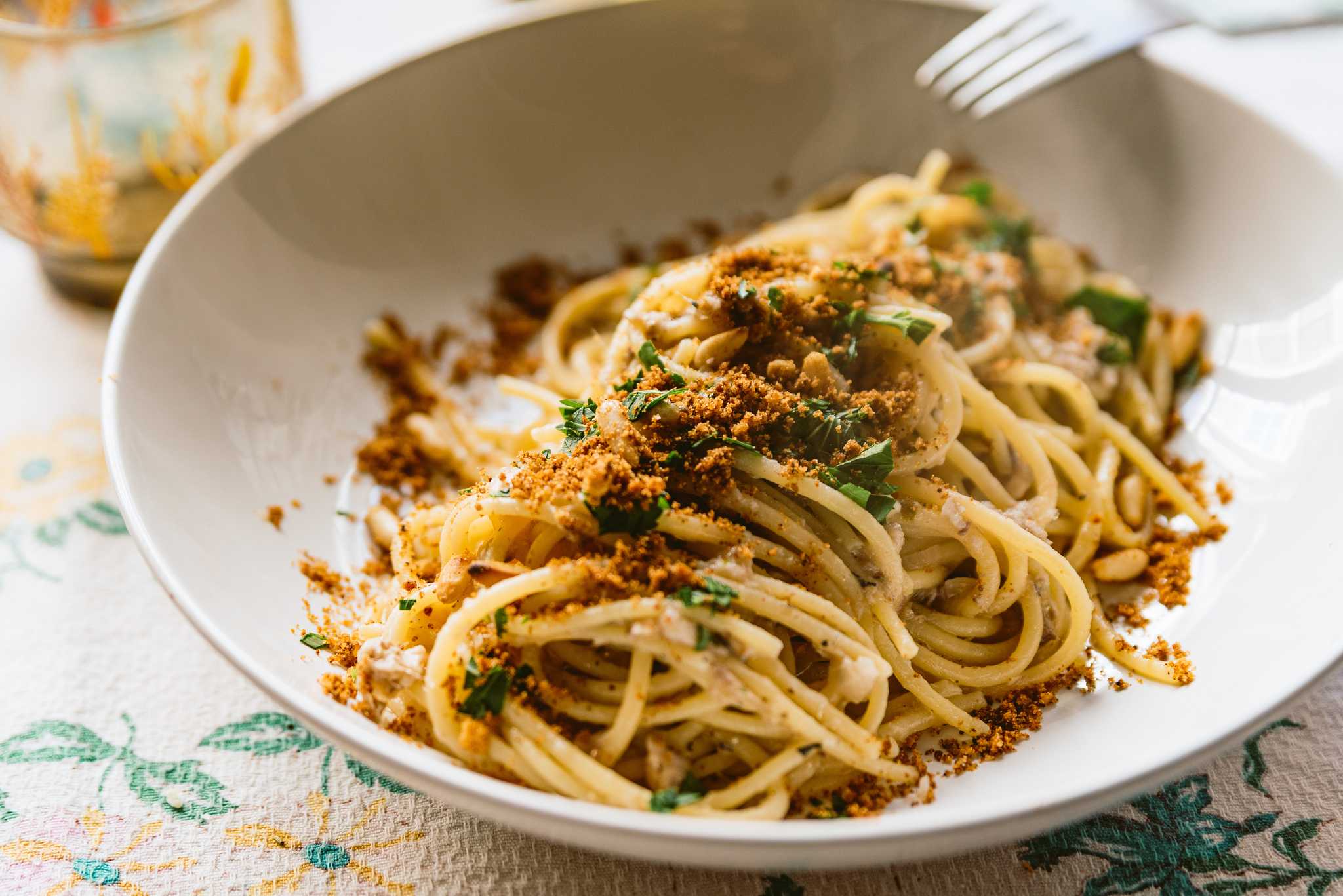
Pasta con le sarde in Palermo
Sardines, wild fennel, pine nuts, and raisins over bucatini, Palermo's Arab-tinged signature, best after a market wander.
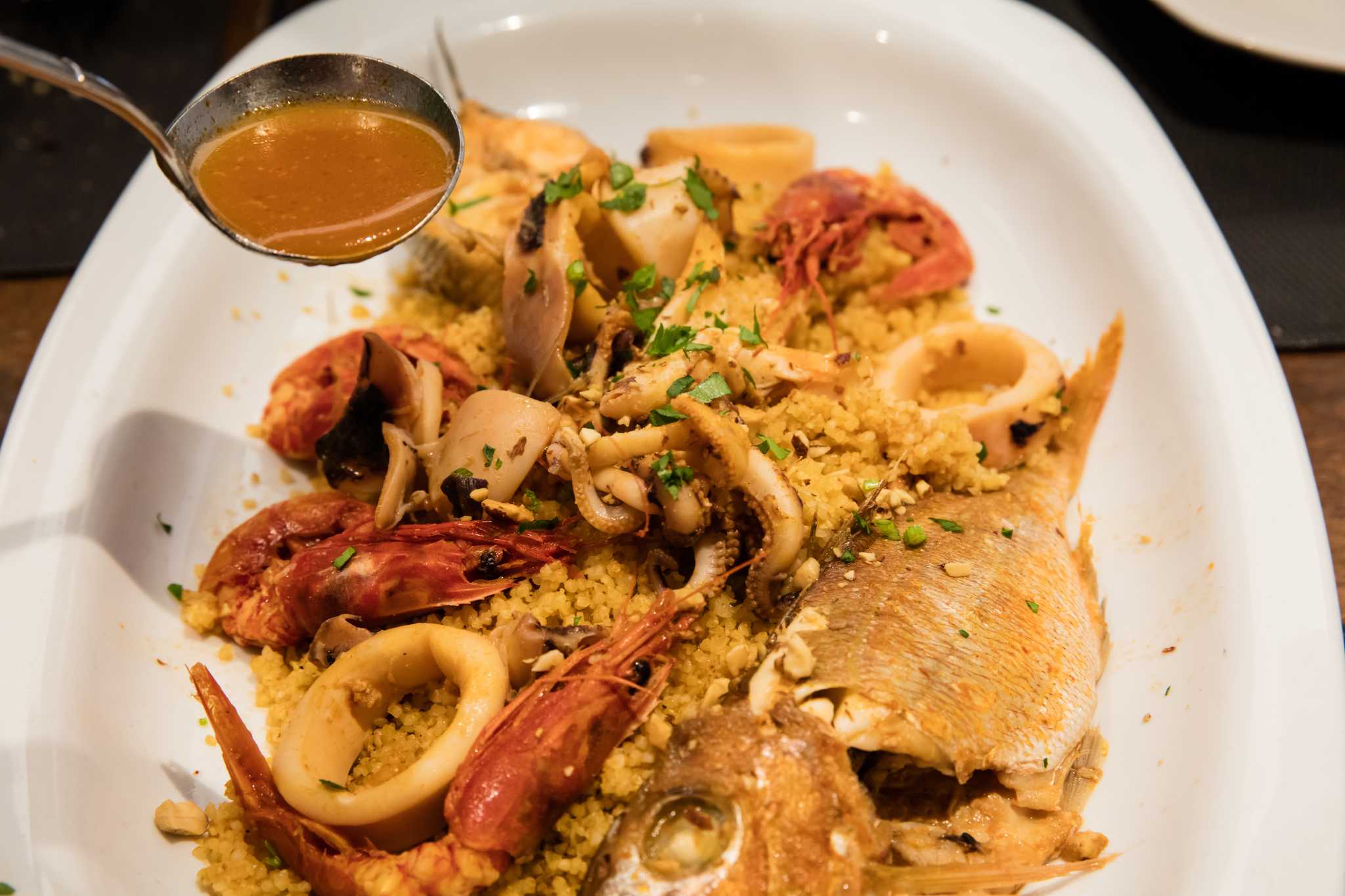
Cuscus di pesce in Trapani
Hand-rolled semolina steamed over fish broth, western Sicily's North African inheritance, eaten beside the salt pans.
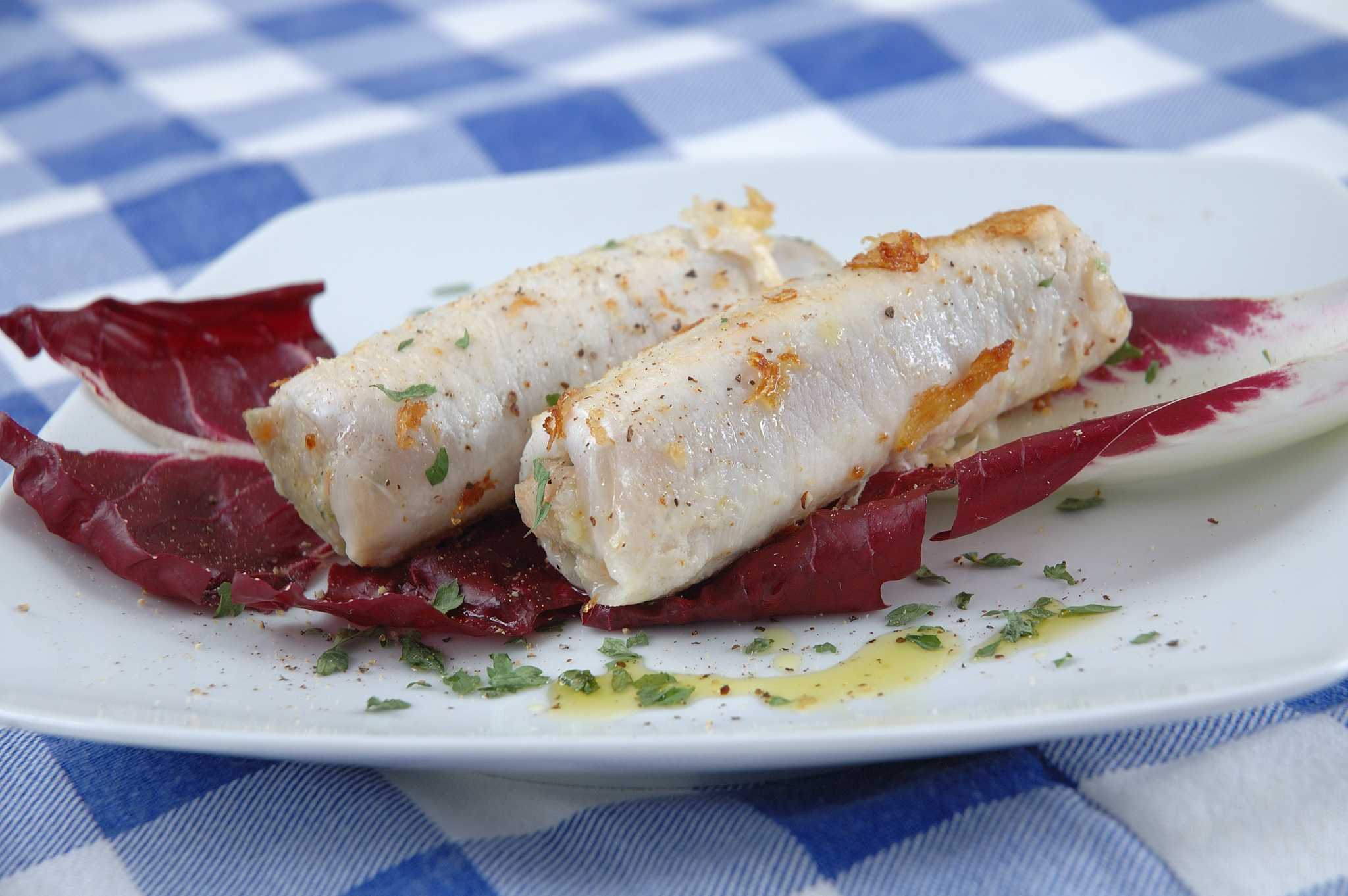
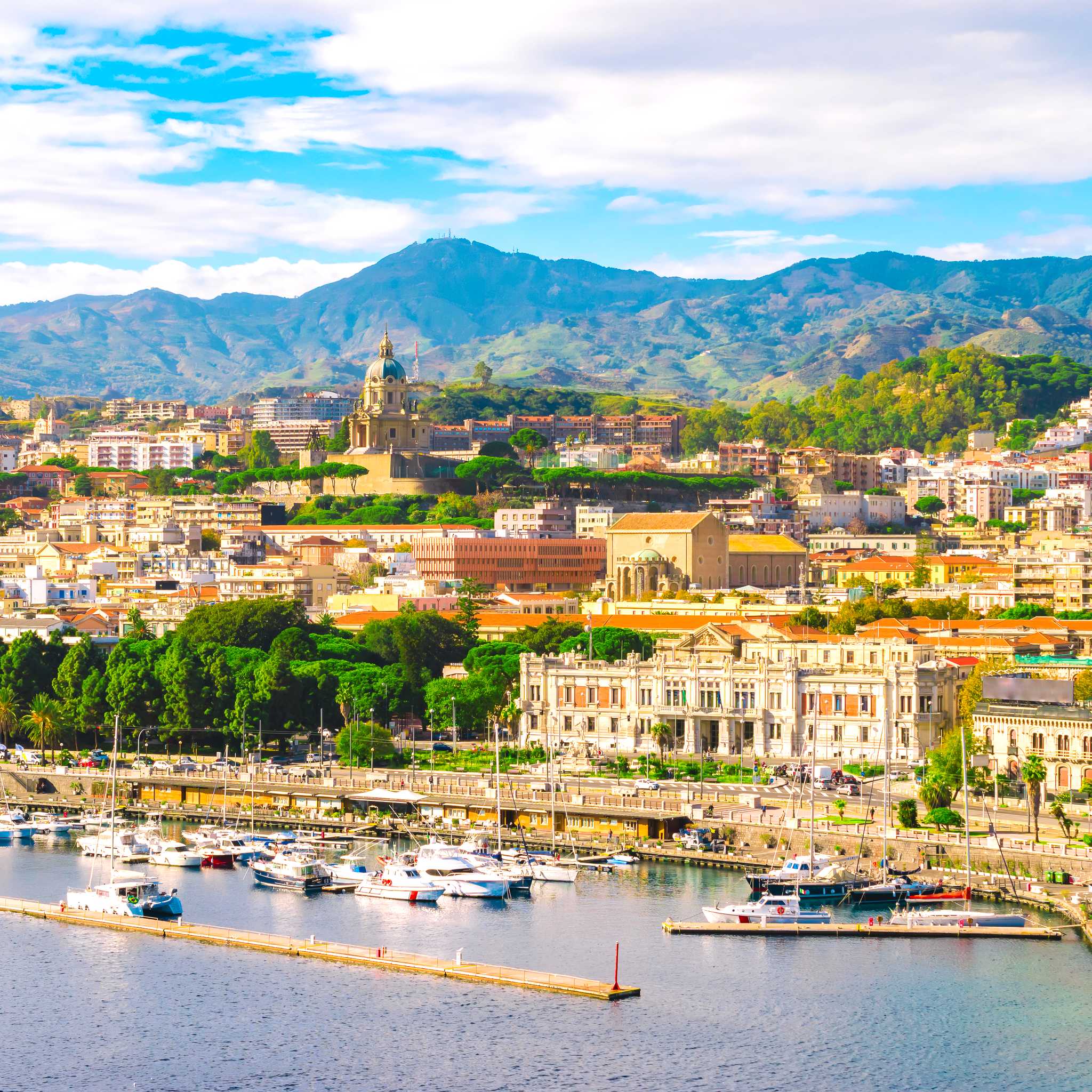
Involtini di pesce spada in Messina
Swordfish rolled around breadcrumbs, pine nuts, and capers, then grilled, the catch of the Strait done the local way.
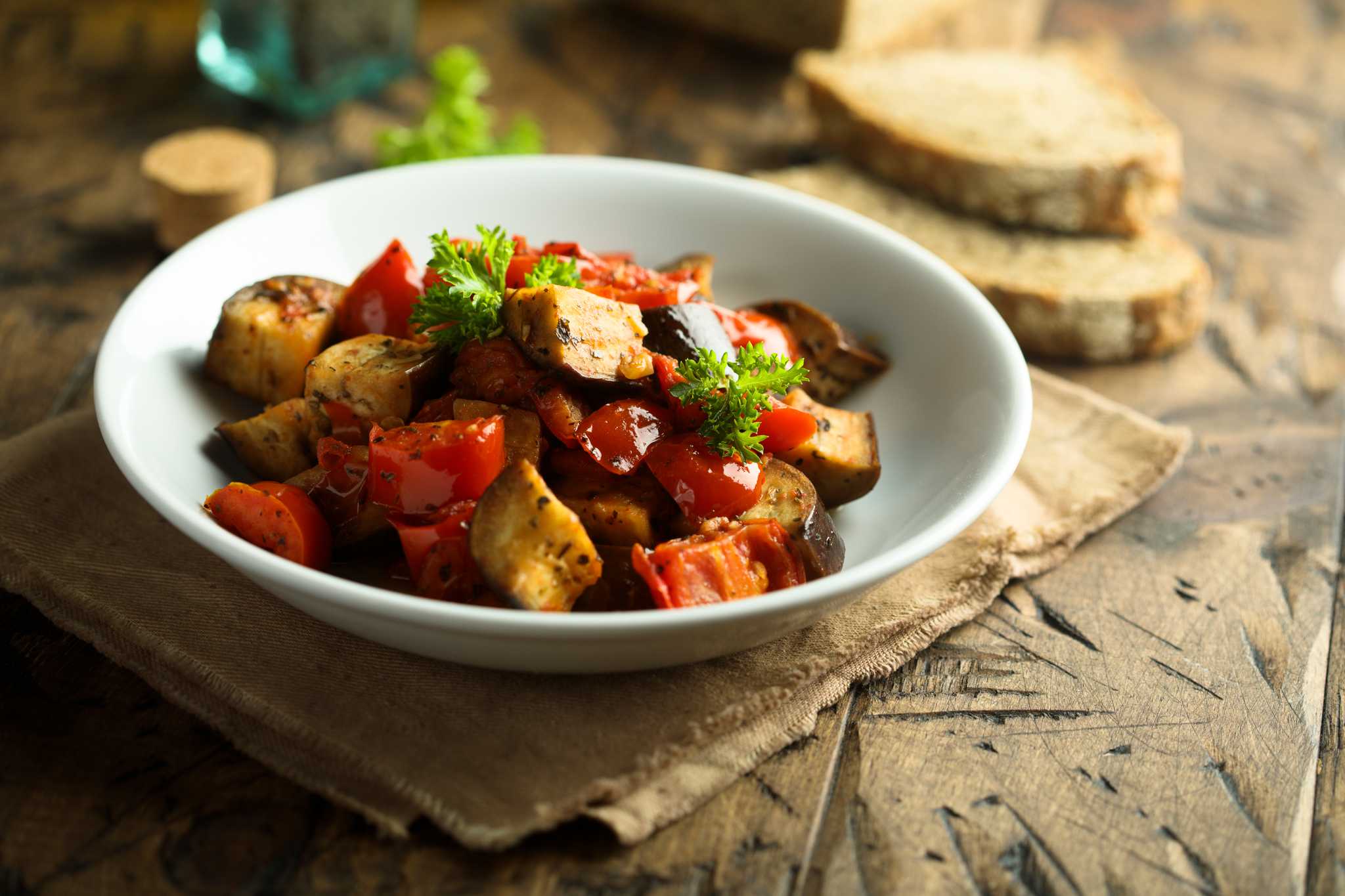
Caponata in Syracuse
Sweet-and-sour eggplant with capers, celery, and vinegar, the island's great vegetable dish, served cool as a starter.
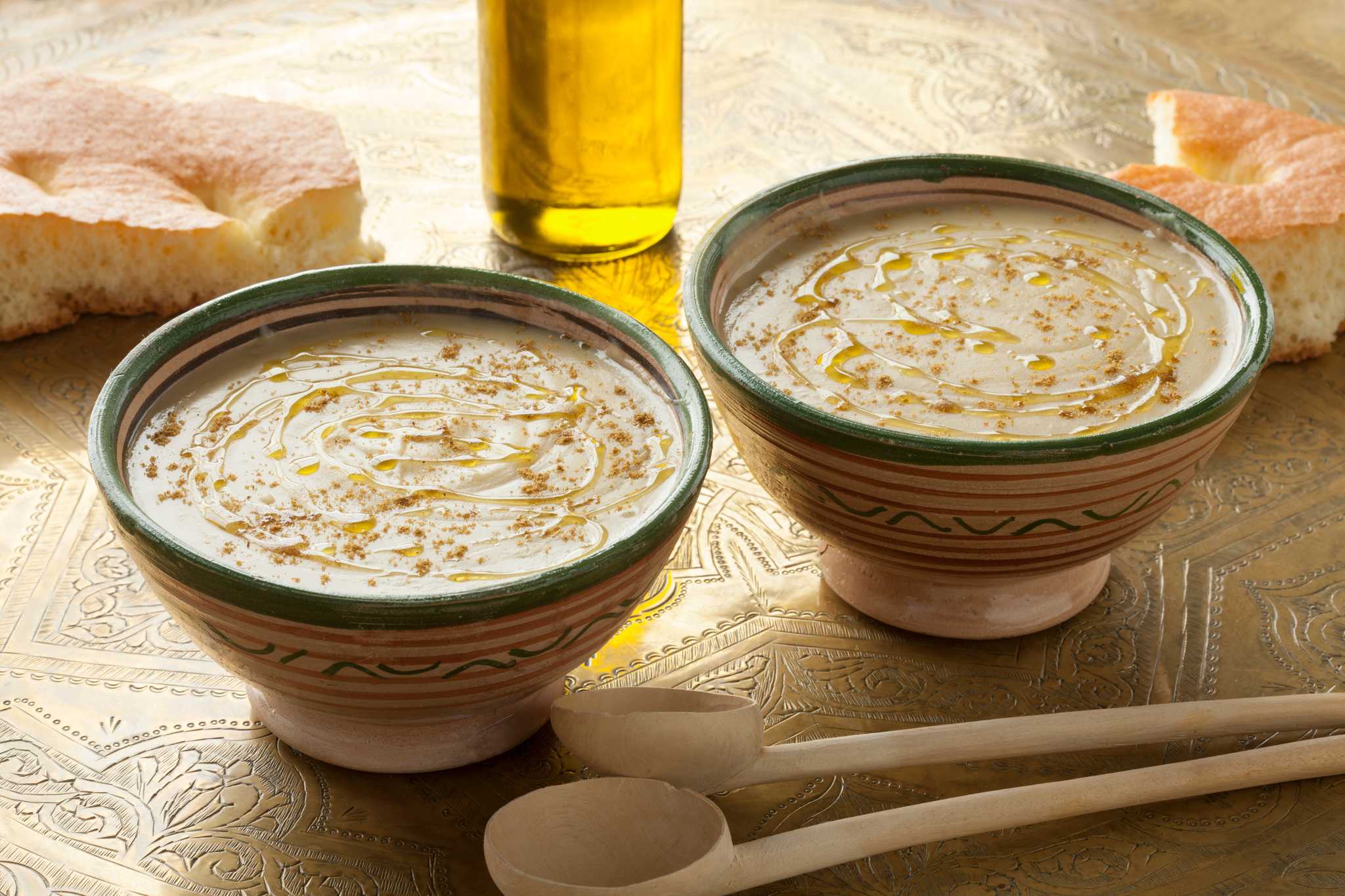
Maccu di fave in the Sicilian interior
An ancient fava-bean purée seasoned with wild fennel, the peasant dish of Sicily's grain-growing heartland, eaten with bread.
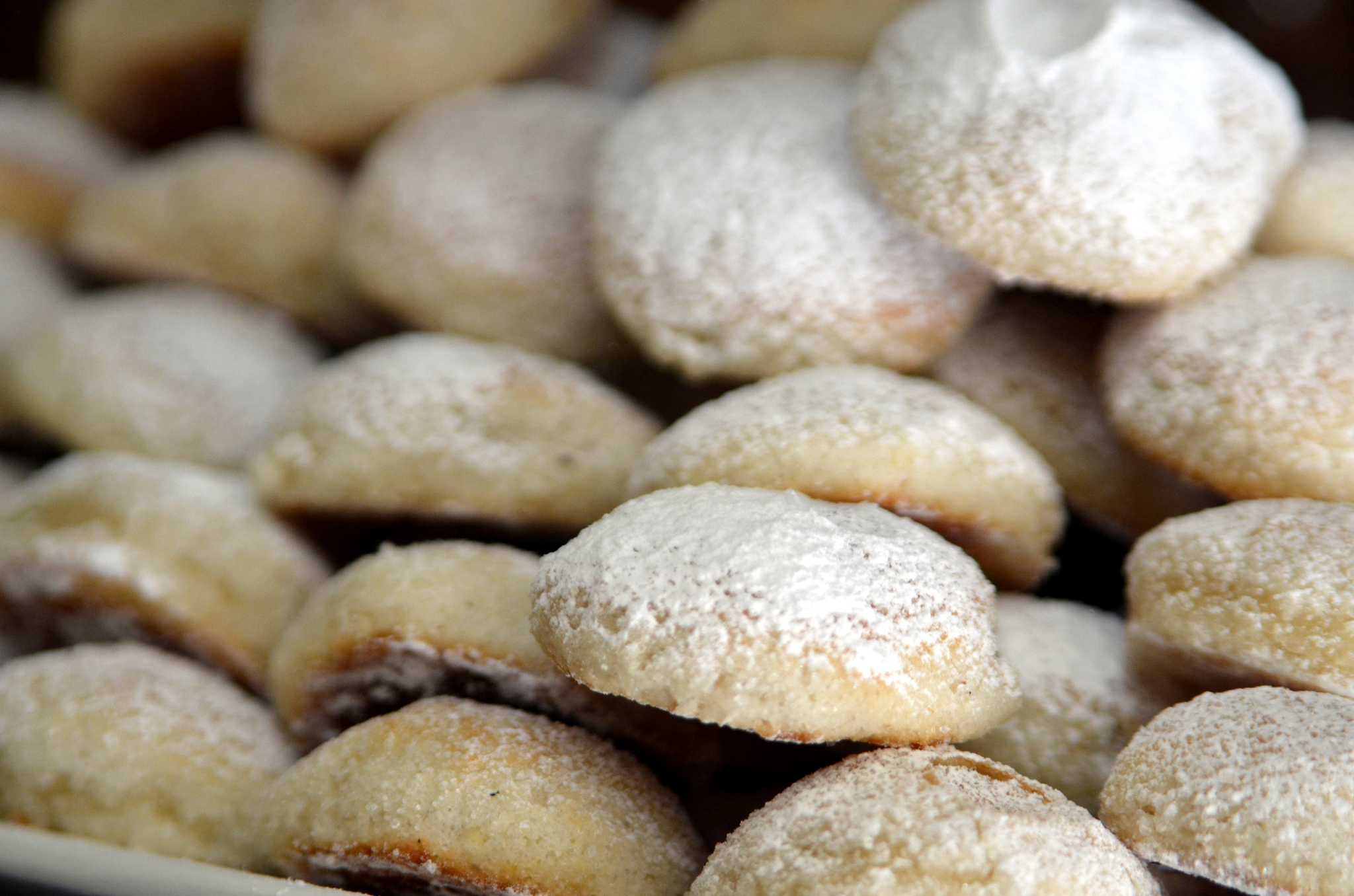
Genovese ericina in Erice
A warm shortcrust shell hiding soft lemon custard, dusted with powdered sugar, the pride of mountaintop Erice.
Getting around Sicily
Plan looser than you think you need to. Sicily is deceptively vast, its sights scattered from coast to coast with a thinly served interior in between. Trains are cheap but slow, buses patchy, and the best corners often sit down roads with no easy transit at all. Summer clogs the coast, and strikes stall trains and flights. Daytrip's private transfer services tie it together: no timetables, no delays, and door-to-door travel that suits families, older travelers, and anyone with luggage or mobility needs.
Our recommended routes in Sicily
Palermo to Taormina
3h 3min • 265km (164.7mi)
From €475
Cefalu to Taormina
2h 25min • 208km (129.2mi)
From €377
Taormina to Catania
52min • 55km (34.2mi)
From €173
Palermo to Syracuse
2h 51min • 259km (160.9mi)
From €442
Agrigento to Syracuse
2h 29min • 216km (134.2mi)
From €374
Palermo Airport to Cefalu
1h 18min • 99km (61.5mi)
From €181
Messina to Taormina
46min • 52km (32.3mi)
From €170
Palermo to Trapani
1h 28min • 108km (67.1mi)
From €200
Milazzo to Catania
1h 42min • 131km (81.4mi)
From €247
Ragusa to Syracuse
1h 28min • 89km (55.3mi)
From €180
Palermo to San Vito Lo Capo
1h 45min • 110km (68.4mi)
From €219
Seccagrande to Catania
2h 33min • 202km (125.5mi)
From €364
Day trips from Sicily's top cities
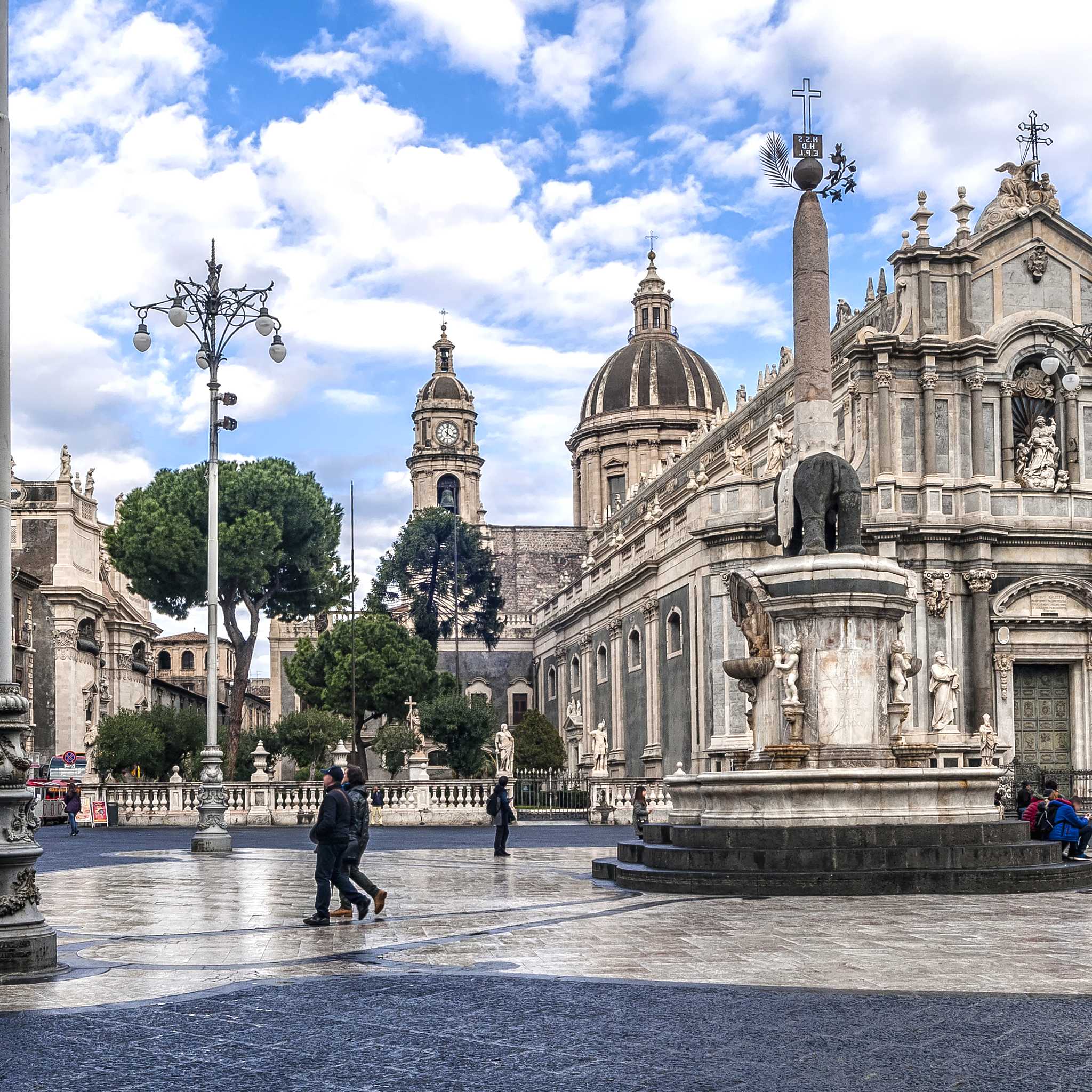

2+ million travelers like you. Moments they'll never forget.

Your Sicily questions, answered
Be the first to discover more
Get handpicked travel ideas, insider highlights, and special Daytrip offers.


