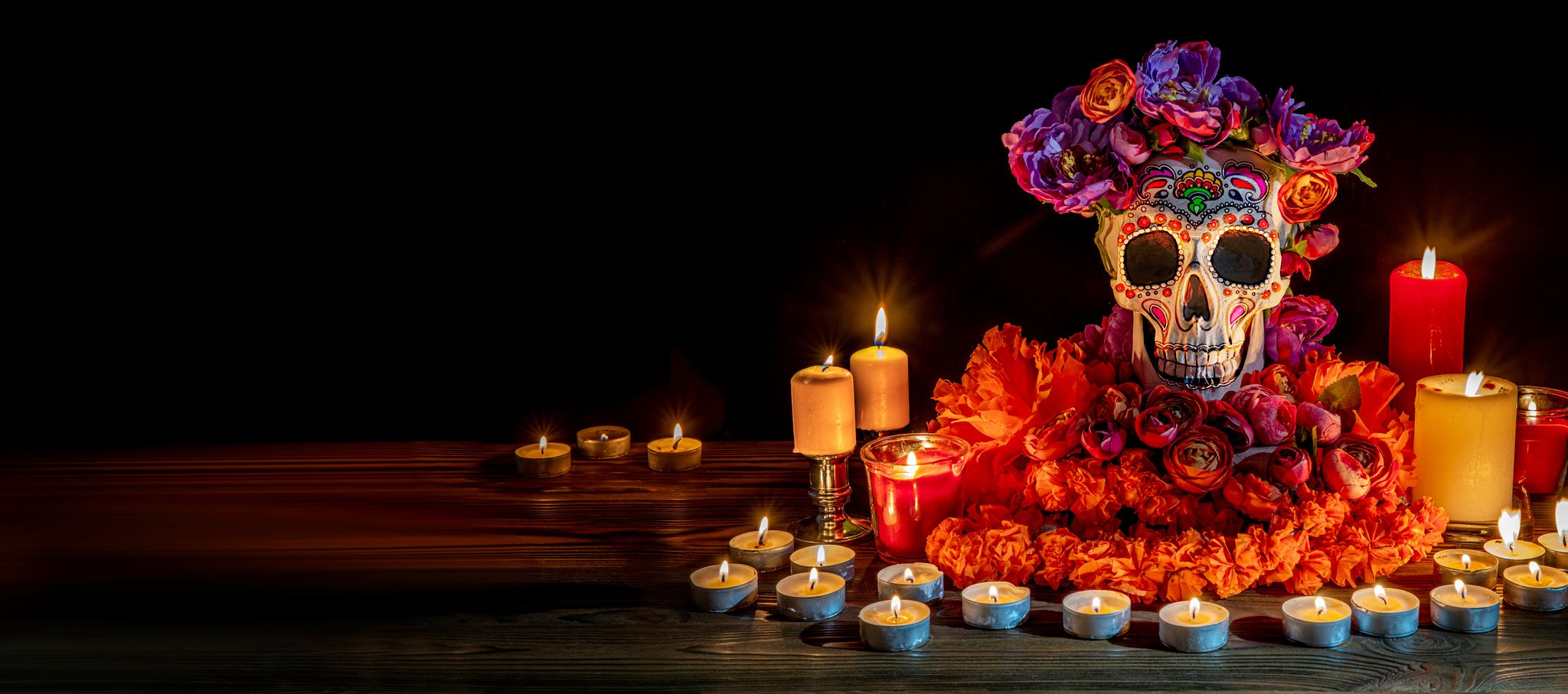
Day of the Dead in Mexico
By Ján Tompkins
Día de Muertos is one of Mexico’s most personal celebrations, and one of its most misunderstood. This guide is for travelers who want to get it right: where to go, when to be there, and how to experience it as a respectful observer.
The holiday runs from Oct. 31 to Nov. 2, when families welcome the souls of their dead home for a visit. Its history is layered. The Mexica and other peoples honored their dead long before the Spanish arrived, and those customs met the Catholic feasts of All Saints’ Day and All Souls’ Day. Historians debate how much each strand shaped today’s holiday, which became a national symbol in the 20th century. In 2008, UNESCO recognized it as a practice of Mexico’s Indigenous communities.
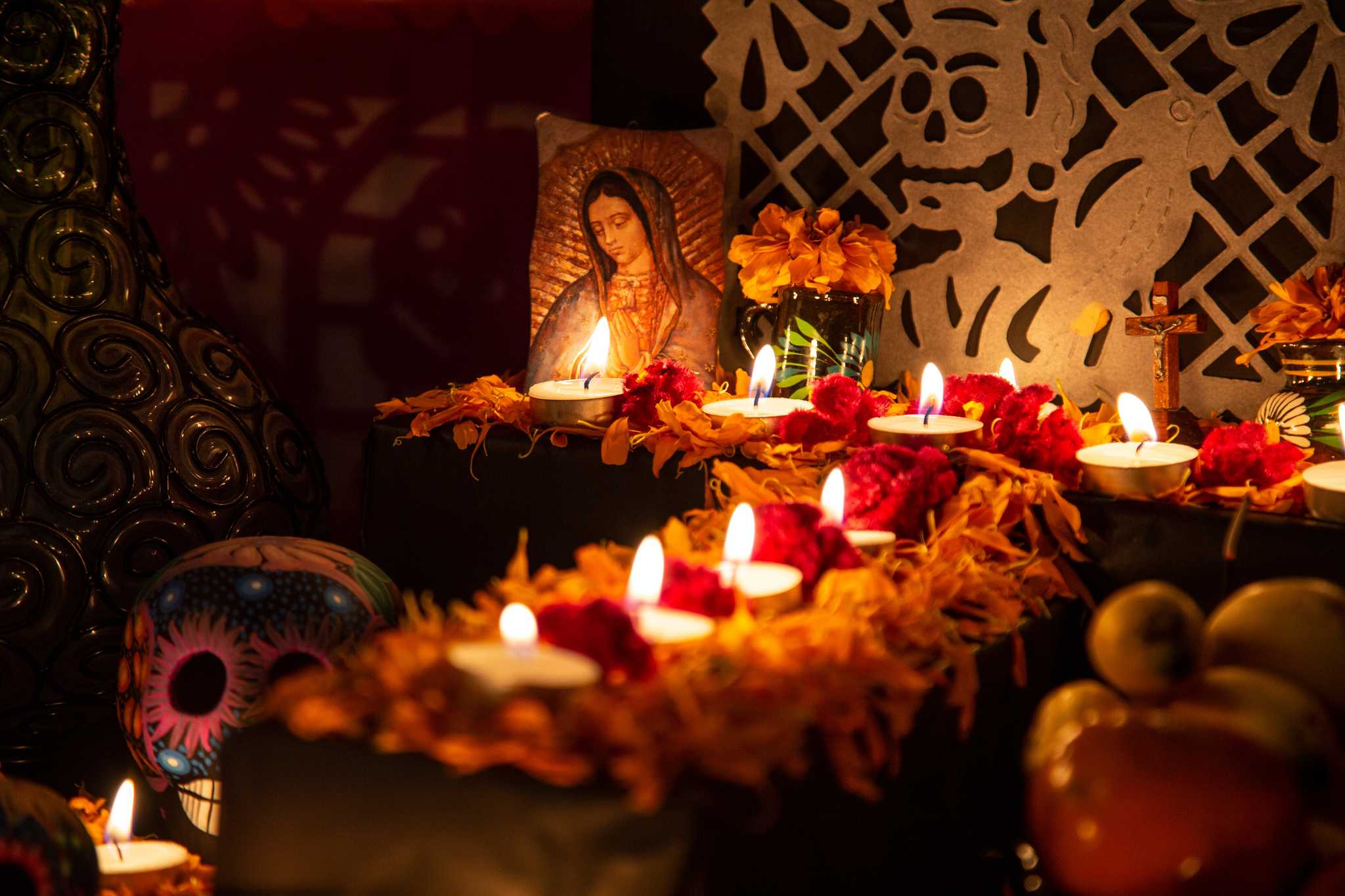
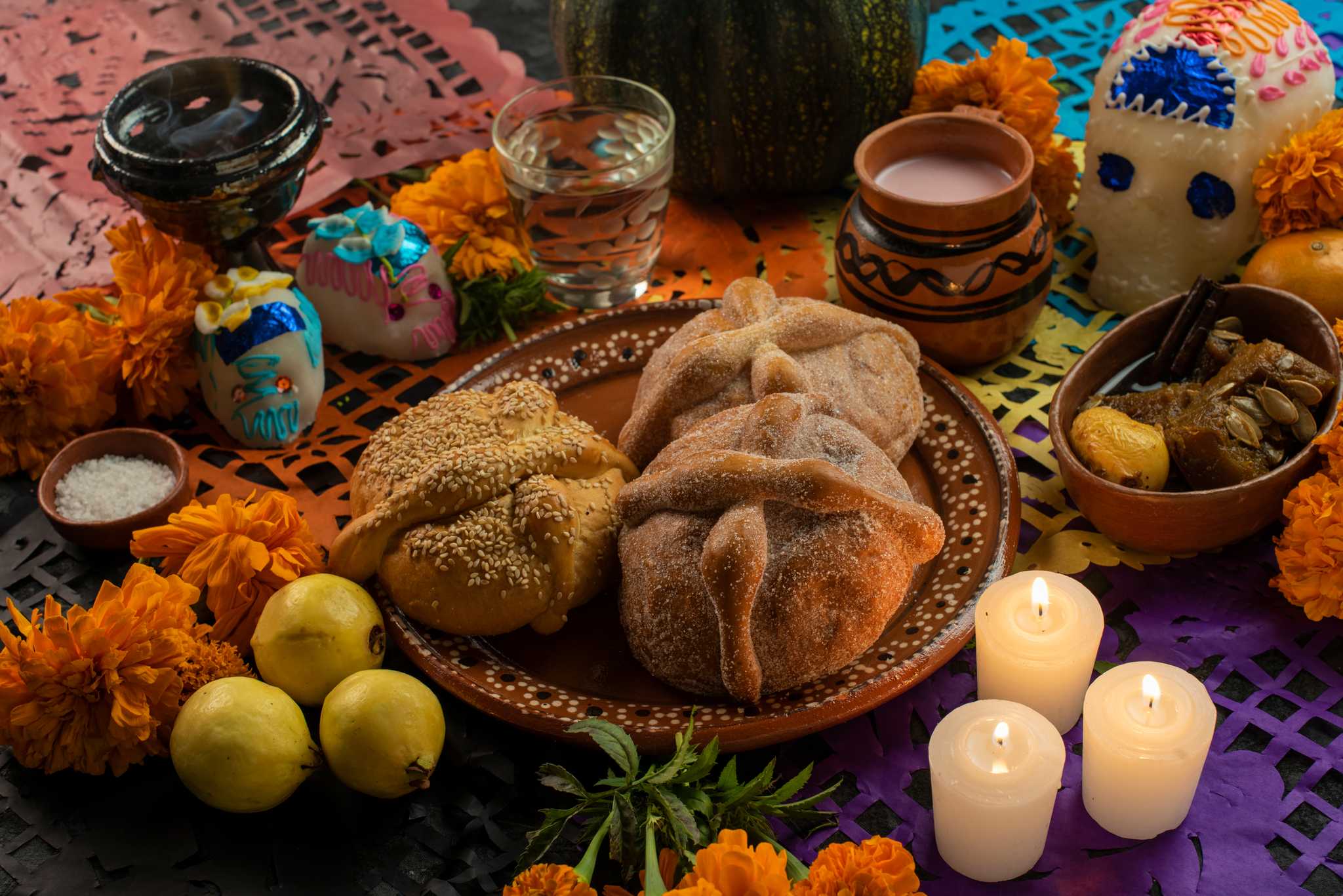
It is often lumped in with Halloween, but the two share little beyond a spot in the calendar. Nobody is trying to scare off the dead here. They’re honored guests. Families build ofrendas, altars laid with photos, candles, pan de muerto, and the person’s favorite food and drink, and scatter marigold petals so the spirits can find their way home. Drive out of town in late October, and you pass whole fields of the orange flowers.
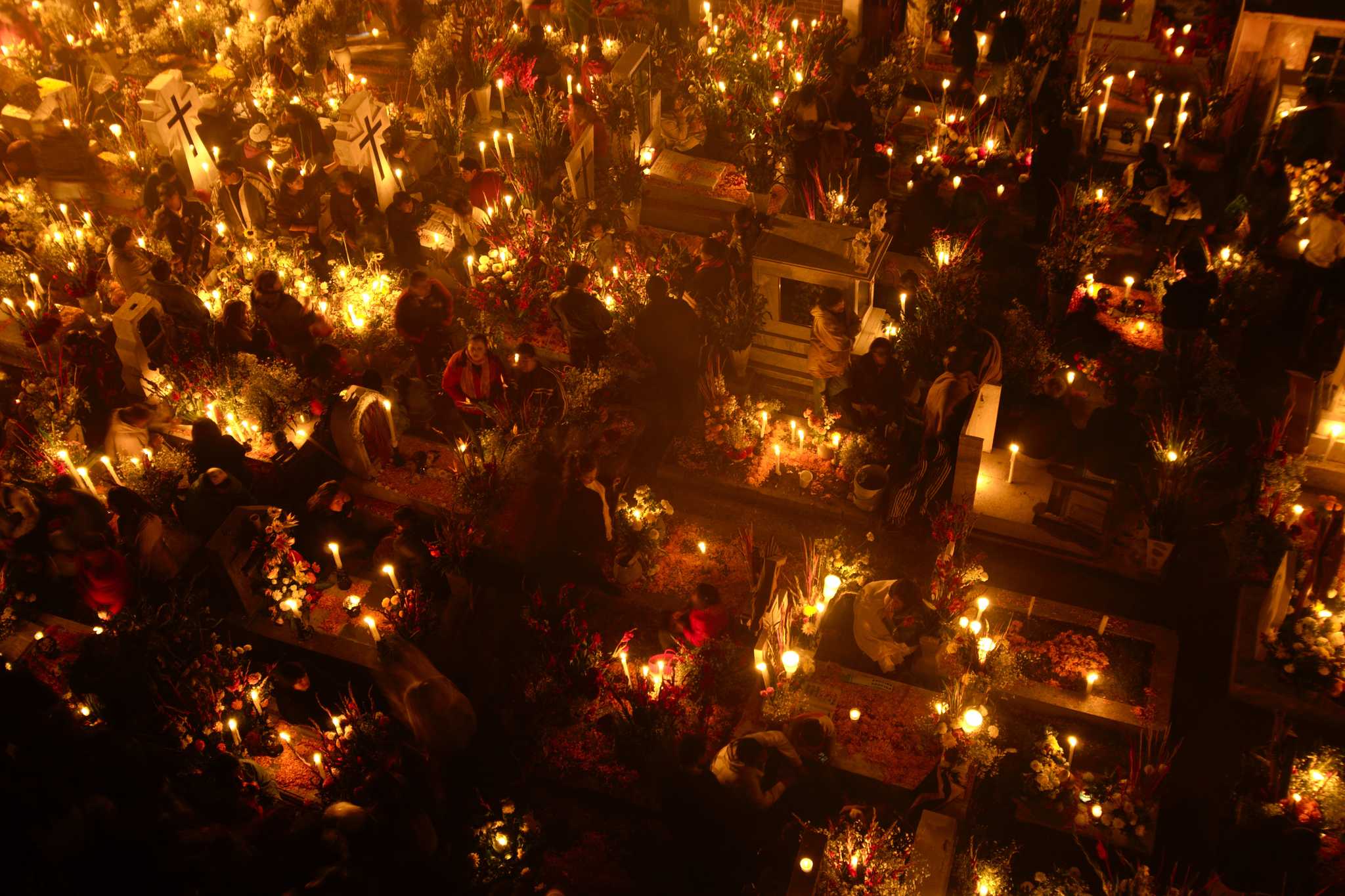
The heart of the holiday is a family keeping vigil at a grave, sharing food, music, and stories with the people they have lost. Mexico City adds parades and giant public altars, but in Oaxaca and Mixquic, the cemeteries glow with candles until dawn.
Understanding the celebration
Dates
Celebrations peak Oct. 31 to Nov. 2. Some rural and Indigenous communities set Nov. 1 aside for children who died, the angelitos, and Nov. 2 for adults. Elsewhere, the days blend together.
Ofrenda
An altar built at home or on a grave, laid with photos, candles, water, salt, pan de muerto, and the person’s favorite food and drink. Public ofrendas also fill plazas and museums.
Marigold
Cempasúchil, the Aztec marigold, is said to guide the dead home with its color and scent. People lay petals in paths from the street or the grave to the altar.
Copal
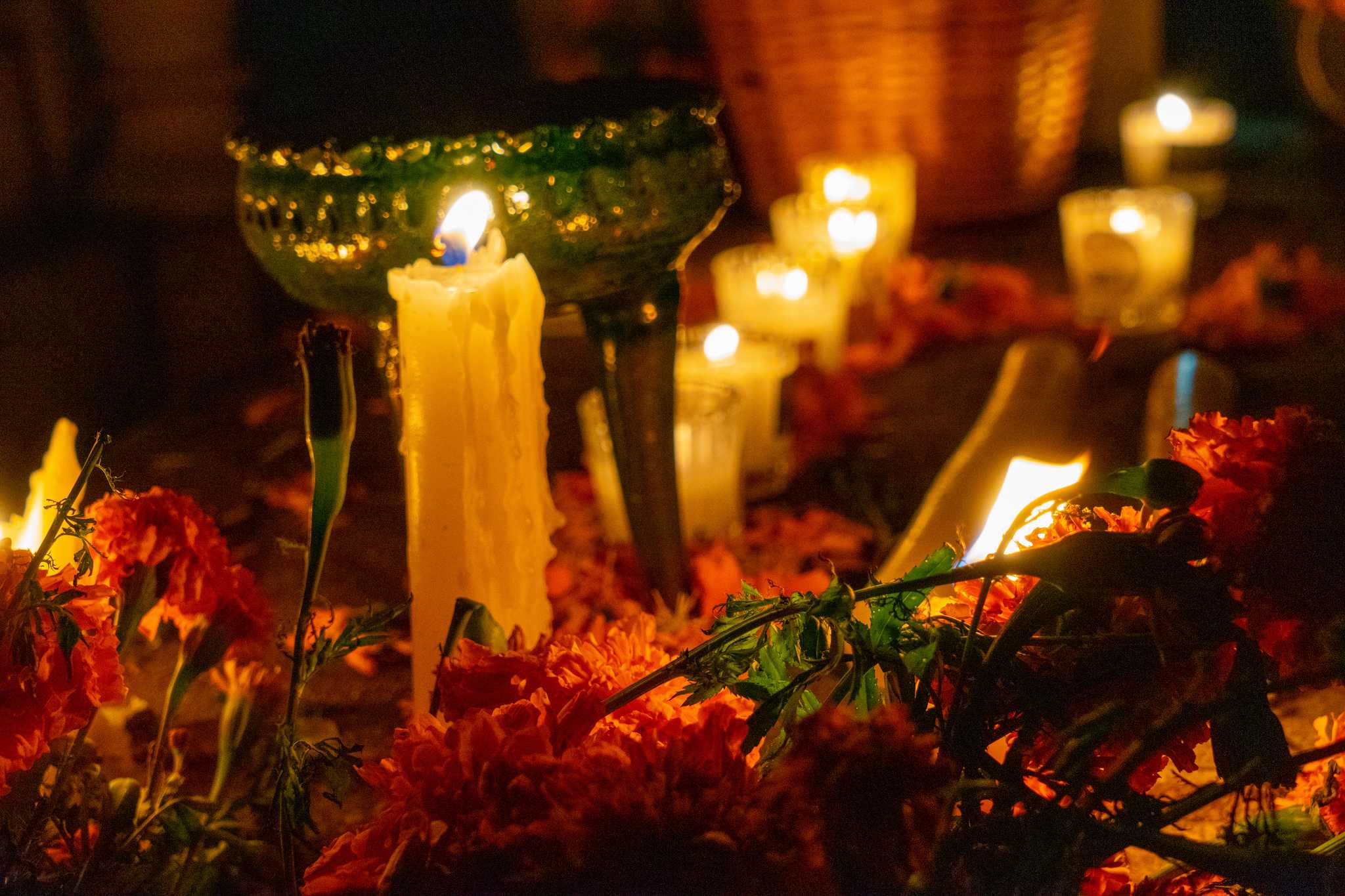
A tree resin burned as incense since pre-Hispanic times. Its smoke is meant to cleanse the altar and draw the spirits in, and its scent hangs over every cemetery.
Calaveras
Skulls in every form: sugar skulls with names on the forehead, satirical verses that “bury” the living, and La Catrina, the elegant skeleton based on a print by José Guadalupe Posada.
Music
Families hire mariachis or local bands to play the dead’s favorite songs at the grave. In Oaxaca, comparsas, costumed processions with brass bands, dance through the streets.
Did you know
La Catrina, the skeleton lady behind so many Day of the Dead costumes, began as a joke. Around 1912, printmaker José Guadalupe Posada drew her as a skull in a feathered hat, mocking Mexicans who copied European fashions. In 1947, Diego Rivera painted her full-length, in a long dress and feather boa, at the heart of his Mexico City mural of the Alameda Park, and the icon was born.
Oaxaca
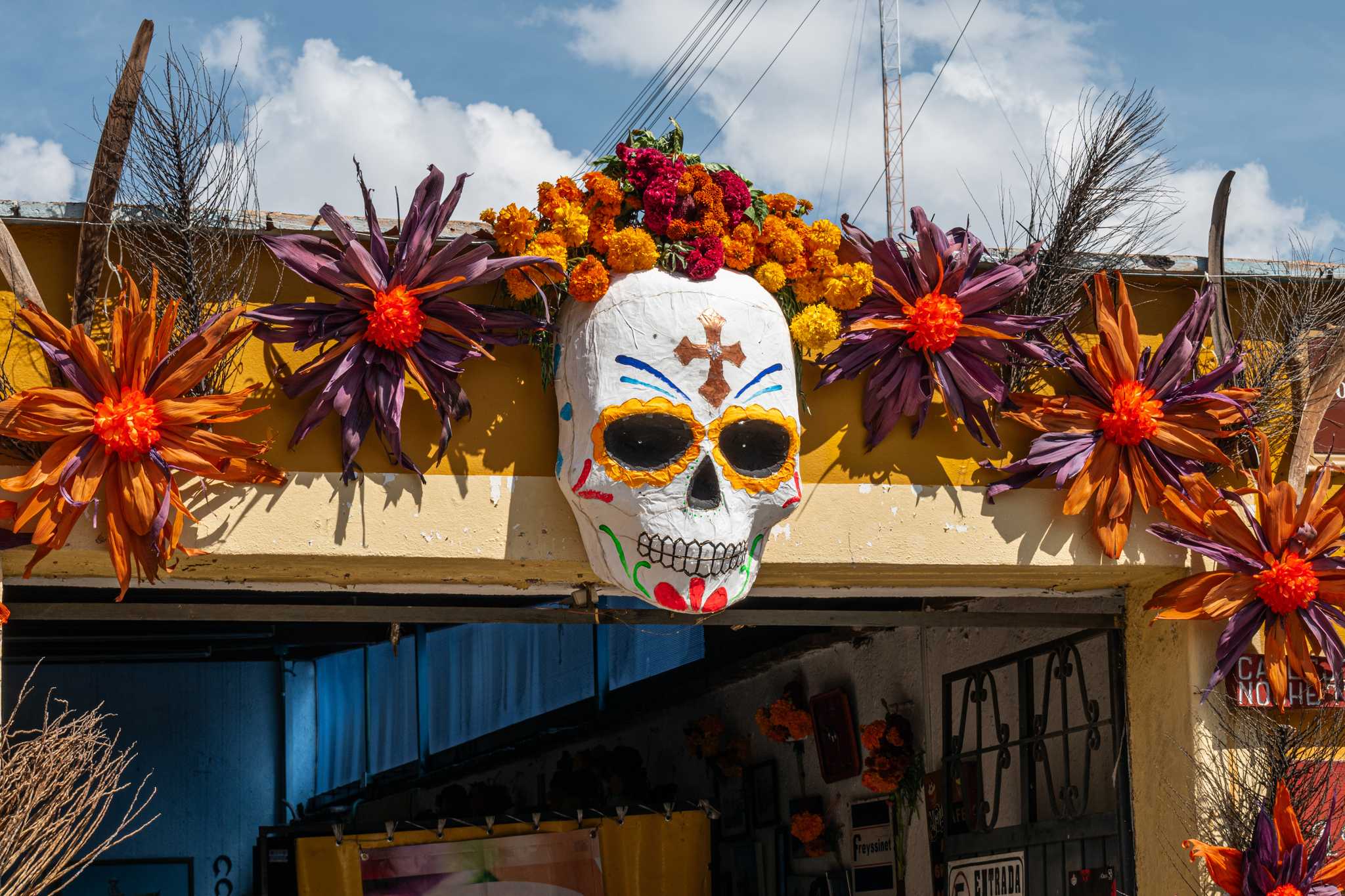
Oaxaca takes Día de Muertos further than almost anywhere. For about a week, the city and the villages of its valleys fill with marigold arches, sand tapestries on graves, and bands in the streets. Nearly all of it lies within an hour’s drive of the center, so one base covers it all.
Oaxaca takes Día de Muertos further than almost anywhere. For about a week, the city and the villages of its valleys fill with marigold arches, sand tapestries on graves, and bands in the streets. Nearly all of it lies within an hour’s drive of the center, so one base covers it all.
Overview
The celebration here is a week-long season, not a single day, and it spreads from the city’s churches and plazas out to the Zapotec villages in the surrounding valleys.
- Arrive by Oct. 29 or 30 to see the altars go up and the markets at their busiest
- The main nights are Oct. 31 and Nov. 1, but some villages celebrate into early November
- Schedules change each year, so check the official program from the state government
- Expect crowds in the historic center and quieter, more traditional scenes in the villages
- Homes, shops, and hotels all build altars
Parades and processions
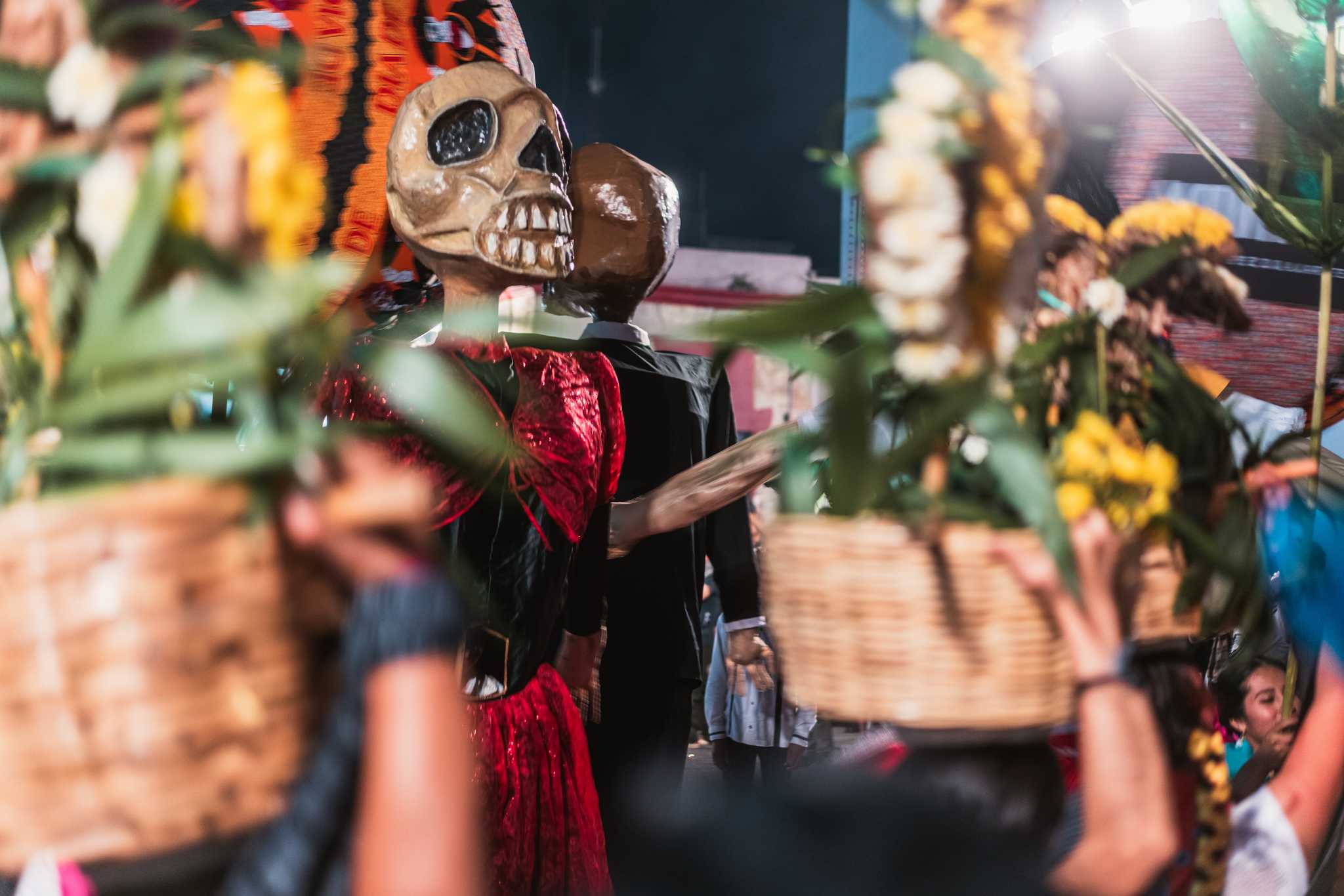
After dark, comparsas take over: costumed processions with brass bands, skeletons, and devils wind through the barrios and dance late into the night.
- The biggest comparsas run on the nights of Oct. 31 and Nov. 1 in the historic center
- In the Etla Valley, muerteadas stage street theater with a dead man, a widow, and a devil
- Some dancers wear costumes hung with bells weighing 65 to 110 lbs (30 to 50 kg)
- Watch from the sidelines, and keep out of the dancers’ path as the bands pass
- Bands play until the early hours, so expect late, loud nights
Markets
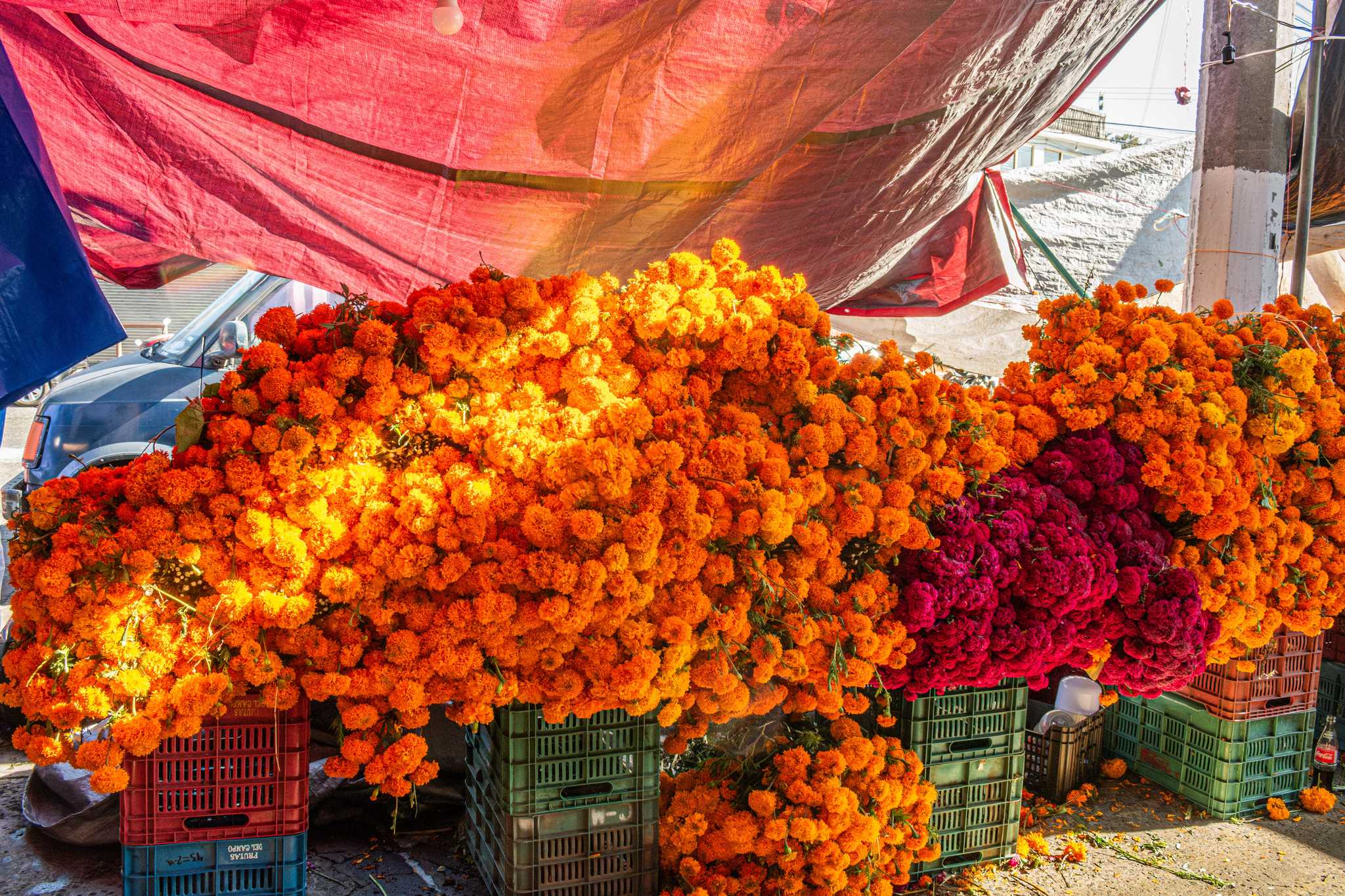
In the days before, the markets overflow with everything an altar needs, and walking through them is one of the best ways to understand the holiday.
- Central de Abasto, the city’s sprawling wholesale market, sells marigolds by the armful
- Look for cockscomb, a velvety red flower, sold alongside the orange cempasúchil
- Bakeries stack pan de yema, Oaxaca’s egg bread, topped with small painted faces
- Sugar skulls, candles, and copal fill stalls at Mercado 20 de Noviembre and Benito Juárez
- Go early in the morning, before the stalls get crowded

Mezcal
Most of Mexico’s mezcal comes from Oaxaca, and a glass of it sits on many local altars. The distilleries are an easy drive from the city.
- Santiago Matatlán, about an hour away, calls itself the world capital of mezcal
- The road there passes the giant Tule tree and rows of agave on the hillsides
- At a palenque (mezcal distillery), agave hearts roast in earth pits before a stone wheel crushes them
- Sip it slowly, often with orange slices and sal de gusano, a salt made from agave worms
- Many palenques are family-run, so a tasting often comes with the family’s story
Cemeteries
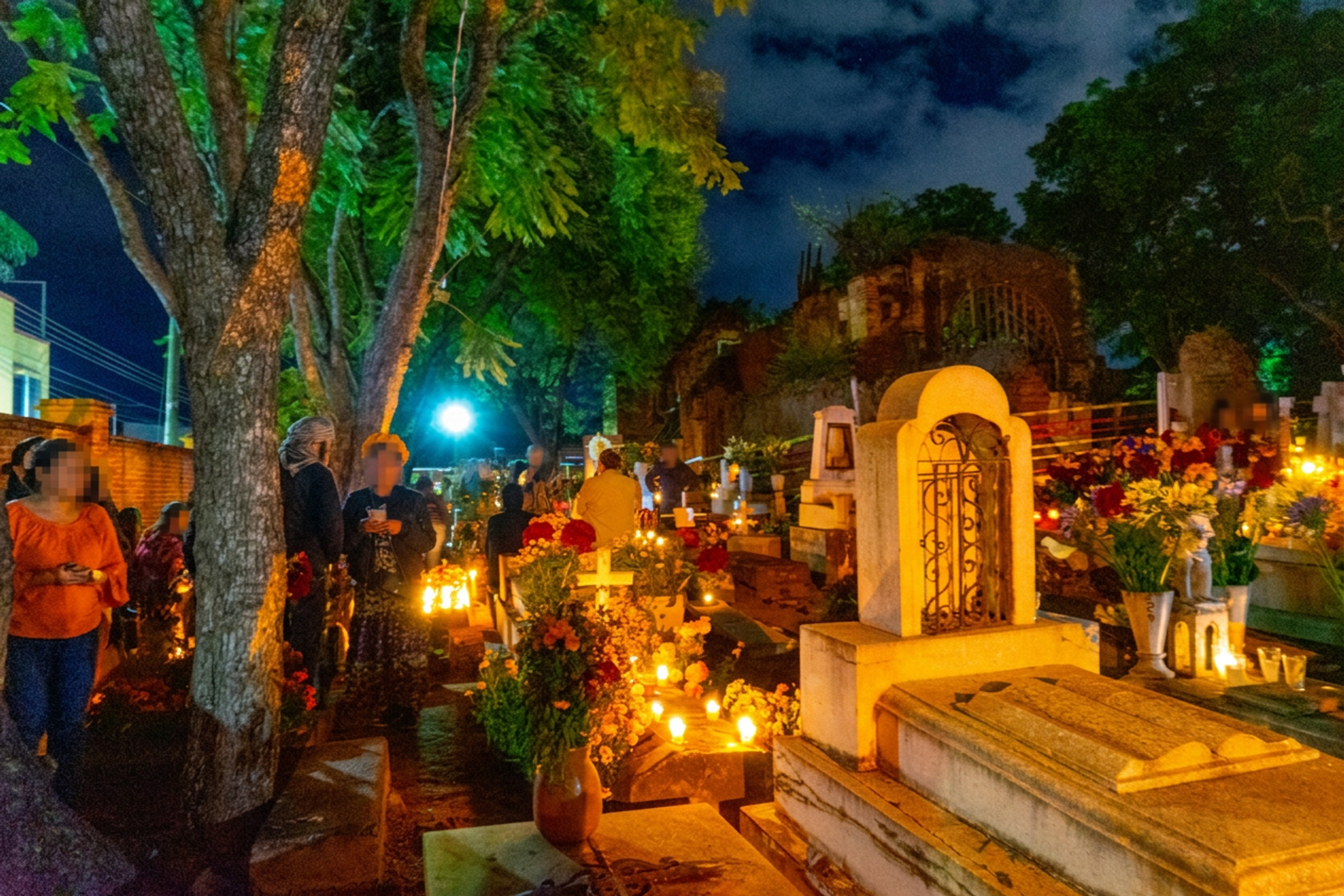
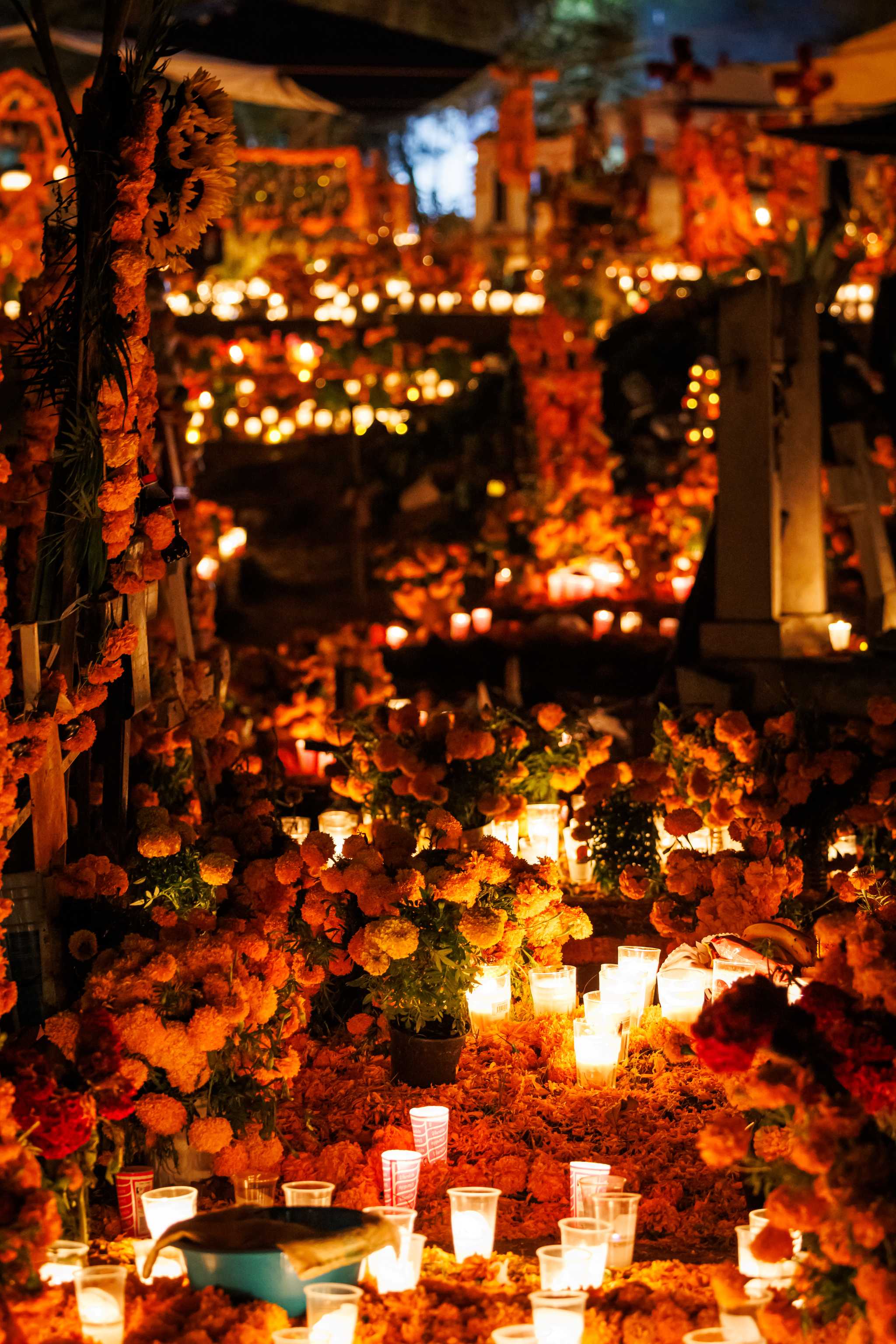
The holiday is felt most in the cemeteries, where families decorate graves with flowers, candles, and sand art, then keep watch through the night.
- Xoxocotlán, 20 minutes from the center, hosts the largest vigil on the night of Oct. 31
- Atzompa’s cemetery is quieter, lit by thousands of candles as families sit with their dead
- The Panteón General in the city is the easiest to reach on foot from the historic center
- San Felipe del Agua keeps a smaller, more intimate vigil on the night of Nov. 2
- Go after dark, once the candles are lit
Practical notes
Oaxaca fills up for Día de Muertos, so plan early and leave time to move between the city and the valley villages, especially after dark.
- Book hotels by early summer, as the best rooms sell out months ahead
- Stay in the historic center or Jalatlaco, within walking distance of the main comparsas
- Fly into Oaxaca’s airport, 20 minutes from town, or drive about six hours from Mexico City
- Arrange late-night rides to the village cemeteries in advance, as taxis are scarce
- Pack layers, as nights in the valley turn cold after sundown
From a local
"Día de Muertos in Oaxaca is known for its frío de muertos, the cool gusts that blow into the city, the scent of cempasúchil fields along the roads, and the excitement you see as people start their preparations, with markets full of spices, fruit, and bread."
– Fernando, Daytrip driver based in Huatulco, Oaxaca
Mexico City
Mexico City does Day of the Dead on a grand scale. Paseo de la Reforma fills with marigolds, giant alebrijes, and costumed catrinas, and a monumental altar takes over the Zócalo. For the older village rituals, head south to Mixquic, which is still part of the city.
Mexico City does Day of the Dead on a grand scale. Paseo de la Reforma fills with marigolds, giant alebrijes, and costumed catrinas, and a monumental altar takes over the Zócalo. For the older village rituals, head south to Mixquic, which is...
Overview
The capital stretches the holiday across several weeks, from mid-October through Nov. 2, with most events free and run by the city.
- Mid-October brings the parade of monumental alebrijes down Reforma, which then stay on display for weeks
- From late October, marigold displays and night illuminations line the avenue
- The main parade usually falls on a Saturday, depending on the year
- The season closes on the night of Nov. 2 with the candlelit vigil in Mixquic
- Dates shift every year, so check the city’s official program before you go
Parades and processions
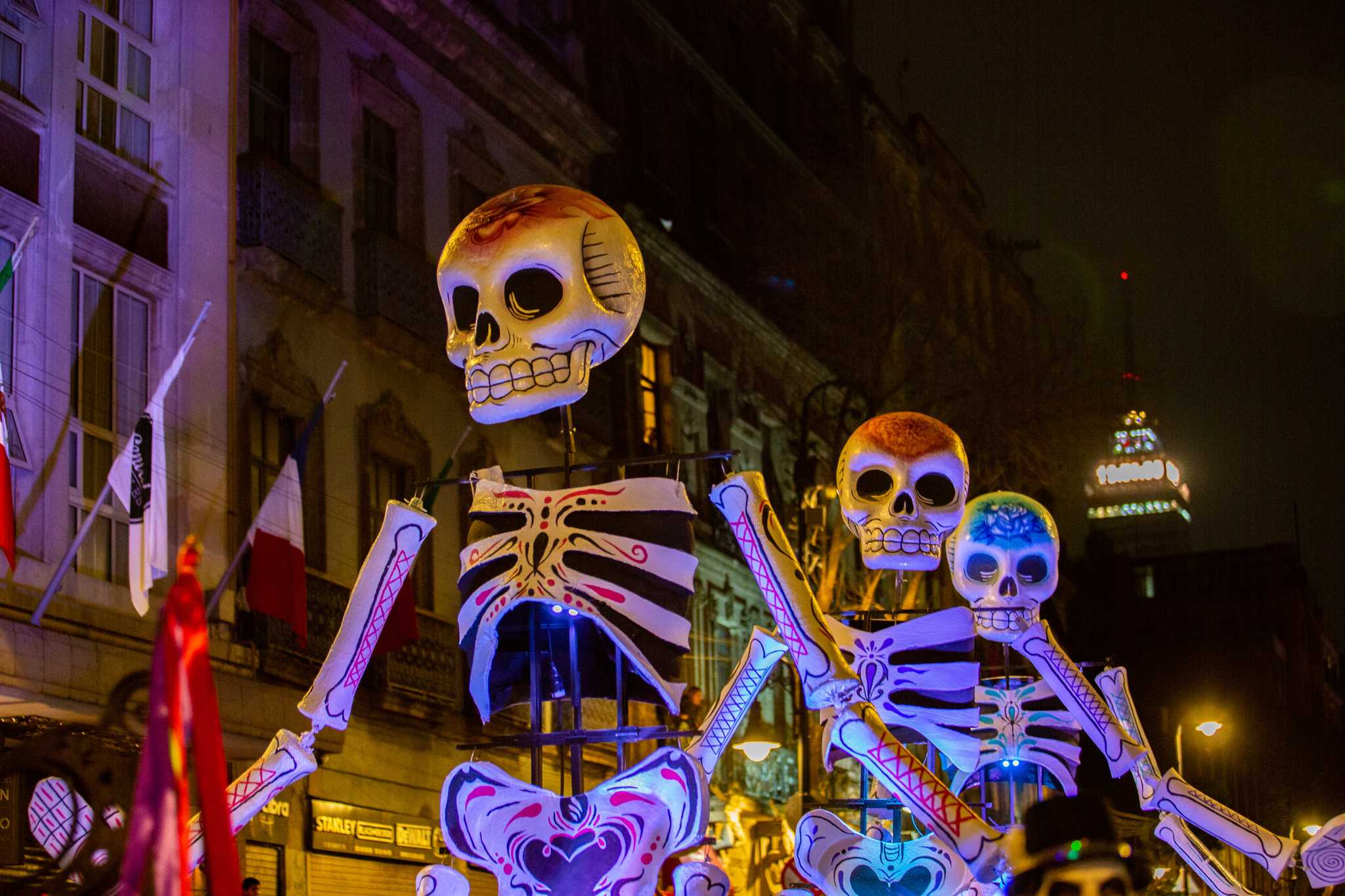
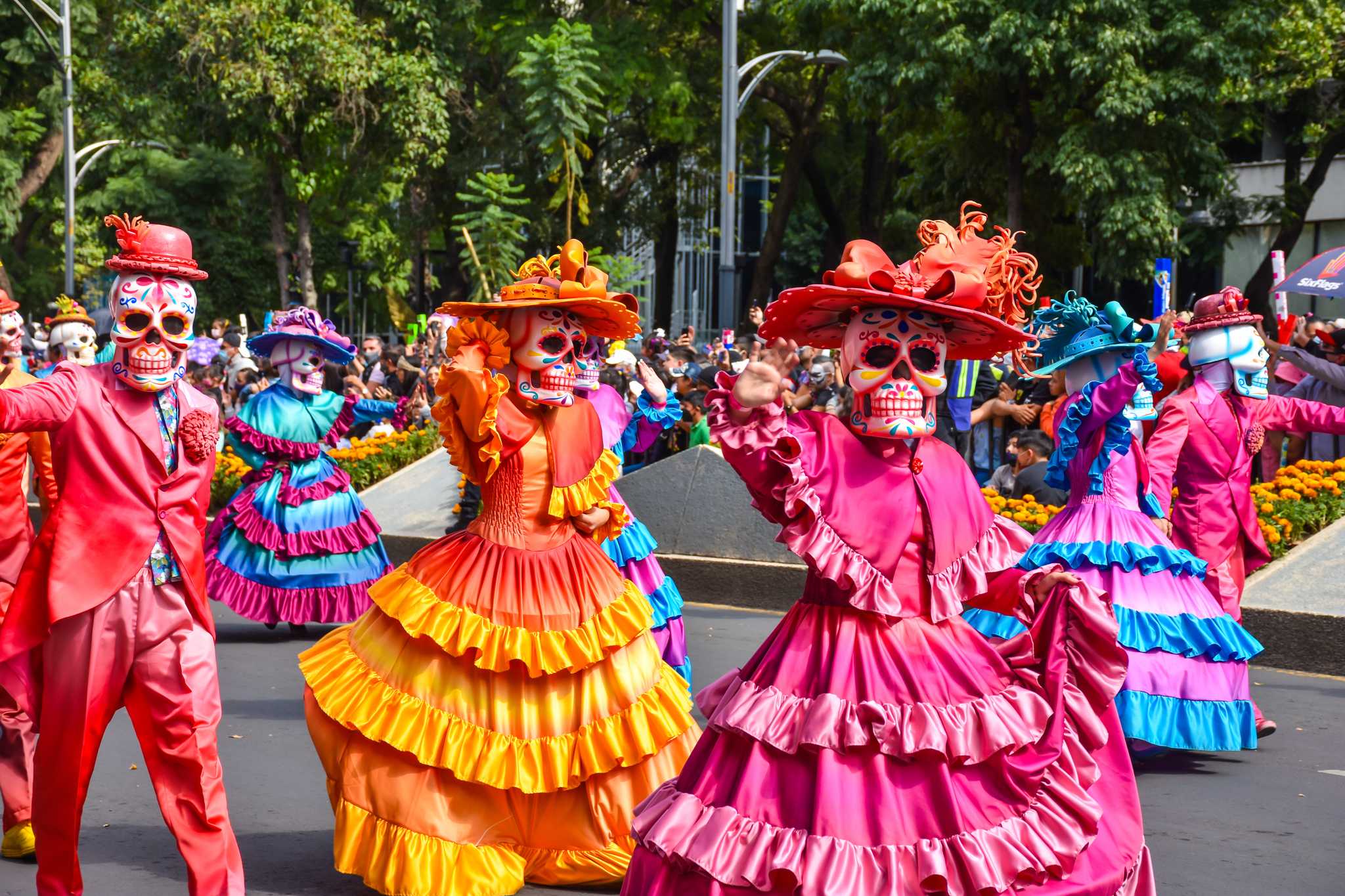
The main parade only began in 2016, when the city staged a real version of the one invented for the opening of the James Bond film Spectre.
- It runs along Reforma to the Zócalo, with giant skeletons and floats
- Around 1.5 million people watched the 2025 parade, with 8,000 performers
- In late October, thousands walk Reforma in Catrina makeup for the Mega Procesión de las Catrinas
- It is the one event where visitors are welcome to dress up and join in
- Arrive hours early for a spot near the Zócalo, where the parade ends and crowds are thickest
Altars and ofrendas
The city’s public altars show the craft of the ofrenda at monumental scale, and they make a good introduction before seeing the family altars.
- The Zócalo’s giant ofrenda stands from about Oct. 29 to Nov. 2
- UNAM students build a Megaofrenda across the university campus in early November, each year on a new theme
- Chapultepec Park hosts a festival of altars and performances in the same week
- Museums, markets, and hotel lobbies build their own ofrendas, often with a theme
- Coyoacán’s plazas fill with altars, sugar skulls, and pan de muerto stalls
Mixquic
San Andrés Mixquic, a farming town on the city's southern edge, keeps the capital’s most traditional celebration, with roots older than the Spanish conquest.
- Celebrations run from Oct. 31 to Nov. 2 in and around the town
- El Campanero has groups ringing bells house to house to pray at altars
- On the night of Nov. 2, La Alumbrada lights thousands of candles on the graves
- The cemetery lights go out first, so the whole churchyard glows by candle alone
- Food stalls sell tamales, sopes, and quesadillas around the main square and church
- Traffic builds for hours beforehand, so leave the city early in the afternoon
Practical notes
Most of the action sits along one avenue and in the historic center, but the city is huge, so pick your base and your days with care.
- Stay in the Centro, Juárez, or Roma to walk to Reforma and the Zócalo for the main events
- Book hotels months ahead for the parade weekend, when rooms run short
- Expect road closures around the parade routes, and plan rides and pickups around them
- Arrange a car for Mixquic, roughly an hour and a half south in light traffic
- Evenings turn cool at the city’s altitude, so bring a warm layer for the parade
Other destinations
Oaxaca and Mexico City draw the biggest crowds, but the holiday changes from region to region. These five places each have their own version, from Maya traditions in Mérida to towering white altars in the Puebla countryside and sugar skulls in Toluca, all within easy reach by road.
Oaxaca and Mexico City draw the biggest crowds, but the holiday changes from region to region. These five places each have their own version, from Maya traditions in Mérida to towering white altars in the Puebla countryside and sugar skulls in Toluca, all within easy reach by road.
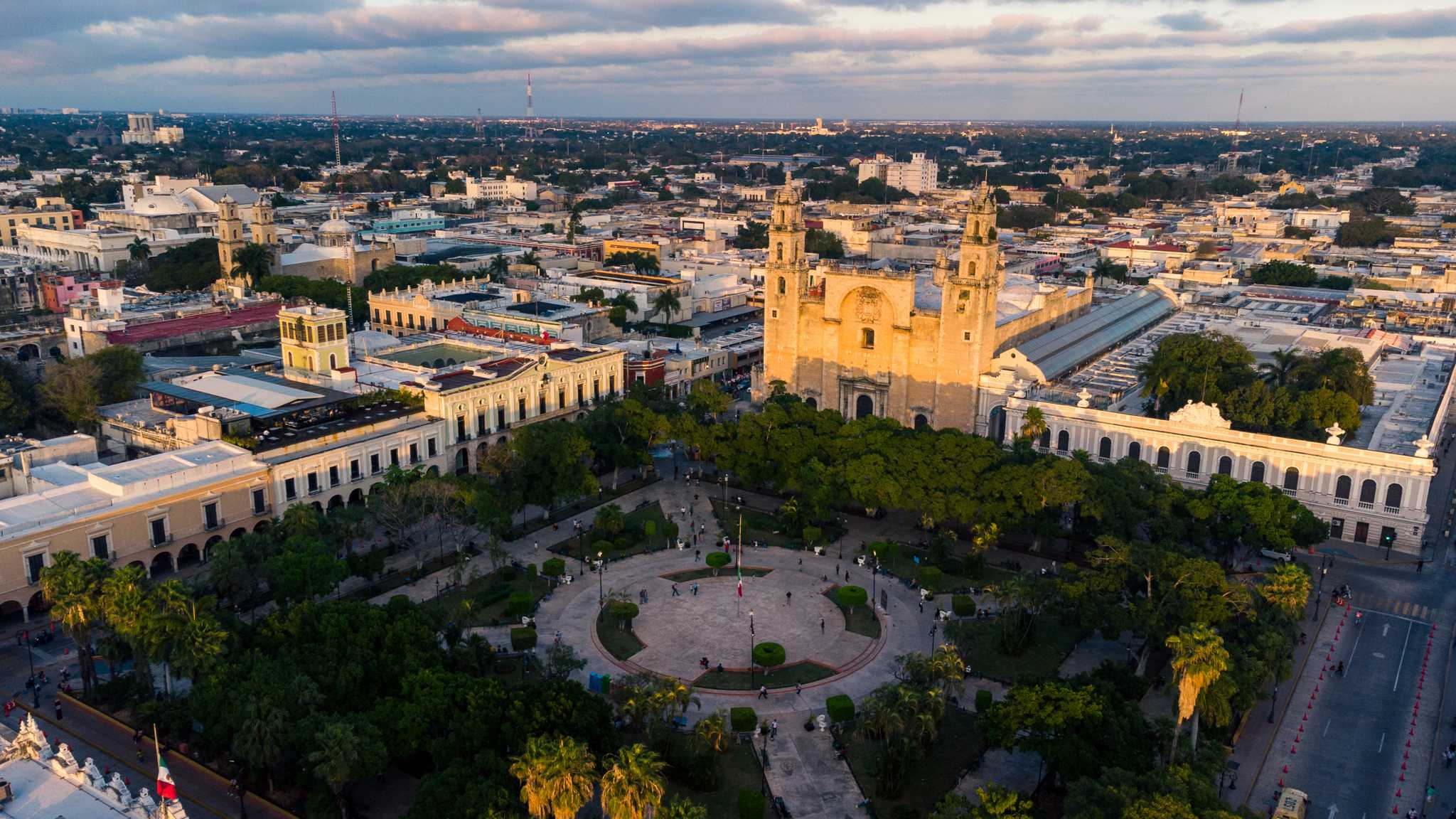
Mérida
The Maya call it Hanal Pixán, food for the souls, and Mérida marks it with a citywide festival of altars, music, and processions.
- Altars sit on white cloths, often hand-embroidered
- Mucbipollo, a tamale baked in an earth pit, gets its own fair
- On Oct. 30, the candlelit Paseo de las Ánimas ends in San Juan Park
- A monumental altar stands on the Plaza Grande, standing up to 45 feet tall (14 meters)
- Families light rows of candles at their doors to guide souls home
- Mérida is about four hours by road from Cancún
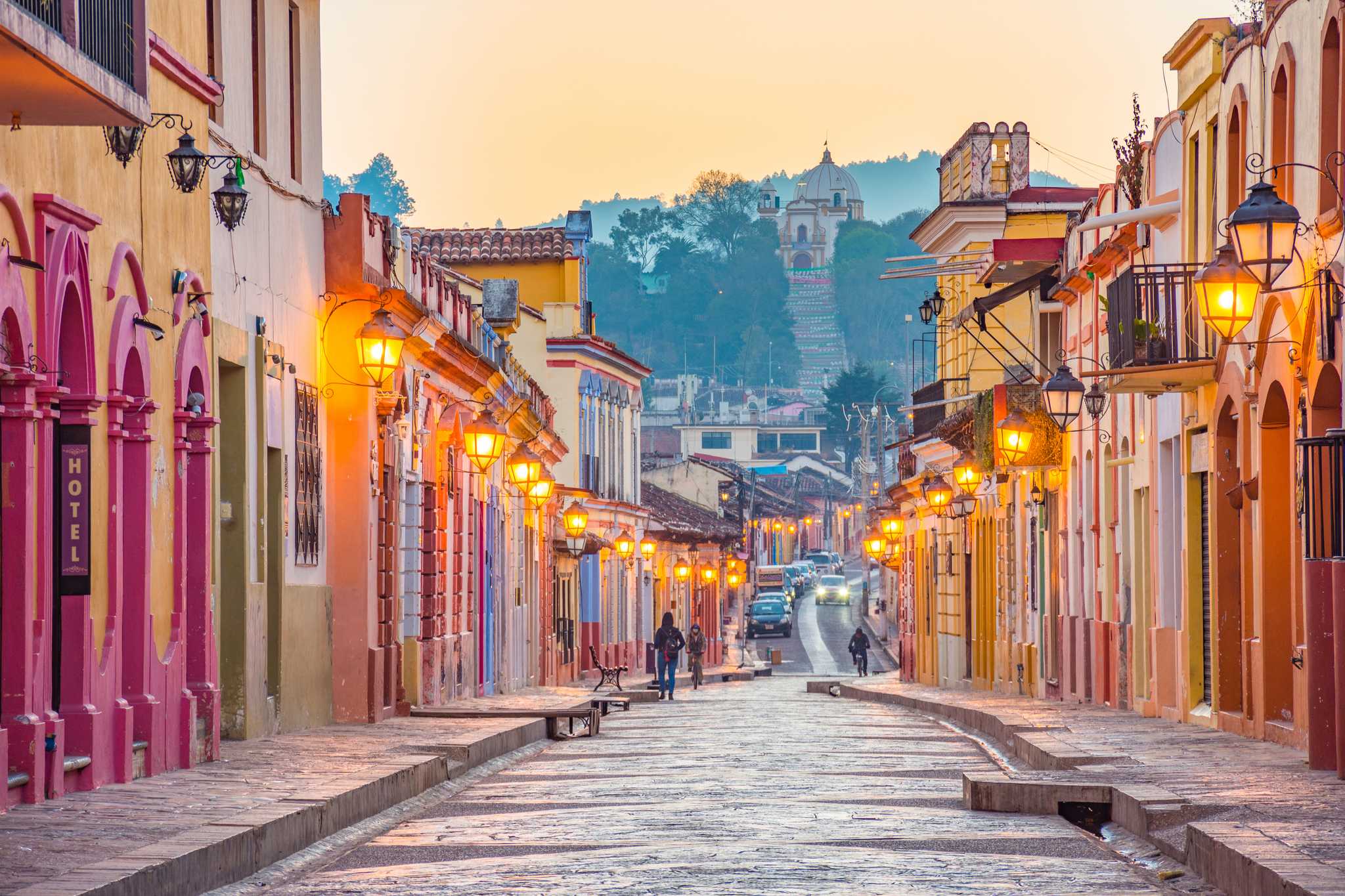
San Cristóbal de las Casas
Around San Cristóbal, Tzotzil Maya communities keep K’in Ch’ulelal, the feast of the souls, welcoming their dead at hillside graves.
- On Nov. 1, families fill nearby Romerillo’s hilltop traditional Maya cemetery
- 22 giant turquoise crosses, one per community, crown the hill
- Mayordomos pray grave to grave to welcome souls, then send them back
- Kolemal max dancers play wind music to cheer the arriving souls
- Photography is strictly forbidden inside San Juan Chamula’s church
- San Cristóbal is 90 minutes by road from Tuxtla Gutiérrez airport
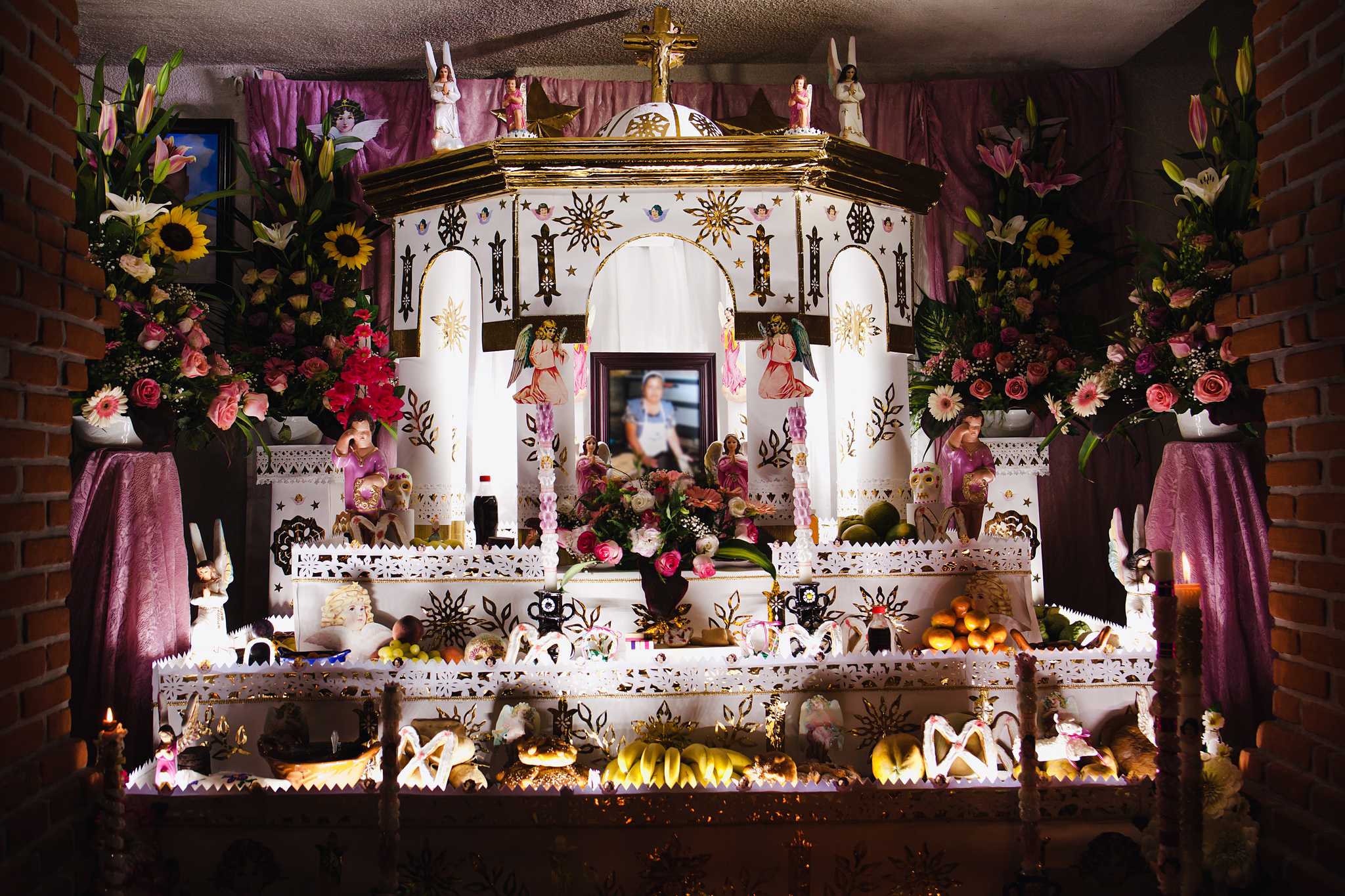
Huaquechula
Huaquechula builds monumental altars only for those who died in the past year: three or more tiers of white satin. The town puts a family’s cost at 10,000 to 50,000 pesos ($550 to $2,700).
- Altar makers, the altareros, spend months on each one
- The dead’s photo is seen only in a mirror, never directly
- Days before, a barter market swaps food for altar flowers
- Families open their homes, and visitors bring a candle to leave
- The altars have been Puebla state cultural heritage since 1997
- The town is about an hour by road from the city of Puebla
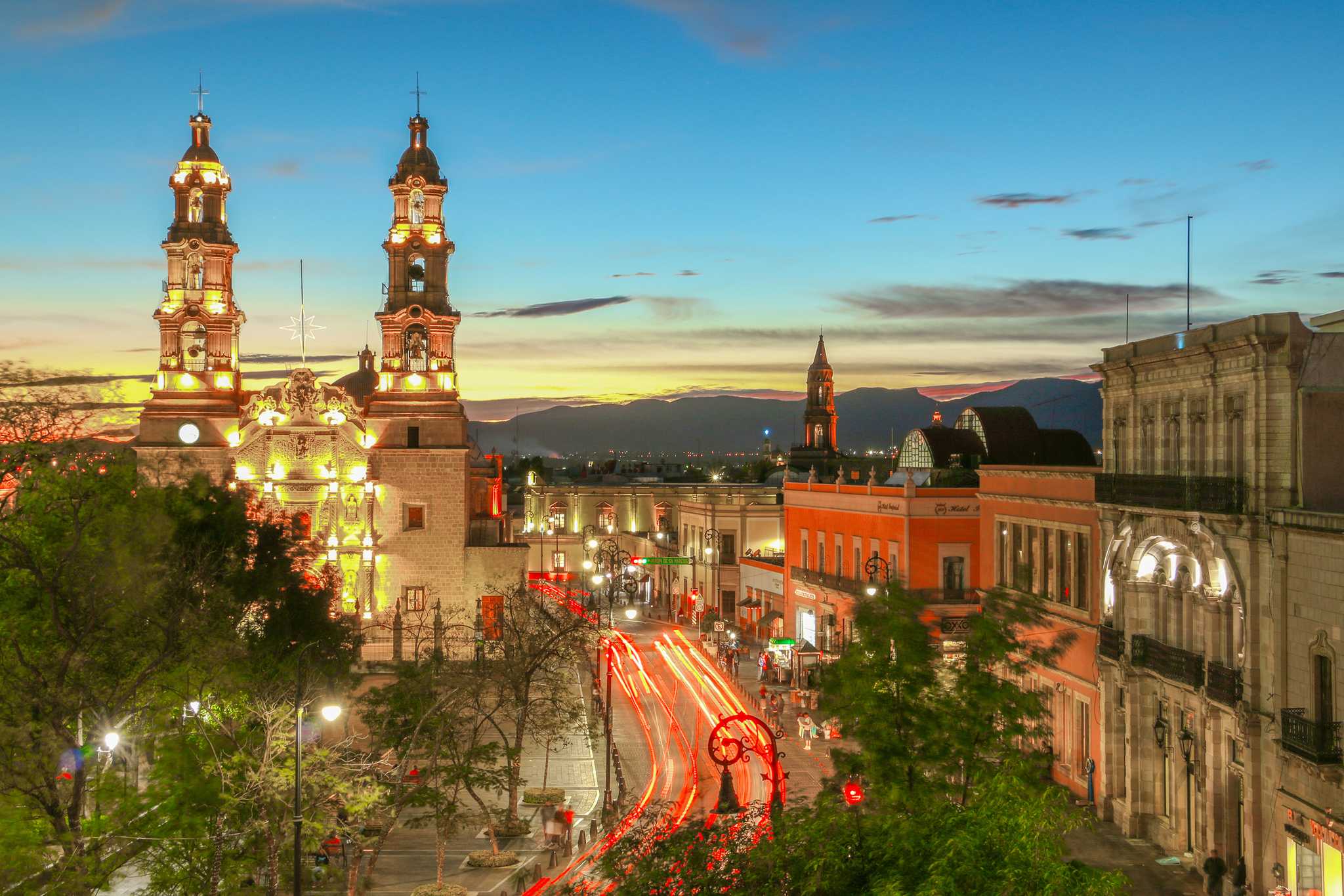
Aguascalientes
José Guadalupe Posada, who drew the skeleton later named La Catrina, was born here, and his hometown has held the Festival de Calaveras every fall since 1994.
- A parade of catrinas, floats, and giant skulls fills Avenida Madero
- The José Guadalupe Posada Museum shows his original prints
- Visitors can paint skulls and write calaveras, comic verses about the living
- The National Museum of Death holds over 2,500 pieces on the theme
- Concerts, food stalls, and altars fill the city center
- Posada’s prints still shape how Mexico pictures death today
Toluca
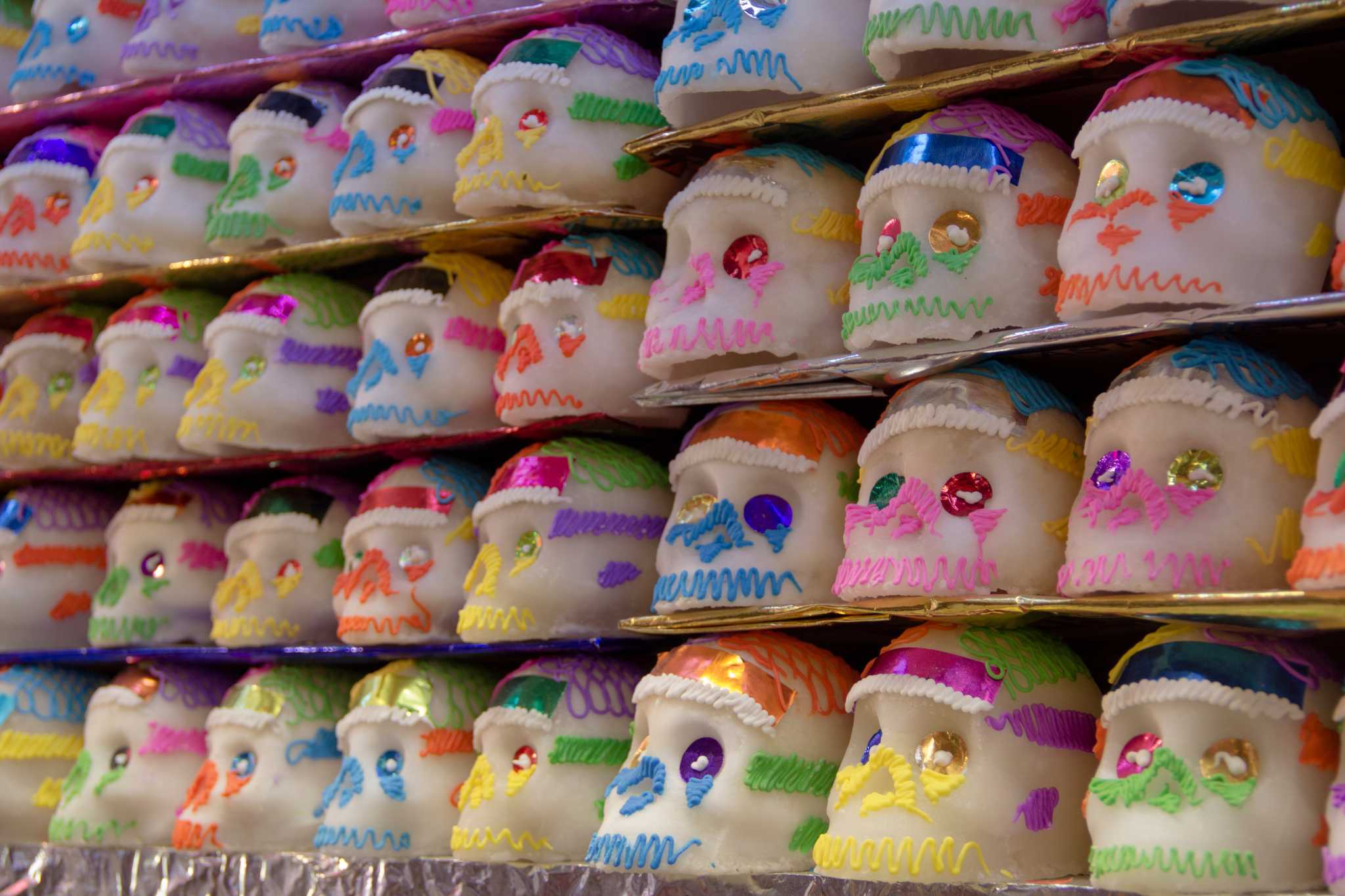
Toluca, an hour from Mexico City, opens the season in early October with the Feria del Alfeñique, a fair built around the sugar figures made for the altars.
- The fair runs from early October into the first days of November
- Around 80 local families still shape the sugar skulls by hand
- Stalls sell sugar skulls, coffins, and calacas for home altars
- The Museo del Alfeñique tells the craft's story
- Free concerts fill the evenings outside the Mercado Juárez
- Night tours of the city cemetery run on October weekends
How to visit respectfully
Día de Muertos is a family occasion first, and travelers are welcome as long as they remember that. The best way to experience it is with all your senses and a light footprint: watch, listen, breathe in the copal and marigolds, and ask questions when the moment allows.
- Watch and listen first. Take in a cemetery for a few minutes, keep your voice low, and let the music at the graves set the mood
- Breathe it in: copal smoke, marigolds, and warm pan de muerto are as much a part of the holiday as the sights
- Ask questions gently. Many families are glad to explain their altar, but read the mood and leave mourners in peace
- Never touch an altar or take from it, since the food is for the dead, and never sit or step on a grave
- Ask before photographing anyone, as Mexican law requires consent to use or publish a person’s image. Skip the flash and the drone
- Dress modestly, as you would for church, and save Catrina makeup for the parades, not the cemeteries
Our recommended Day of the Dead routes
Tulum to Merida
3h 9min • 259km (160.9mi)
From US$270
Valladolid to Merida
1h 49min • 160km (99.4mi)
From US$216
Mexico City to Oaxaca de Juarez
5h 58min • 462km (287.1mi)
From US$442
Puebla to Oaxaca de Juarez
4h 28min • 340km (211.3mi)
From US$390
Mexico City to Oaxaca de Juarez
5h 58min • 462km (287.1mi)
From US$442
Santiago Matatlan to Oaxaca de Juarez
1h • 48km (29.8mi)
From US$157
Merida to Cancun
3h 24min • 315km (195.7mi)
From US$329
San Cristobal to Tuxtla Gutierrez
1h 2min • 60km (37.3mi)
From US$104
Puebla to Mexico City
2h 14min • 132km (82.0mi)
From US$151
Toluca to Mexico City
1h 22min • 65km (40.4mi)
From US$81
Aguascalientes to Mexico City
5h 42min • 499km (310.1mi)
From US$483
Atlixco to Puebla
39min • 31km (19.3mi)
From US$37
Best Day of the Dead day trips

Oaxaca to Hierve el Agua and Tule Tree: Day trip

Oaxaca to Teotitlan del Valle and Tlacolula: Day trip

Tuxtla Gutierrez to Aguacero Falls and El Romerillo Day Trip

Puebla to Cholula and Atlixco: Private day trip

Artistic Heritage from Mexico City: Private day trip

Oaxaca to Monte Alban and Mitla: Private day trip

Tuxtla Gutierrez to San Cristobal and Comitan: Day trip

Mexico City to Metepec and Ixtapan de la Sal: Day trip
2+ million travelers like you. Moments they'll never forget.

Your Día de Muertos questions, answered
About the author
Ján Tompkins is a Prague-based travel writer with a passion for arts and culture. His travels are shaped as much by museum exhibitions as by bakeries, greasy spoons, and funny signage. His favorite Juan Gabriel song is "¿Por Qué Me Haces Llorar?"
Be the first to discover more
Get handpicked travel ideas, insider highlights, and special Daytrip offers.

